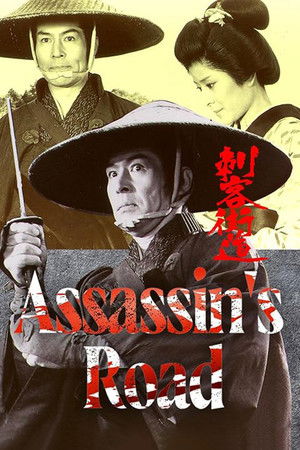
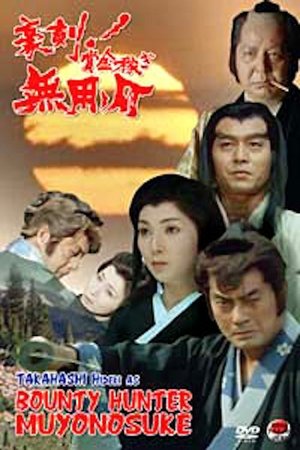
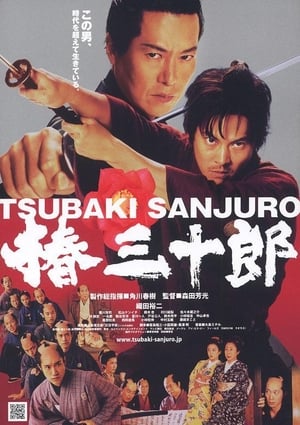
Ogami Itto battles a group of female ninja in the employ of the Yagyu clan and must eliminate a traitor who plans to sell his clan's secrets to the Shogunate.
A poor peasant, after years of scraping, becomes a rich and powerful Osaka merchant. Mizoguchi Kenji's final project; he died before completing it and directing duties turned over to Yoshimura Kozaburo.
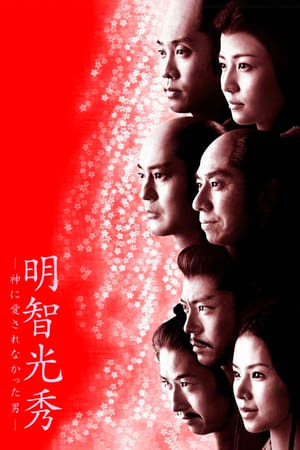
Sen no Rikyu (Ebizo Ichikawa) is the son of a fish shop owner. Sen no Rikyu then studies tea and eventually becomes one of the primary influences upon the Japanese tea ceremony. With his elegant esthetics, Sen no Rikyu is favored by the most powerful man in Japan Toyotomi Hideyoshi (Nao Omori) and becomes one of his closest advisors. Due to conflicts, Toyotomi Hideyoshi then orders Sen no Rikyu to commit seppuku (suicide). Director Mitsutoshi Tanaka's adaptation of Kenichi Yamamoto's award-winning novel of the same name received the Best Artistic Contribution Award at the 37th Montréal World Film Festival, the Best Director Award at the 2014 Osaka Cinema Festival, the 30th Fumiko Yamaji Cultural Award and the 37th Japan Academy Film Prize in nine categories, including Best Art Direction, Excellent Film and Excellent Actor.
Having put down his sword and given up the will to fight, the masterless samurai Iemon lives in solitude while being haunted by his violent enigmatic past...
Writer Jippensha Ikku hears Tsutaya Juzaburo, a wholesaler of picture books, mutter on his deathbed, "Where has Sharaku gone?" He begins to figure out the true identity of Sharaku, who disappeared after about 150 portraits of actors he created came out.
Kanichiro Yoshimura is a Samurai and Family man who can no longer support his wife and children on the the low pay he receives from his small town clan, he is forced by the love for his family to leave for the city in search of higher pay to support them.
Down-on-his-luck veteran Tsugumo Hanshirō enters the courtyard of the prosperous House of Iyi. Unemployed, and with no family, he hopes to find a place to commit seppuku—and a worthy second to deliver the coup de grâce in his suicide ritual. The senior counselor for the Iyi clan questions the ronin’s resolve and integrity, suspecting Hanshirō of seeking charity rather than an honorable end. What follows is a pair of interlocking stories which lay bare the difference between honor and respect, and promises to examine the legendary foundations of the Samurai code.
In 16th century Japan, peasants Genjuro and Tobei sell their earthenware pots to a group of soldiers in a nearby village, in defiance of a local sage's warning against seeking to profit from warfare. Genjuro's pursuit of both riches and the mysterious Lady Wakasa, as well as Tobei's desire to become a samurai, run the risk of destroying both themselves and their wives, Miyagi and Ohama.
This is one of the many films based on the legend of Chuji Kunisada, a wandering gambler and a defender of the weak in the Edo period. In other words, he was the Japanese Robin Hood. In this film Kunisada (Chiezo Kataoka) arrives to a small town terrorized by an evil gang. He insists that he is not Kunisada, as the word is Kunisada has been executed, but of course the audience know better. Sonny Chiba plays an unusual supporting role as a helpless young man unable to defend himself from the gangsters. He does, however, get to play taiko drums and dance with Junko Fuji (who makes her film debut here). Chiba's father, an old judge who helps Kunisada, is played by Takashi Shimura. The film hardly anything exceptional, but it's a pretty decent jidai geki / yakuza drama.
In the mountainous region of Koshu, Taikahara, there was an intense power struggle between the prominent families, Tamaki and Kakukura. Facing the steward of Kakukura, Kurokawa Senjiro, was Tamaki Daisaburo, who was skilled with a handgun. Daisaburo had granted protection to the charcoal maker, Miyoshi, safeguarding a few mountains passed down from their ancestors. Daisaburo's elder brother, Iori, who had completed his training in Edo, saved Kakukura's only daughter, Koyumi, on his way back home. However, while Daisaburo rushed to Iori's aid after Koyumi was attacked by Kurokawa and his men, their family home was set ablaze.
Seibei Iguchi leads a difficult life as a low ranking samurai at the turn of the nineteenth century. A widower with a meager income, Seibei struggles to take care of his two daughters and senile mother. New prospects seem to open up when the beautiful Tomoe, a childhood friend, comes back into he and his daughters' life, but as the Japanese feudal system unravels, Seibei is still bound by the code of honor of the samurai and by his own sense of social precedence. How can he find a way to do what is best for those he loves?
三屋清左衛門残日録
The one-eyed swordsman Tange Samanosuke receives a secret order from his lord, Daizen no suke: to steal the cursed twin blades, Kenunmaru and Konryumaru. He risks his life to seize Kenunmaru, losing his right arm in the process. Saved by the fugitive Ofuji, he is reborn as the one-eyed, one-armed warrior-Tange Sazen. Soon, the turmoil reaches Town Magistrate Ooka Tadasuke.
In Tensho 9, as Oda Nobunaga nears the unification of Japan, he assigns trusted generals to conquer remaining regions. Meanwhile, a peasant farmer named Sahei, resembling Nobunaga, is chosen by Hideyoshi and Sen no Rikyu to act as Nobunaga’s shadow. Furious at the idea of a double, Nobunaga confronts Sahei, who courageously performs the "Atsumori" dance, impressing Nobunaga enough to accept him as his Kagemusha. Sahei’s first test as the shadow warrior comes at a memorial service for the Oda family.
Police detective Heiji is assigned to catch the masked Maboroshi gang of robbers who have terrorized all of Edo, leaving few clues as to their leader's identity.
The adventures of a blind, gambling masseur and master swordsman. Zatoichi targets a yakuza-controlled village, because war with a neighbouring town's smaller gang is brewing.
Returning to the village where a year before he had killed Hirate, a much-admired opponent, Zatoichi encounters another swordsman and former rival in love.
Chushingura has been made into a movie several times before, but this time it will be presented in a widescreen version with all natural colors and a new look. Written by Masato Ide and directed by Tatsuo Osone. This is a magnificent scroll of images that depicts on a grand scale the triumph of the Genroku era that shook the citizens of Edo, the peaceful capital of Japan. The top stars of the film, shinpa, shingeki, and kabuki worlds at the time of production were lavishly cast, and a huge budget was invested to create a large set for this highly acclaimed and moving epic.
A group of travelers is stranded in a small country inn when the river floods during heavy rains. As the bad weather continues, tensions rise amongst the trapped travelers.
三屋清左衛門残日録 三十年ぶりの再会