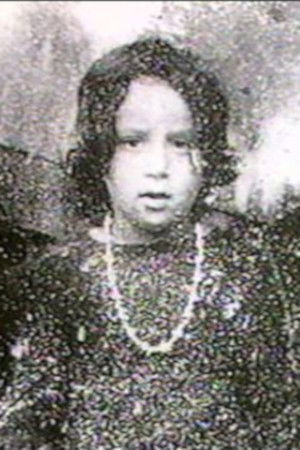
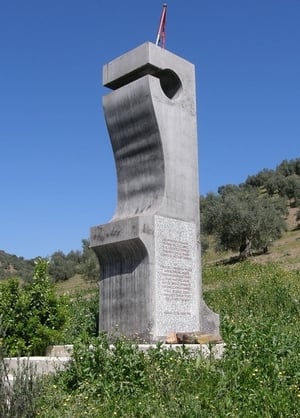
Cautivos en la arena
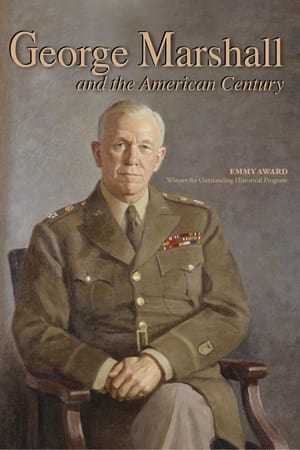
He built the mightiest army in history and selected its leaders. Eisenhower, MacArthur and Patton all obeyed his commands. George Marshall was the only soldier ever to receive the Nobel Peace Prize.
The film's protagonists are the orphaned children taken into custody by the state and institutionalized at Children's House no. 6 from Bucharest. For Mészáros, the concern for the situation of children left orphaned during the Second World War is autobiographical: the director directly experienced the absence of parents in her own childhood.
The story of the railroad in Illinois and the train's role in moving product out of the states to the rest of America.
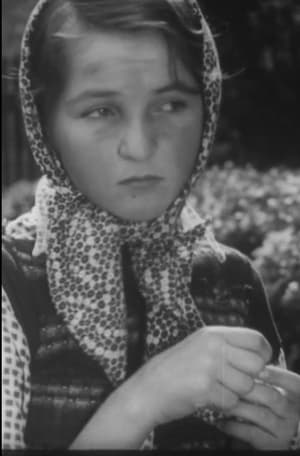
Made on the occasion of March 8, it presents a series of brief portraits of women, from various professional fields, of different ages and even of different ethnicities, pointing out the benefits that the communist organization had brought to their daily lives. A special emphasis is placed on their status as mothers and on the role of nurseries and socialist kindergartens not only in making their lives easier, but also in giving them the time they need to build a career. Another concern of the filmmaker, starting from the concrete case of one of the protagonists, is to highlight the differences between the happy present and the not-too-distant past in which someone with her social status should have dedicated herself exclusively to raising children, in hygienic and extremely difficult lives.
When artist Janet Biehl fell in love with radical American philosopher Murray Bookchin in the 1980s whilst editing his ground-breaking opus “The Ecology of Freedom”, she could never have imagined that it would one day take her halfway across the globe. Now, over 40 years later, Janet travels from America to the Middle East to witness something remarkable - how Murray’s ideas have ignited a female-led revolution in North-East Syria, where society is being rebuilt in the wake of victory over ISIS. Janet meets the women who are turning her late partner’s political theories into a modern reality, creating a grassroots communal democracy. Janet draws what she sees, and her illustrations capture the humanity of ordinary people in their struggle to self-govern. Now, at this critical moment for Syria and with this revolutionary project under renewed threat, "Threads of a Revolution" reveals a possible way forward for those prepared to fight for a new way to live.
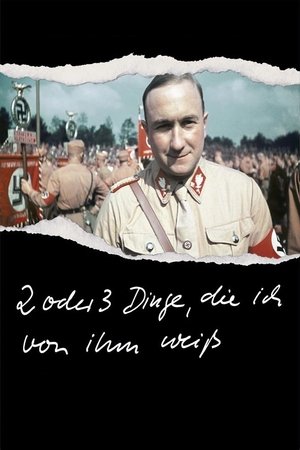
What would your family reminiscences about dad sound like if he had been an early supporter of Hitler’s, a leader of the notorious SA and the Third Reich’s minister in charge of Slovakia, including its Final Solution? Executed as a war criminal in 1947, Hanns Ludin left behind a grieving widow and six young children, the youngest of whom became a filmmaker. It's a fascinating, maddening, sometimes even humorous look at what the director calls "a typical German story." (Film Forum)
Los últimos guerrilleros - Historia de la A.G.I. (Agrupación guerrillera de Levante)
A couple returns to Aghdam, the city they once fled 32 years ago due to the war. It's a story about memory held in people, and about the small, powerful ways the past resurfaces when you finally face it.
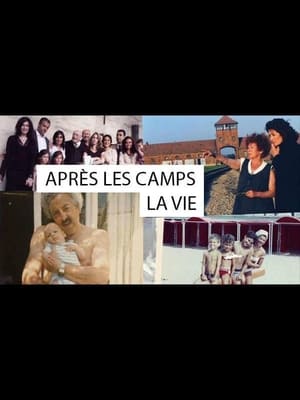
For the first time, survivors talk about life after the camps. How does one return to a life that was interrupted with such violence? How does one reconstruct oneself when all or most of one’s family were butchered? How does one resume studies and earn a living in a society that had cast you out a few years earlier?
The animated corpse of Moscow goes on after its inhabitants left. Filled with weeps and whispers of the mourning ghosts, torn apart with phone calls from distant countries and unfamiliar sounds, emotionally devastated and deserted, the city attempts to reconcile with its own voice.
Jonathan Stavleu explores, in a stream-of-consciousness video essay, the relationship people have with water and what happens when access to it is taken away. For this work, he examines anecdotal histories he has heard from Estonians, as well as stories from his own family history in the Netherlands, weaving them together into a journal-like narrative.
Between 1993 and 1995, artist and photographer Louis Jammes took pictures of people on the streets of Sarajevo under siege and gave them angelic face and wings. Then he put his huge portraits on destroyed city walls. Suddenly, it seems as life is getting back with their arrival, because they brought a sense of peace, beauty, nostalgia...
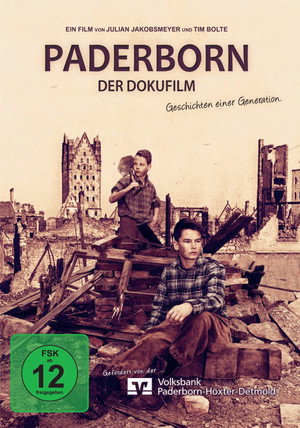
Paderborn - der Dokufilm
The sinking of the German fleet interned at Scapa-Flow (Orkney Islands), June 21, 1919. We know that one of the stipulations of the armistice signed with Germany on November 11, 1918 was that that power's surface warships were to be "immediately decommissioned and interned in neutral or Allied ports, and remain there under the supervision of the Allies and the United States, guard detachments only being maintained on board". In fact, all the ships designated by the Allies - 11 battleships, 5 battlecruisers, 7 light cruisers and 50 destroyers - had, a few days after the armistice, been assembled in Scapa-Flow Bay, in the center of the Orkney archipelago, i.e. north of Scotland, and had remained there ever since, under the supervision of the English naval authorities, but under the effective authority of German Admiral von Reuter.
This interactive infographic short documentary examines the human losses of the Second World War between 1939 and 1945 and the decline in battle deaths in the years since that most terrible war of human history. The 19-minute data visualization uses cinematic storytelling techniques to provide viewers with a fresh and dramatic perspective of a pivotal moment in history. The film follows a linear narration, but it allows viewers to pause during key moments to interact with the charts and dig deeper into the numbers.
Dresdner Filmschätze - Teil 2 | Die 40er bis 60er Jahre
Following in the footsteps of two women in search of their origins, this documentary lifts the veil on a little-known page of the post-war era: the adoption, as part of a cross-border program, of thousands of children born during the French occupation of Germany.
Celebrating Udo Lindenberg’s 80th birthday, exploring his extraordinary career as one of Germany’s most influential rock musicians. The film traces his rise from a rebellious young artist to a national icon, highlighting his music, political activism, and unique personality. Through interviews, archival footage, and behind-the-scenes insights, the documentary showcases Lindenberg’s cultural impact and enduring legacy in the German music scene.
In her autobiographical documentary, the young director uses cartoon impressions, photographic memories, and the various stages of baking a cake to draw the viewer into her own stream of consciousness, and using images full of kindness, tenderness, and playfulness, she deals with the sadness that began during a children's birthday party many years ago.