National Film Board of Canada documentary of stories of Acadians (French Canadians from the eastern Maritime provinces). Hundreds of thousands of Acadians emigrated to Louisiana following deportation by the British during the Acadian Expulsion of the mid-18th century, hence the term 'Cajun.'
Ben is worried. Overwhelmed by the world's encroaching crises, he travels from Brandenburg to London to Kansas to the Yucatan peninsula and many places in between, to find out how to cope with social and ecological collapse.
A look at the state of the global environment including visionary and practical solutions for restoring the planet's ecosystems. Featuring ongoing dialogues of experts from all over the world, including former Soviet Prime Minister Mikhail Gorbachev, renowned scientist Stephen Hawking, former head of the CIA R. James Woolse
A documentary on Al Gore's campaign to make the issue of global warming a recognized problem worldwide.
Harmful chemicals are disproportionately affecting Black communities in Southern Louisiana along the Mississippi River. I am One of the People is an experimental short film exposing the environmental racism of “Cancer Alley.”
This large format film explores the last great wilderness on earth. It takes you to the coldest, driest, windiest continent, Antarctica. The film explores the life in Antarctica, both for the animals that live their and the scientist that work there.
This film tries to blow the whistle on what it calls the biggest swindle in modern history: 'Man Made Global Warming'. Watch this film and make up your own mind.
A decade after An Inconvenient Truth brought climate change into the heart of popular culture comes the riveting and rousing follow-up that shows just how close we are to a real energy revolution. Vice President Al Gore continues his tireless fight, traveling around the world training an army of climate champions and influencing international climate policy. Cameras follow him behind the scenes—in moments private and public, funny and poignant—as he pursues the empowering notion that while the stakes have never been higher, the perils of climate change can be overcome with human ingenuity and passion.
Coral reefs are the nursery for all life in the oceans, a remarkable ecosystem that sustains us. Yet with carbon emissions warming the seas, a phenomenon called “coral bleaching”—a sign of mass coral death—has been accelerating around the world, and the public has no idea of the scale or implication of the catastrophe silently raging underwater.
For 30 years, Lynn Davis has photographed the magnificent icebergs of Greenland. Davis returned recently with climate change expert Tony Leiserowitz, where they take in the meltdown, and explore the implications for the planet.
On Yonaguni Island, the westernmost island of Japan, there is a language in danger of disappearing. How far can we take the language, culture and history that are being quietly forgotten at the edge of Japan? A semi-documentary fantasy full of life force.
Follow the Manhattan-based Beavan family as they abandon their high consumption 5th Avenue lifestyle and try to live a year while making no net environmental impact.
With unprecedented access to the nuclear industry in France, Russia, and the United States, Nuclear Now explores the possibility for the global community to overcome the challenges of climate change and energy poverty to reach a brighter future through the power of nuclear energy. Beneath our feet, Uranium atoms in the Earth’s crust hold incredibly concentrated energy. Science unlocked this energy in the mid-20th century, first for bombs and then to power submarines. The United States led the effort to generate electricity from this new source. Yet in the mid-20th century as societies began the transition to nuclear power and away from fossil fuels, a long-term PR campaign to scare the public began, funded in part by coal and oil interests.
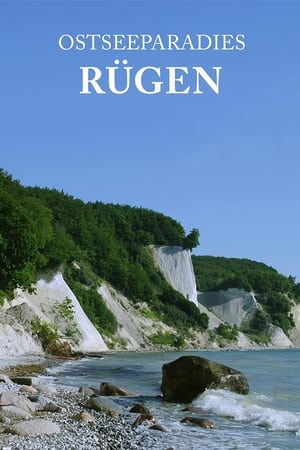
Rügen is the largest island of Germany. Located off the Baltic Sea coast of Western Pomerania, two thirds of its area is protected. The green beech forests of the Jasmund National Park are considered an original virgin forest that is unique in Europe and are part of the UNESCO World Heritage. The white chalk cliffs, which can be seen from afar, are the island's distinctive symbol and were immortalized in the paintings of Caspar David Friedrich more than 200 years ago. On the small island of Vilm, which belongs to Rügen, there is another core area of nature conservation with a 500-year-old, untouched beech forest. Within sight of this refuge, organic farmers are trying to bring more diversity back to the fields. Small-scale agriculture with a great diversity of species has emerged between hedges, tree islands and biotopes. The documentary shows Rügen's natural treasures and introduces different people who have found their home here and are fighting to preserve nature.
Fall Of The Republic documents how an offshore corporate cartel is bankrupting the US economy by design. Leaders are now declaring that world government has arrived and that the dollar will be replaced by a new global currency.
"How our digital lives are impacting our climate goals" (Vox).
A poetic documentary about the lost film culture in the small villages on the Croatian islands during the SFR of Yugoslavia.
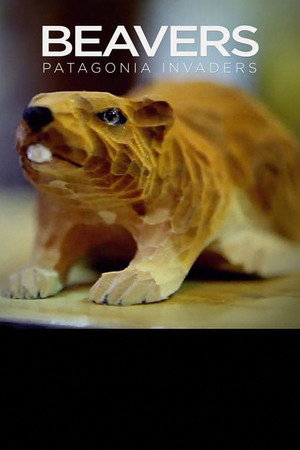
In 1940 twenty Canadian Beavers were brought to 'Tierra del Fuego' island in southern Patagonia for commercial fur production. However, beavers having no natural predators, quickly spread throughout the island, causing massive destruction of trees threatening the entire Patagonian forests rivers and species. Why wildlife conservationist are convinced that 150.000 beavers must be killed? Why some of the most recognized specialist are convinced that an eradication is not possible? Meanwhile truism is capitalizing on the situation: a man dressed as a beaver passes out flyers promoting a famous sky resort: 'Cerro Castor' - Beaver Hill. Hunters claim for subsidies, scientists are researching, rangers do what they can and restaurants tray to offer beaver meat to tourist.
Standing almost alone in the great Southern Ocean, South Georgia island plays host to some of the largest concentrations of animals anywhere on Earth during the spring and summer months. This is the story of these vast animal cities, and of the order that lies beneath their seeming chaos.
In the first half of the 19th century, the French ornithologist Jean-Jacques Audubon travelled to America to depict birdlife along the Mississippi River. Audubon was also a gifted painter. His life’s work in the form of the classic book ‘Birds of America’ is an invaluable documentation of both extinct species and an entire world of imagination. During the same period, early industrialisation and the expulsion of indigenous peoples was in full swing. The gorgeous film traces Audubon’s path around the South today. The displaced people’s descendants welcome us and retell history, while the deserted vistas of heavy industry stretch across the horizon. The magnificent, broad images in Jacques Loeuille’s atmospheric, modern adventure reminds us at the same time how little - and yet how much - is left of the nature that Audubon travelled around in. His paintings of the colourful birdlife of the South still belong to the most beautiful things you can imagine.