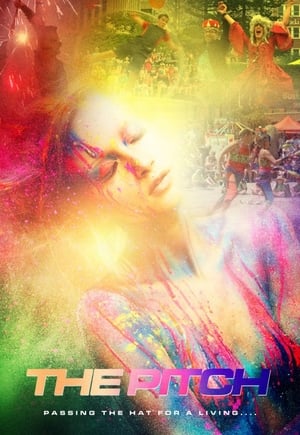
"The Pitch" takes a look at the world of international street performing buskers to find out why these men and women have chosen to "pass the hat" to make a living, along with the challenges they face.
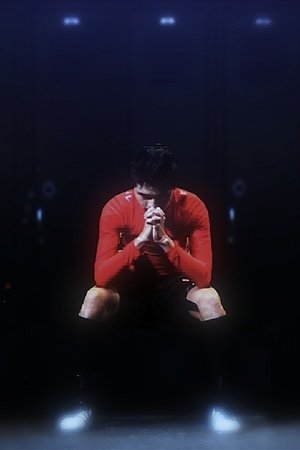
The year is 2021. And Hong Kong is one match away from qualifying for the World Cup. Flash back to 2009. Cheuk-long, aged 18, branded a geek by his girlfriend and an all-round loser by his mother. But he has a dream, ignited by a no-nonsense, Churchill-quoting teacher and driven by a spirited, big-hearted coach. The wannabe footballer grows up overnight, and through blood, toil, tears and sweat, makes the big leaps from the substitute's bench to captaining the Hong Kong side. Three World Cups later, Cheuk-long is one free kick away from making history and legend.
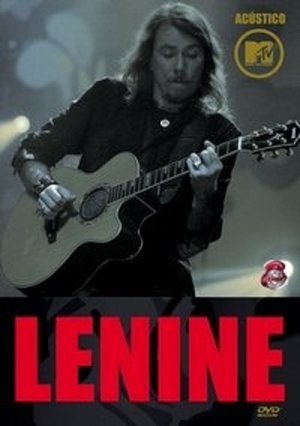
Recorded at Auditório Ibirapuera in Sao Paulo , on 24 and 25 June 2006 , the album features the biggest hits singer-songwriter Lenine's career such as "Paciência" (Patience), "Jack Soul Brasileiro" (Since I am Brazilian), "Na Pressão" (On The Pressure), "A Rede" (The Net), "Hoje Eu Quero Sair Só" (I Want Go Out Alone, Today) and "A Medida da Paixão" (The Measure of Passion), plus new songs like "Tudo Por Acaso" (All By Chance). The album features special participations from musicians such as the Chilean Victor Astorga (the first English horn soloist with the Brazilian Symphony Orchestra), Cameroonian bassist and singer Richard Bona, Mexican singer Julieta Venegas, harpist Cristina Braga, the rapper Gog, and drummer Iggor Cavalera (ex-member of Sepultura). The DVD includes bonus material, plus making-of scenes, reviews, testimonials about the project, the guests and also footage of the 2006 World Cup, since the performance was recorded concurrently with it.
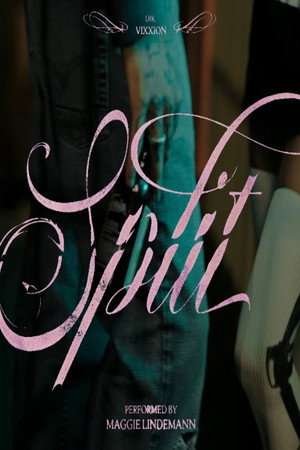
A young woman struggles to survive a relationship marked by emotional instability and manipulation. As the situation deteriorates, she realizes that the only way to save herself is to walk away and reclaim her identity.
This documentary explores the experience of love in young adulthood, contrasting the lessons learned through real relationships with the expectations from childhood (whether from parental portrayals or romanticized fairytales). Through stories of first love, heartbreak, and reflections on parental advice, we will delve into how these early encounters redefine what love truly means.
A detailed chronicle of the famous 1969 tour of the United States by the British rock band The Rolling Stones, which culminated with the disastrous and tragic concert held on December 6 at the Altamont Speedway Free Festival, an event of historical significance, as it marked the end of an era: the generation of peace and love suddenly became the generation of disillusionment.
Primary is a documentary film about the primary elections between John F. Kennedy and Hubert Humphrey in 1960. Primary is the first documentary to use light equipment in order to follow their subjects in a more intimate filmmaking style. This unconventional way of filming created a new look for documentary films where the camera’s lens was right in the middle of what ever drama was occurring. Preserved by the Academy Film Archive in partnership with The Film Foundation in 1998.
In this wildly entertaining vision of one of the twentieth century’s greatest artists, Bob Dylan is surrounded by teen fans, gets into heated philosophical jousts with journalists, and kicks back with fellow musicians Joan Baez, Donovan, and Alan Price.
A German Documentary about the “village of friendship” that was created by American Veteran George Mizo to help the Vietnamese kids suffering from the Vietnam War.
A silent amateur film with a runtime of 1 minute and 28 seconds (DCP from 9.5mm reversal, 16 fps), presented without intertitles. Preserved by Fondazione Home Movies – Archivio Nazionale del Film di Famiglia, Bologna, the film documents a game of tug-of-war on the beach at Lavagna during the summer of 1925. A group of young participants, dressed in bathing suits, engage in the activity while a dog observes from the sidelines. The footage is notable for its stable tripod-based composition and the use of horizontal camera movement to follow the action. At age 16, Lavello demonstrates early technical proficiency and an interest in capturing spontaneous social interaction. As noted by Michele Manzolini in the 2025 Pordenone Silent Film Festival catalogue, the film contributes to a broader visual record of leisure and informal play within early amateur cinema.
A silent amateur film with a runtime of 1 minute and 20 seconds (DCP from 9.5mm reversal, 16 fps), presented without intertitles. Preserved by Fondazione Home Movies – Archivio Nazionale del Film di Famiglia, Bologna, the film captures scenes of rowing and diving during the summer of 1925 in Lavagna. It forms part of a larger collection of 9.5mm films discovered in 2006 in the cellar of Villa Rocca by Lavello’s grandson, Enrico Vassallo, and donated to the archive in 2007. Restored in 2025 using a 2K wet scanning process to mitigate damage from fungal mould, the footage reflects the technical limitations of manual camera operation, including occasional acceleration due to uneven crank rotation. As noted by Michele Manzolini, the film contributes to a broader visual record of informal leisure and early amateur cinematography in interwar Italy.
Film by Franca Donda and Josefina Jordán.
A silent amateur 9.5mm reversal film presented without intertitles. Preserved by Fondazione Home Movies – Archivio Nazionale del Film di Famiglia, Bologna, the film documents a short cruise aboard the ocean liner Rex, departing Genoa on 17 April 1934 and arriving in Naples the following morning. Organised by Genoa’s Company Recreation Club, the voyage served as a preparatory run before the Rex’s transatlantic crossings. The footage includes scenes of the ship and its passengers, with Ludovico Maria Chierici and his son Enrico alternating use of the 9.5mm camera. As Paolo Simoni notes in the 2025 Pordenone Silent Film Festival catalogue, the Rex—a symbol of Fascist Italy and maritime ambition—was later immortalised in Fellini’s Amarcord, despite never having sailed the Adriatic.
The story of Jack Unterweger, one of the most disturbing serial killers in the German-speaking world narrated from the point of view of his ex-girlfriend Bianca Mrak.
Film by Franca Donda and Josefina Jordán for the feminist collective Grupo Miércoles.
Film by Franca Donda about the Feminist icon Argelia Laya.
Film by Franca Donda, about Eumelia Hernández.
Film by Franca Donda about Inés María Marcano.
When Bosnian-Serb forces began shelling Sarajevo in 1992, an officer of the Bosnian-Herzegovinian army made an appeal to all inhabitants of the city with video cameras to "start filming, because their material would definitely influence events." Whether prompted by this call or not, many of those who possessed a camera attempted to capture the atmosphere of the besieged city, resulting in this extraordinary film. At once engaging, horrifying and funny, these "home movies" provide a stark testimony of the courageous spirit of a people under siege, trying to live "normal" lives against all odds.
An experimental Super 8 short that confronts the paradox of resistance within an unyielding system. Filmed during the 2022 anti-TERF protest in New York, its flickering, grainy images capture bodies and voices pushing against an invisible force. Over these visuals, a reading of Andrea Dworkin’s The Great Punctuation Typography Struggle reflects on language as both weapon and cage—who wields it, who submits to it, who is silenced by it. Chants of “TERFs go home!” and “Trans women are women!” pulse through the soundscape, urgent yet bound by the weight of systemic resistance. The film becomes more than a document of protest—it’s an inquiry into how struggles for liberation can, at times, mirror the structures they resist, lingering in the tension between defiance and entrapment, permanence and change.