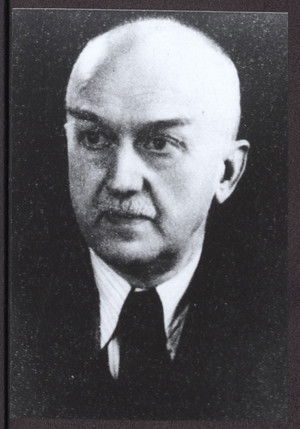
Documentary about the renowned Estonian pedagogue and educational reformer Johannes Käis. Made on commission for Estonian Ministry of Education.
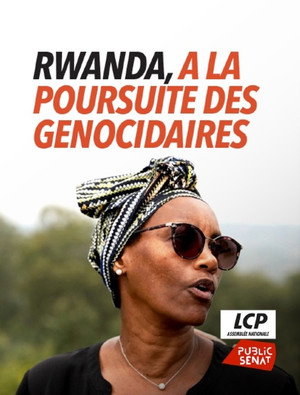
Rwanda, à la poursuite des génocidaires
Welcome to the largest human gathering ever in this one-hour special, World’s Biggest Festival: Kumbh Mela. Imagine a crowd so massive, it is visible from space. A crowd, likely 100 million strong, intent on just one thing: bathing in a sacred river to wash away sins and gain a chance at a new beginning. In the World’s Biggest Festival: Kumbh Mela, experience the dazzling spectacle of spiritual fervour and collective diversity as Hindus from across the globe converge on the Maha Kumbh Mela. Not only is it the world’s largest religious festival, but it is also believed to be the largest gathering of humans in one place, at one time on Earth.
The mountains of Oaxaca harbor the remains of a ravaged and burnt shelter, once home to a psychoanalyst priest who used it to look after savage children, trying to re-integrate them into society. Through videotape diaries and interviews, the truth of what happened is shockingly revealed.
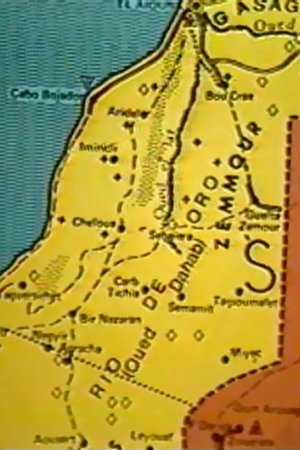
The political upheaval in North Africa is responsibility of the Western powers —especially of the United States and France— due to the exercise of a foreign policy based on practical and economic interests instead of ethical and theoretical principles, essential for their international politic strategies, which have generated a great instability that causes chaos and violence, as occurs in Western Sahara, the last African colony according to the UN, a region on the brink of war.
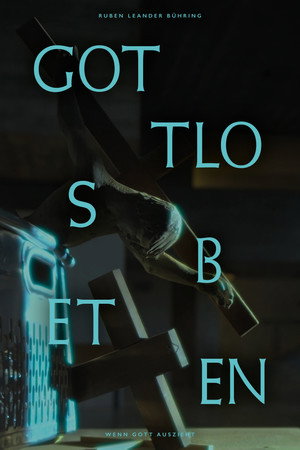
In a small chapel in Zug, Switzerland, a legend tells of a hidden treasure. There is only one rule: remain silent, and in time, the treasure will be yours. But the moment the silence is broken, it is lost forever. What if the treasure was never gold or jewels, but the chapel itself—a place where silence is still possible? Perhaps we have forgotten how to remain silent, and with that, we risk losing one of the last places that still allows it. Gottlos Beten follows the decline of a sacred place.
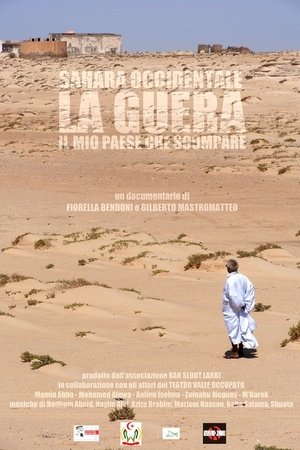
Mohamed lives in Nouadhibou, in Mauritania. But he can always see the ghost of his former town in front of his eyes. Aalien, the postman, fled to refugee camps in Tindouf, Algeria. But he's still thinking about the houses and the streets where he used to deliver letters. Zeinabu, in Tenerife, looks at the Ocean from her terrace. She looks in the direction of La Güera, her town that no longer exists. The stories of the inhabitants of a "ghost town", located on the border between Mauritania and the Sahrawi Arab Democratic Republic (Sadr). The destiny of a forgotten land hidden under the sand. "La Güera, my forgotten land" is a 29 minutes documentary, which tells the story of this city and, through it, the story of a whole people.
Mektub portrays a day in the life in the Sahrawi refugee camps, along with the declarations of some of its protagonists. But behind this seemingly calm life hides a common fight, which is to continue fighting and protesting to accomplish the single common goal that all Sahrawis have as a nation: to take back the occupied land, rebuild their country, and reunite with their families.
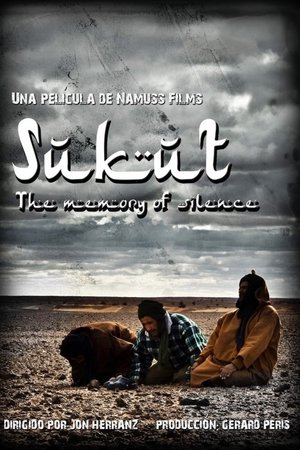
In the refugee camps of Tindouf, for more than 30 years the Sahrawi people is waiting to get the goal that forced them to exile: to return to their land free from any foreign domination. Sukut collects the testimonies of life of elderly Sahrawi with three objectives: to preserve the historical memory of this people, that have basically an oral tradition, show the human aspects of some experiences and data too much objectified, and especially, give the word to those who have been silenced too long ago.
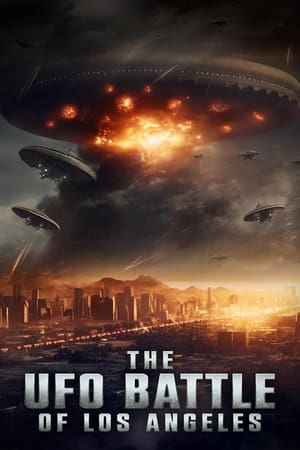
On the night of February 24-25, 1942, amid terror and neurosis caused by the terrible Pearl Harbor attack only two months earlier, a huge flying object of unknown origin appears in the sky over Los Angeles. The military reacts by imposing a total blackout in the area and firing more than 1440 artillery rounds. However, despite the firepower, no object was shot down. We will try to understand what actually happened and who or what flew over the skies of Los Angeles that night of February 24, 1942.
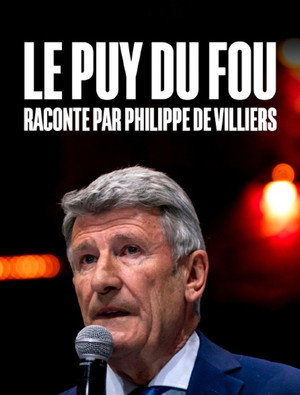
Le Puy du Fou raconté par Philippe de Villiers
A short film, featuring windows.
A man confronts the trauma of past sexual abuse as a boy by a Catholic priest only to find his decision shatters his relationships with his family, community and faith.
American academic Norman Finkelstein discusses foreign policy toward Israel and the Middle East.
We often have ideas of religious life... either kneeling in a convent or out in the streets assisting the poor. While both of these scenes are essential to the life as a sister, Light of Love takes a deeper look into understanding the call... the "why" of religious life. By interviewing five sisters from five orders across the United States, the film places viewers face to face in intimate conversations with these amazing women. What does it mean to be called? What are the struggles of religious life? How have you seen God move through your ministry? These questions and others are addressed throughout the film. The film itself is very simple: 60 minutes designed for viewers to quiet their surroundings and enter into convent, the food pantry, the hospital, and the chapel. With minimal music and simple visuals, Light of Love gives viewers a look into the lives, suffering, and joys of religious life captured in a way like never before.
A historical analysis of the on-going war in the Western Sahara. Liza Bear interviews Abdullah Majdid, the Polisario Front's United Nations representative. The tape addresses Morocco's U.S.-backed military effort to subjugate the indigenous Sahrawi population and annex one of the world's largest phosphate deposits, as well as the Sahrawis' conditions for a referendum.
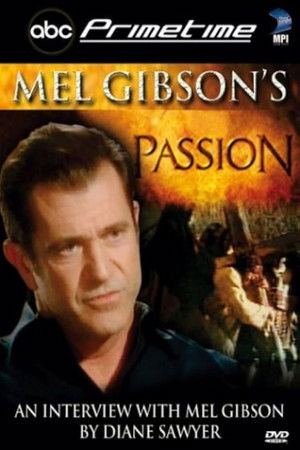
In this special edition of Primetime, ABC News' Diane Sawyer interviews filmmaker Mel Gibson about his highly controversial movie, ""The Passion of the Christ."" He responds to charges that the movie's portrayal of the Jewish role in the death of Christ will encourage anti-Semitism. He also elaborates on comments he's made about the Holocaust. In addition, Gibson tells why he felt it necessary to exhibit such a graphic depiction of Christ's crucifixion on film and discusses his decision to tell the story in Aramaic and Latin.
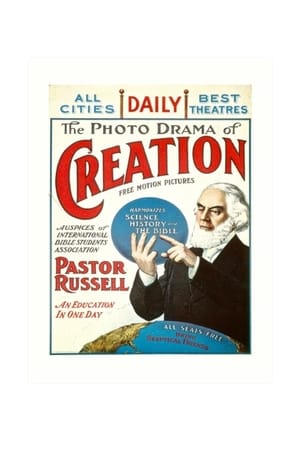
The film presents the Bible's account of God's plan from the creation of the earth through to the end of the 1,000 year reign of Christ.
The nuns of the Anglican Benedictine Community at St. Mary's Abbey, West Malling, reflect on their calling and the joys and challenges of their way of life. In this short documentary, directed by Jamie Hughes, the nuns' voices are complemented by images from the life of the Abbey.
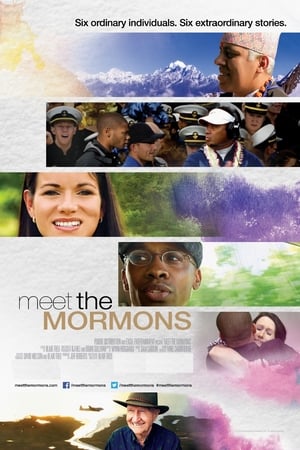
Meet the Mormons examines the very diverse lives of six devout Mormons. Filmed on location and across the globe, Meet the Mormons takes viewers on a journey into the day-to-day realities of individuals living in the U.S., Costa Rica, Nepal and beyond. From their individual passions to their daily struggles, each story paints a picture as rich and unique as the next while challenging the stereotypes that surround the Mormon faith.