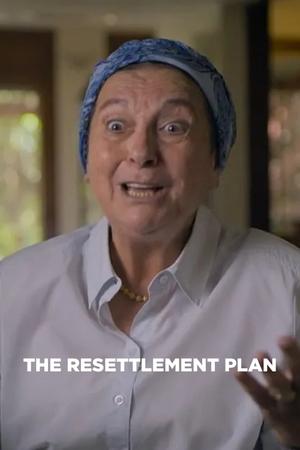
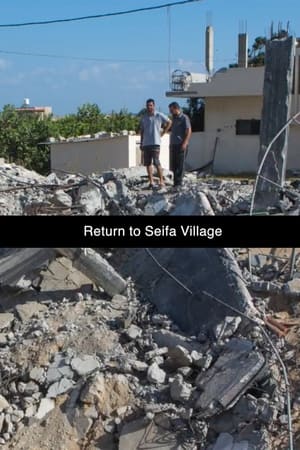
14 years after his first visit, Louis Theroux meets some of the growing community of religious-nationalist Israelis who have settled in the occupied West Bank.
Amid the ruins of northern Gaza, Ibrahim clings to the only companion he has left: Farfour, a stray cat he adopted during the war. Farfour has become more than just a pet for Ibrahim. He has turned into his shadow, his confidant, his last connection to humanity. Together, Ibrahim and Farfour navigate a collapsing world, enduring a relentless siege while living in an unsafe building, with no water and electricity. As the war tightens its grip, Ibrahim must flee.
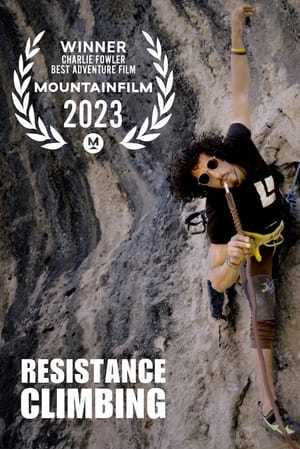
In 2014, during a trip, American Tim Bruns discovered cliffs in a small village five minutes north of Ramallah in Palestine and got to work equipping all the easy routes, then setting up climbing routes so that we can start teaching people how to climb. Bruns and Harris also opened Wadi Climbing, the first indoor climbing gym in Palestine. Today, gathered in the conflict-torn hills of Palestine, a diverse team of Bedouins, activists and urban professionals have embraced climbing as a much-needed respite from the burden of Israeli occupation. American writer and climber Andrew Bisharat visits the West Bank to explore his own roots and the power of climbing to transform lives. This documentary is part of the Reel Rock 17 series released in 2023.
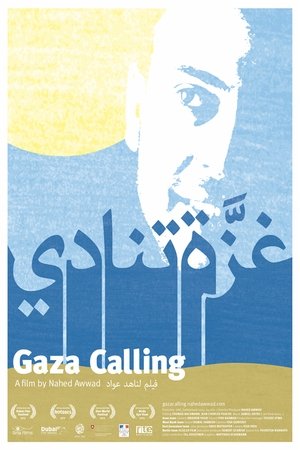
A travelogue in the Gaza strip.
Elementary Genocide is a documentary executive produced by award winning journalist/filmmaker Rahiem Shabazz. The documentary appeals to a wide general viewership by addressing the social, cultural, political and personal ramifications of how the federal government allots money to each state, to build prions based on the failure rate of 4th and 5th graders. In America, where half of the 4th grade is reading below grade level and more African-American males are in jail than are in college, Elementary Genocide serves as a striking reminder of a flawed system in need of repair.
Rahiem Shabazz continues the conscience-raising dialogue generated by his acclaimed documentary Elementary Genocide: The School To Prison Pipeline with his equally hard-hitting Elementary Genocide 2: The Board of Education vs The Board of Incarceration. The Board of Education vs The Board of Incarceration uncovers the true purpose of today’s educational system and how it’s failing the African child. Going beyond the school-to-prison pipeline headlines and conspiracy theories, The Board of Education Vs. The Board of Incarceration proves that something sinister is afloat by digging deep to explore its origin, its existence and how to plot its destruction to save every Black child.
World renowned journalist, and award-winning filmmaker Rahiem Shabazz presents the third installment of his docu-series Elementary Genocide: Academic Holocaust. The first two documentaries in the series; The School To Prison Pipeline and Elementary Genocide 2: The Board Of Education vs. The Board of Incarceration received critical acclaim and launched Shabazz as a political pundit and academic ambassador for the African American community. Elementary Genocide: Academic Holocaust adds more statistical proof of the scholastic inequalities faced by Original people around the country. The documentary revisits the importance of education and its impact on self-image, family structure, financial freedom, and the collective future of African/indigenous people in America and abroad.
Gaza Ghetto: Portrait of a Family, 1948 – 1984 is a documentary film about the life of a Palestinian family living in the Jabalia refugee camp. The film, created by Joan Mandell, Pea Holmquist, and Pierre Bjorklund in 1984 is believed to be the first documentary ever made in Gaza. The film features Ariel Sharon, Binyamin Ben-Eliezer and soldiers on patrol "candidly discuss[ing] their responsibilities." The film follows a refugee family from the Gaza Strip who visit the site of their former village, now a Jewish town in Israel. As the grandfather and great-grandfather point out an orchard and sycamore fig that belonged to Muhammed Ayyub and Uncle Khalil, an Israeli resident appears and tells them to leave, claiming they need a permit to be there. The mother tells him that, "We work in Jaffa and Tel Aviv and that's not forbidden," to which he replies, "Here it's forbidden."
Documentary on water usage, money, politics, the transformation of nature, and the growth of the American west, shown on PBS as a four-part miniseries.
Breaking Ranks: Inside Israel’s War presents the first-hand recollections of IDF soldiers who have broken official silence to share their experiences of the war in Gaza - accounts that may raise serious questions about conduct on the ground and potential breaches of international law. Directed by award-winning filmmaker Ben Zand, the film features exclusive interviews with Israel Defense Forces (IDF), reservists and veterans - many speaking for the first time - who served during the war in Gaza. Their testimonies describe what they recall as indiscriminate bombardment, instances where Palestinian civilians were used as human shields, and an operational culture that some soldiers characterised as “no innocents in Gaza.”
Free Fish is a short documentary filmed over the course of a year in Gaza, following two brothers — Abu Nagham and Ahmad — separated by war yet connected by the sea. Displaced from their home, Abu Nagham now lives in a tent in the south, fishing with his young nephew Rami, who lost his twin brother. Ahmad remains in the north, fishing amid ruins and occupation. Once a source of livelihood and freedom, the sea has become a battleground — heavily restricted, constantly watched, and always dangerous. Through intimate footage and poetic observation, the film captures the everyday courage required to cast a net, mend a line, or share a meal. Fishing becomes an act of survival, resistance, and hope. Co-directed by Bisan Owda (Peabody Award 2024) and Carolina Pereira, Free Fish offers a deeply personal and universal story of resilience in the face of erasure — a quiet tribute to a people who refuse to be forgotten.
This feature length investigation by Al Jazeera’s Investigative Unit exposes Israeli war crimes in the Gaza Strip through the medium of photos and videos posted online by Israeli soldiers themselves during the year long conflict. The I-Unit has built up a database of thousands of videos, photos and social media posts. Where possible it has identified the posters and those who appear. The material reveals a range of illegal activities, from wanton destruction and looting to the demolition of entire neighbourhoods and murder. The film also tells the story of the war through the eyes of Palestinian journalists, human rights workers and ordinary residents of the Gaza Strip. And it exposes the complicity of Western governments – in particular the use of RAF Akrotiri in Cyprus as a base for British surveillance flights over Gaza.
Everyone was surprised at the triumph of Hamas in the last Palestinian elelctions, but the bigger surprise was that the women were behind that victory. We follow three Hamas women to try and understand why an Islamist political party, operating in a very conservative society, allows its women to become political, social and even military leaders.
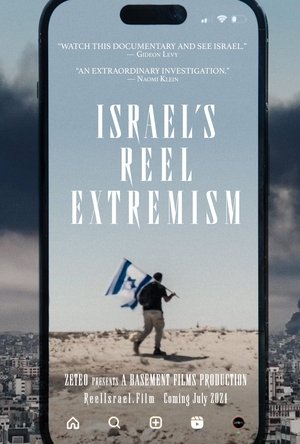
An examination of Israel and its society after many months of war, seen initially through the prism of viral social media posts - and exclusive interviews with the soldiers behind them. These posts, some shared millions of times, show soldiers humiliating bound Palestinians, ransacking their homes, joking as they detonate schools and whole districts, and laughing as they launch high explosive ordnance into densely-packed areas. The award-winning team behind this Basement Films production traveled to Israel to interview some of these soldiers, who proudly defended themselves and their videos, some expressing callous disregard for Palestinians in Gaza. Through additional interviews with Israeli radical groups, politicians, and media figures, the film reveals Israeli Jewish society in the aftermath of October 7th, gripped by a vengeance and hate that puts into question any possibility for peace.
This deeply affecting documentary follows a small number of Israelis and Gazans through the most dramatic and tragic year of their lives. Using personal and previously unseen footage, it tells the story of the war in Gaza and the October 7 attacks through deeply emotional stories from both sides of the conflict. In Gaza, the film follows three individuals from reaction to the October 7th attacks to the start of the bombing by the Israeli military and to the loss of family members that all three suffer. In Israel, we witness footage of the Israeli characters, as they and their family members are attacked by Hamas on October 7th and then follow their stories through the year.
Gaza Souvenirs
Gaza Fights for Freedom depicts the ongoing Great March of Return protests in the Gaza Strip, occupied Palestine, that began in 2018.
MILWAUKEE 53206 chronicles the lives of those living in the ZIP code that incarcerates the highest percentage of black men in America, up to 62%. Through the intimate stories of three 53206 residents, we witness the high toll that mass incarceration takes on individuals and families that make up the community. The film examines Milwaukee’s ZIP code 53206 to illuminate the story of people from across the United States who live with the daily affects of mass incarceration.
This film from Bill Moyers is the first documentary to focus exclusively on people formerly detained in New York City’s notorious Rikers Island Jail. They tell their compelling stories direct to the camera, revealing the violent arc of the Rikers experience – from the trauma of entry to extortion and control by inmates, to oppressive corrections officers, violence and solitary confinement.
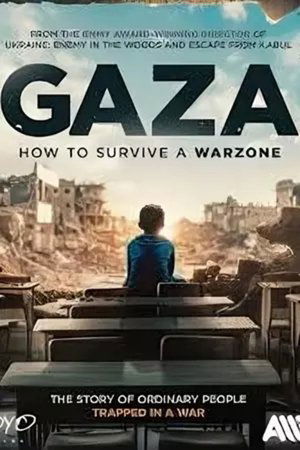
Follow the lives of four young people trying to survive the Israel-Hamas war as they hope for a ceasefire - a vivid and unflinching view of life in a warzone.