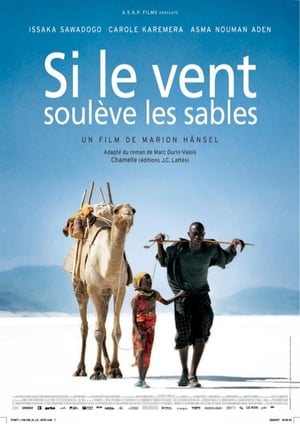
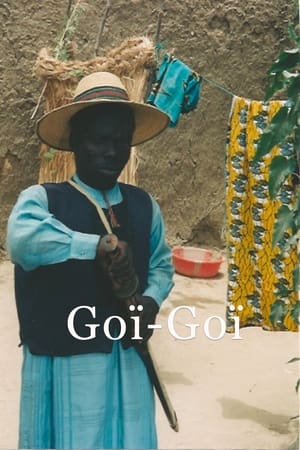
On the one hand, there’s the desert eating away at the land. The endless dry season, the lack of water. On the other there’s the threat of war. The village well has run dry. The livestock is dying. Trusting their instinct, most of the villagers leave and head south. Rahne, the only literate one, decides to head east with his three children and Mouna, his wife. A few sheep, some goats, and Chamelle, a dromedary, are their only riches. A tale of exodus, quest, hope and fatality.
Dida Ibsen, daughter of impoverished farmers, has, according to her father's will, to marry the main creditor. But she refuses and decides to live with a married man as a mistress, till he gets his divorce. In the town she opens a restaurant with the money of her wealthy lover, from whom she soon gets pregnant, but their dreams of marriage fail, his wife refuses the divorce. After a while, she decides to marry one of the regular guests at her restaurant, van Galen, who spent quite some time in the tropics and because of this is at the brink of madness. Shortly after the marriage his condition worsens and life becomes hell for Dida.
In 1911, a willful and determined man from peasant stock named Charles Saganne enlists in the military and is assigned to the Sahara Desert under the aristocratic Colonel Dubreuilh.
Writer Harry Street reflects on his life as he lies dying from an infection while on safari in the shadow of Mount Kilimanjaro.
In West Africa, Colombine runs a dispensary in risky bushland. A strong-willed, whiskey-drinking religious woman armed with her rifle, she takes care of sick and orphaned children in the region. She sees Mélia arrive, a somewhat imprisoned Parisian MSF doctor, herself an African orphan, but who has never returned to her homeland since childhood. She discovers bush medicine, its difficulties and the dilemmas that caregivers must face in the face of chronic shortages of equipment and medicines. These two courageous but opposite women form an unlikely team. They will have to learn to overcome their barriers and confess their secrets to protect the dispensary and the children from the dangers of the region and a threat that surpasses them.
Ali is the image of modern Africa. He happily returns from a football match on his motorbike but a nasty surprise is waiting for him at his parents' home: he finds Haoua, his bride-to-be, waiting for him. The wedding is celebrated shortly afterwards and the two begin living together under the same roof. They are strangers but cannot stand each other. Haoua is the classic traditional woman who has just arrived from the village, God-fearing and faithful to the laws of tradition. Ali's friends advise him to look for a second wife. He meets Henriette, an uninhibited and provocative city girl, the woman of his dreams. To meet Henriette's constant requests, Ali 'borrows' some money from the coffers of commander Soleymane, but he is discovered and ends up in prison. Henriette is furious and leaves him, whilst Haoua cries for him in despair.
The story of Quincy Bosomfield who is the product of colonial education and has risen to become the district commissioner. In the process, he abandons his African heritage and all that has real meaning to him.
Tourneur, a self-proclaimed cinéaste, feuds with Cinema and his gang, who are obsessed with foreign action movies.
Asked by his girlfriend about the essence of his love for her, a young man remembers a dream he once had about the African jungle, in which the forces of nature seemed to lead a life of their own.
A city with its problems. A gang of abandoned children provide for themselves and pose as heroes. The police are on their backs day and night. They are enterprising, energetic, and full of fresh vitality. Despite the fact they are rejected by their parents and ignored by the world, they form among themselves a powerful example of solidarity. Ablakon is something of a different order. He is an adult delinquent and a swindler. Posing as a businessman, he has deceived a countless number of people. When he and his accomplice return to the village, his extravagant behaviour is mistaken for a sign of success. Following his example many young people leave for the city. But they will soon understand their mistake...
An African mother will do just about anything to protect her child. Bilaly is a simple peasant who is blind. He wants to “know” a woman before he dies, but try as his mother might, she cannot find someone to oblige. She finally gets an idea – an idea that completely stuns the village.
Life in the African country of Mali in the 1990s is vividly highlighted in this mild drama. In the story, a young forest ranger who sees that his work holds the key to the future of his country (through reforestation) is disgusted at the short-sighted, money-grubbing ways of his superiors. He has a much better relationship with local villagers than with his agency's bosses. As the movie opens, the villagers are preparing to hold a hunting ceremony but are not sure whether they will do it the old fashioned way, with a bonfire, or will obey a government decree that open fires are too dangerous. There is a lot of sexual teasing between the villagers, including some harmless horseplay. For instance, when a man whispers another woman's name in his sleep, his wife pours water into his ear in revenge.
A young Ivorian man travels to Paris in search of his white wife and their daughter, after she has returned to France. His journey through the city becomes an account of a mixed marriage and the social tensions surrounding it. The film, Désiré Ecaré's feature debut, unfolds as a satirical comedy set to a score by Memphis Slim.
Young Africans in Paris face insecurity and vague future. Should they stay in France, or return to their homes?
At a festival, a chorus of women sing and dance as two stories unfold. In a village, a young women with a jealous husband gives him something to be jealous about when his younger brother visits from the city.
A West African pig farmer has a religious vision, wherein he is told that he'll be Magloire the First, a prophet of Christ. He then sets out to rid his local villagers of superstition and instead save them for Jesus.
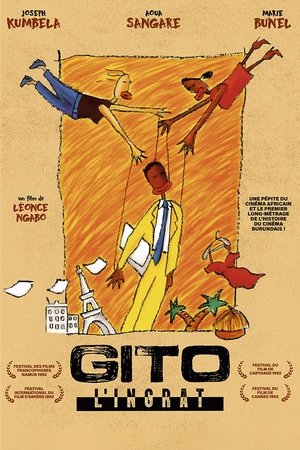
Back home in Bujumbura with a Parisian diploma in his pocket and expecting to walk into a civil service job, Gito finds himself both unemployed and caught between two women: his current French girlfriend Christine and his local old flame Flora.
Based on a traditional African tale. A king has the habit whilst walking in disguise on the streets of his kingdom to listen to the wishes of his own people. One day he overhears two brothers daydreaming out loud about marrying the king's daughters, even if that meant being beheaded one year later. The weddings take place and one of the brother is decapitated one year later. The other one escapes execution at his wife's insistence. On a long journey full of surprising incidents, our hero himself becomes king of a village with wives and subjects. However, his earlier promise haunts him, and in order to save his family he accepts to be sacrificed.
A sorcerer (played by the director himself) controls all activities in a village. Manipulating the different parties, the sorcerer promises love, good health and riches in exchange for the most extravagant rewards. One day someone exposes him, and the sorcerer becomes the laughing stock of the whole village. Desperate, he throws himself of a cliff.
A dissolute man whose wife cheats on him seeks revenge to preserve his honor.