On the island of Amorgos, during summer. Small monuments were erected at the scene of a fatal accident: a photograph, a few words, flowers, religious or pagan objects. The deceased "stayed there": dead in transit, on a road, frozen forever.
The Happy Island looks at the work of the London Missionary Society on Gemo (now Hanudamua) Island in Port Moresby harbour, Papua New Guinea, which from 1937-1974 treated people who suffered from infectious diseases, mainly leprosy and tuberculosis. The film offers insight into the attitudes and practices of Christian missionaries of that time. Despite the colonial paternalism that underpins the Missionary Society’s model of care, the film tells the story of a happy, active community, as it follows the lives of the patients, their families and the dedicated staff, all of whom live, work and socialise on the island together.
Combining archival photos with new and found footage, this short film presents a personal, impressionistic rendering of what it's like growing up Mi'kmaq in Newfoundland, while living in a culture of denial. Vistas is a series of 13 short films on nationhood from 13 Indigenous filmmakers from Halifax to Vancouver. It was a collaborative project between the NFB and APTN to bring Indigenous perspectives and stories to an international audience.
This short documentary includes three vignettes about life off the coast of Newfoundland. In Island of Birds, we visit Green Island, a sea bird sanctuary where puffins frolic. In Caplin Harvest, little silvery fish called caplin spawn by washing ashore along the waves, making an easy catch for fishermen. In Outports on the Move, off-shore houses are pried loose from their foundation and floated to the Newfoundland mainland, where schools, hospitals, stores and services are available to the community.
Why Walk When You Can Fly? The Movie
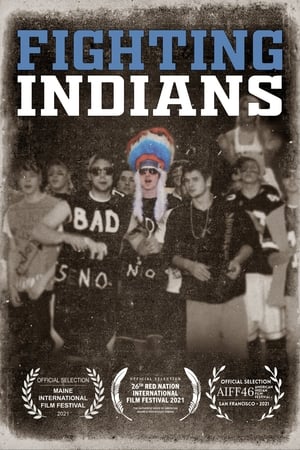
Despite dwindling interest and a two-decade-long losing record, a determined coach and group of young athletes fight to keep their football program alive.
Papa, raconte-moi mon père
Dancing Around the Table: Part One provides a fascinating look at the crucial role Indigenous people played in shaping the Canadian Constitution. The 1984 Federal Provincial Conference of First Ministers on Aboriginal Constitutional Matters was a tumultuous and antagonistic process that pitted Prime Minister Pierre Elliot Trudeau and the First Ministers—who refused to include Indigenous inherent rights to self-government in the Constitution—against First Nations, Inuit and Métis leaders, who would not back down from this historic opportunity to enshrine Indigenous rights. The conference was Pierre Elliott Trudeau’s last constitutional meeting before he resigned and the process was handed over to his successor, Brian Mulroney.
It's death on an unimaginable scale, when a majority of Earth's species quickly die out. It's called "mass extinction," and it's happened at least five times before. Cataclysms, such as supervolcanoes or asteroids, are thought to cause these events, but some experts believe a manmade mass extinction could be next. Is our planet in trouble? And if so, is there anything we can do to stop the next catastrophic annihilation? Experts are traveling the world, performing groundbreaking scientific detective work to answer these very questions.
SEX AND BROADCASTING is a feature length documentary about New Jersey's WFMU, the world's strangest and most unique radio station, and one man's attempt to keep it alive in the face of recession, the persistent threat of commercial media, and the challenges that come with keeping a rebellious group of outsiders together.
With no Forest left to hunt and no land to cultivate, the Maby-Guarani depend on the sale of their handcraft to survive. Three young Guarani filmmakers accompany the daily life of two comunities united by the same history, since the first contact with the Europeans until the intense coexistence with today’s White people.
"Celso: a portrait, a place" is a documentary that emerges from a year of sporadic visits by the documentary filmmaker (until then a convinced agnostic) to the Capuchin complex, a block that is, among other things, a place to preserve the memory of the Capuchin friars in the Serra Gaúcha, southern Brazil. The daily life of the space and the ramblings of the charismatic friar and artist Celso Bordignon are interspersed in an attempt to contemplate aspects of religious life, art, and the awareness of the nuances of the action of time on matter, body and spirit.
This documentary takes an in-depth look at the witch hunts that swept Europe just a few hundred years ago. False accusations and trials led to massive torture and burnings at the stake and ultimately to the destruction of an organic way of life. The film questions whether the widespread violence against women and the neglect of our environment today can be traced back to those times.
For the first time, survivors talk about life after the camps. How does one return to a life that was interrupted with such violence? How does one reconstruct oneself when all or most of one’s family were butchered? How does one resume studies and earn a living in a society that had cast you out a few years earlier?
Ice (Baraf) is essential to almost every step of the fishing supply chain at Sassoon Docks, Mumbai's largest fish market, and this short documentary takes you through a day in the life of the workers responsible for it.
A retired teacher’s journey living with essential tremor becomes a poetic meditation on identity, aging, and the quiet power of human connection.
Using his failed attempts at creating profitable stock footage, a filmmaker reflects on the absurd, mundane and funny side of being trapped inside your own head as an out of work, self-employed freelancer.
Before the creation of the secret cities of Los Alamos, Oak Ridge and Hanford, the Manhattan Project hired the Mallinckrodt Chemical Works of St. Louis to refine the first uranium used in the atomic bomb dropped on Hiroshima. For the next two decades, Mallinckrodt continued its classified work for the Atomic Energy Commission during the Cold War. The resulting radioactive waste contaminated numerous locations in the St. Louis area some of which have not been cleaned up 70 years after the end of World War II. Told through the eyes of an overexposed worker, the story expands through a series of interviews that careen down a toxic pathway leading to a fiery terminus at a smoldering, radioactively-contaminated landfill. The First Secret City reveals a forgotten history and its continuing impact on the community in the 21st Century, uncovering past wrongdoing and documenting the renewed struggles to confront the issue.
Authors, teachers, social activists and feminists explore manifestations of contemporary women's spirituality in the Western world.
Your Ecstatic Self is a conversation unfolding in a car with Sajid, the artist’s brother. As the journey progresses Sajid discusses his engagement with the philosophy and practice of Tantra, having spent the majority of his 44 years as a strict Sunni Pakistani Muslim. Placing the idiosyncrasies of western fetishism towards eastern philosophical traditions alongside cultural orthodoxies and ancestral knowledge, Your Ecstatic Self takes up multifaceted expressions of desire, intimacy and sexual agency.