Afonya Borshev is a plumber who drinks a lot, flirts a lot and doesn't care too much about tomorrow. His wife left him, his boss placed him on probation, his whole life is falling apart, but he doesn't realize it. When Afonya met Katya at a dance club he didn't pay her much attention, yet she may be the only one who can help him.
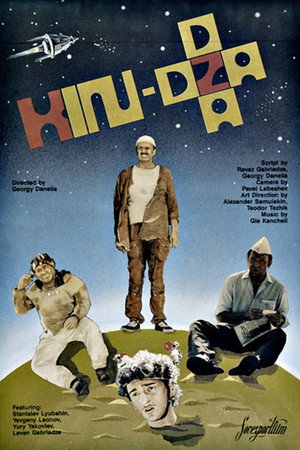
Two Soviet humans previously unknown to each other are transported to the planet Pluke in the Kin-dza-dza galaxy due to a chance encounter with an alien teleportation device. They must come to grips with a language barrier and Plukian social norms (not to mention the laws of space and time) if they ever hope to return to Earth.
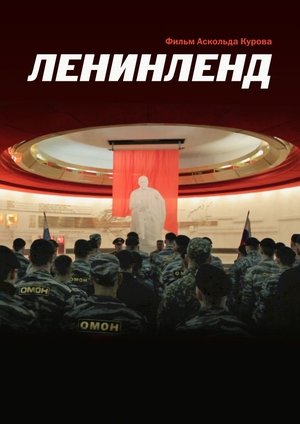
At the peak of Perestroika, in 1987, in the village of Gorki, where Lenin spent his last years, after a long construction, the last and most grandiose museum of the Leader was opened. Soon after the opening, the ideology changed, and the flow of pilgrims gradually dried up. Despite this, the museum still works and the management is looking for ways to attract visitors. Faithful to the Lenin keepers of the museum as they can resist the onset of commercialization. The film tells about the modern life of this amazing museum-reserve and its employees.
Docu-drama surrounding the events leading to the Soviet Union's invasion of Czechoslovakia in 1968.
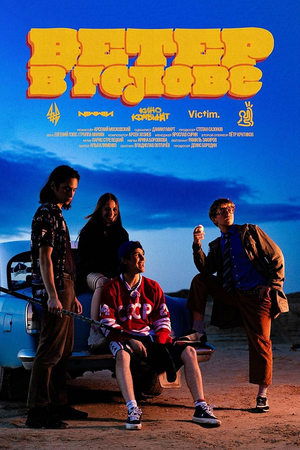
The hippie movement that captivated hundreds of thousands of young people in the West had a profound impact on the other side of the Iron Curtain. Within the Soviet system, a colorful crowd of artists, musicians, freaks, vagabonds and other long-haired drop-outs created their own system, which connected those who believed in peace, love, and freedom for their bodies and souls. More than 40 years later, a group of eccentric hippies from Estonia take a road trip to Moscow where the hippies still gather annually on the 1st of June for celebration that is related to the tragic event in 1971, when thousands of Soviet hippies were arrested by the KGB. The journey through time and dimensions goes deep into the psychedelic underground world in which these people strived for freedom.
The documentary tells two very different human fates in the 1920s Soviet Union. Nikolai Vavilov was a botanical genius, Trofim Lyssenko was an agronomist who made great promises and fake inventions. Each of them tried to solve the country's nutritional problem, but only one succeeded.
A story to honor actor-singer-activist Paul Robeson and his contributions to today's social climate and inspire new generations to engage in the ongoing fight for justice and equality.
Wes Hurley's autobiographical tale of growing up gay in Soviet Union Russia, only to escape with his mother, a mail order bride, to Seattle to face a whole new oppression in his new Christian fundamentalist American dad.
With the good of the people in mind, Valery Legasov, a Soviet scientist called to the scene of the Chernobyl nuclear disaster, stands up to censorship behind the Iron Curtain.
In the new film, TNT will again rethink its favorite plot in its signature style and show many stars in the most unexpected images. There will be jokes on current topics and musical numbers that will be organically woven into the narrative.
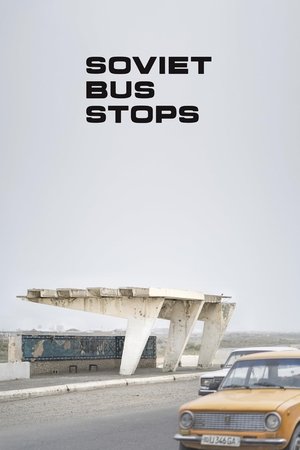
“There’s a bus stop I want to photograph.” This may sound like a parody of an esoteric festival film, but Canadian Christopher Herwig’s photography project is entirely in earnest, and likely you will be won over by his passion for this unusual subject within the first five minutes. Soviet architecture of the 1960s and 70s was by and large utilitarian, regimented, and mass-produced. Yet the bus stops Herwig discovers on his journeys criss-crossing the vast former Soviet Bloc are something else entirely: whimsical, eccentric, flamboyantly artistic, audacious, colourful. They speak of individualism and locality, concepts anathema to the Communist doctrine. Herwig wants to know how this came to pass and tracks down some of the original unsung designers, but above all he wants to capture these exceptional roadside way stations on film before they disappear.
"Trotsky and Mexico, two revolutions of the twentieth century" tells us of the famous Russian revolutionary asylum by President Lazaro Cardenas in Mexico.
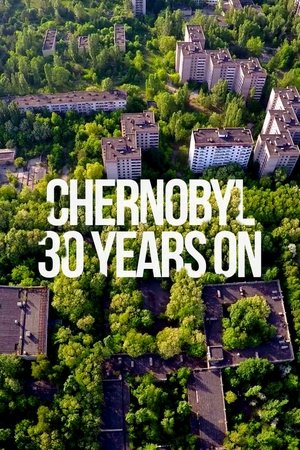
Three decades after the nuclear explosion, almost everything has been said about this ecological and sanitary disaster that made Pripiat a part of History. How did the greatest industrial disaster change the course of History, disrupt global geopolitics and, directly or indirectly, redistribute the balances and power relations of the twentieth century? The world will never be the same again. By retracing the incredible battle waged by the Soviet Union against radiation, this film proposes to retrace and enlighten an extraordinary story, while exploring the historical stakes in the medium and long-term…
A small band of multicultural convicts stages a daring escape from a WWII-era Siberian gulag, and embarks on a treacherous journey across five countries in a desperate race for freedom and survival.
Lithuania, 1941, during World War II. Hundreds of thousands of texts on Jewish culture, stolen by the Germans, are gathered in Vilnius to be classified, either to be stored or to be destroyed. A group of Jewish scholars and writers, commissioned by the invaders to carry out the sorting operations, but reluctant to collaborate and determined to save their legacy, hide many books in the ghetto where they are confined. This is the epic story of the Paper Brigade.
Anatoli Kuzmich retired and received a separate apartment in a new house. He and his wife are happy and make bright plans for the future: how they will go to theaters, museums, read their favorite books. But their daughter Lyusya suddenly gets married. Not wanting to part with her, Korolyovs persuade the young spouses to live with them in a new apartment. Soon a child is born, and gradually life together becomes unbearable...
The Moscow Case is a 52 minute documentary with never-before-seen footage of Michael Jackson in Moscow during the "Dangerous" tour. This film tells the behind the scenes story of Jackson's ill fated concert in September 1993. It includes unique archival footage showing Michael close up and personal while meeting fans and playing with orphan children.
In this short film directed in the style of Andrei Tarkovsky, eternity and the downfall of the Soviet empire are explored in a deeply symbolic and poetic way. The film follows a protagonist as they traverse a desolate landscape, reflecting on the transient nature of life and the inevitability of death. Through a series of dreamlike sequences, the audience is presented with a powerful meditation on the idea of eternity, and how it can be seen in the rise and fall of empires. The film culminates in a powerful scene of the protagonist standing atop a hill, looking out at the ruins of the Soviet empire, and contemplating the eternal cycle of life and death.
A Soviet cruise ship "Evgeni Onegin" is carrying cages with tigers and lions for a Soviet Circus. One loose monkey unlocks all cages, letting the tigers and lions out. Poor passengers and crew have no place to run. The captain abandons his post out of fear, and the monkey takes over the captain's post. The ship gets under total control by the tigers and lions. Only one lady is standing up to the challenge. Her name is Marianna, she loves animals, and she takes the situation under control.
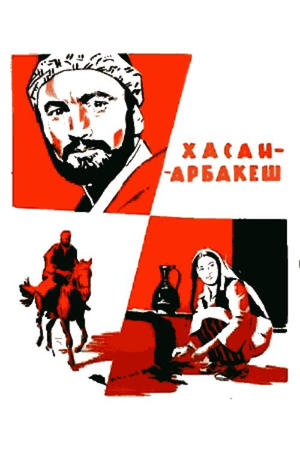
When Imeda’s father is killed in a blood revenge accident, the family moves him to the city where he is sheltered at his father’s friend. After fifteen year he gets back to Khevsureti. A talented painter, he spends most of his time doing sketches of nature and people. There he meets a local beauty, Mzekala and fells in love with her but finds out that Torghva is also in love with her. Enraged by Imeda’s impudence Torghva calls him for a sword fight and is killed by Imeda. To avoid another round of blood revenge, the villagers let Imeda and Mzekala out of the village but someone who wants Imeda’s blood finds it out and follows them.