Dive into the waters below and watch the aquatic wildlife from the world of Nemo and Dory.
In the Fall of 1999, four teenage sleuths and their Great Dane got lost in the woods while in search of a mystery. This is their story.
A narrative self-discovery theme done in real time in Art Nouveau style.
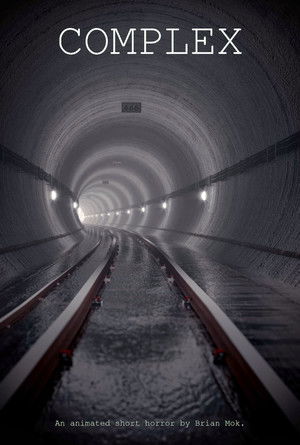
You are locked in an empty room with a camera. The room is dark. It is raining hard outside. You are a subject of Complex, a scientific experiment, whose purpose is to test the limits of the human mind. The objective is simple: stay alive.
The corner of a street is matched and mixed with the chant of a bird recorded on that same street. A symbiotic relationship is triggered: the rapid and successively repetitive montage cuts between the image of the street and the corners of the video frame itself produce new textures and shapes in our brain, whilst the sound follows the same rhythmic movements by emphasizing different “corners” (frequencies) from the bird’s singing. The energetic potency stemming from the junction of these elements creates a new image that is almost tactitle, maleable and rippling. The result is a somewhat humorous operation of the portuguese word "corner" throughout the different stages of making the piece, finally unveiling a piercing physical and kinetic experience for all the corners of our eyes and ears.
The first part depicts the heroine's toothache consequent to the loss of a very valuable watermelon, her dentistry and transportation to heaven. Next follows an elaborate exposition of the heavenly land, in terms of Israel and Montreal. The second part depicts the return to Earth from being eaten by Max Müller on the day Edward VII dedicated the Great Sewer of London.
A tilted figure, consisting largely of right angles at the beginning, grows by accretion, with the addition of short straight lines and curves which sprout from the existing design. The figure vanishes and the process begins again with a new pattern, each cycle lasting one or two seconds. The complete figures are drawn in a vaguely Art Deco style and could be said to resemble any number of things, an ear, a harp, panpipes, a grand piano with trombones, and so on, only highly stylized. The tone is playful and hypnotic.
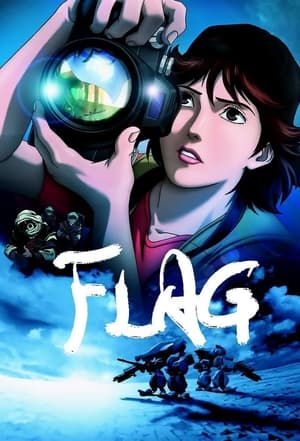
Director's cut release of the war/mecha anime series "FLAG" features famous scenes from the series edited together into a cohesive, realistic story about war. Camerawoman Shirasu Saeko's photo of residents of a war-torn Asian country struggling to raise the flag of the UN became the symbol for the movement of peace across the land. However, on the eve of a truce, the actual flag captured in the photo is stolen and war once again threatens to plague the land. To return the flag and establish peace in the land, the UN sends a lone mechanical army called the SDC (pronounced as Seedac—Special Development Command).
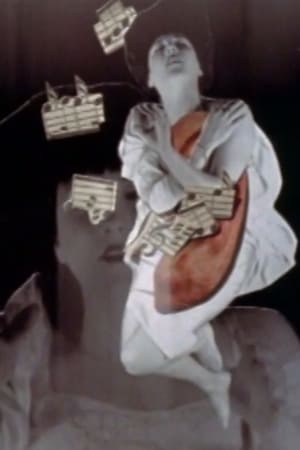
Initially commissioned to accompany a Danish production of Alban Berg’s LULU, Lewis Klahr’s cut-out animation refigures the opera's themes in a torrent of images. With an ever-inventive approach to color and symbol, Klahr distills the title character's moral predicament, along with a great many of German Expressionism’s characteristic motifs, in the span of a pop song.
In a nightmarish world, dominated by the decline and degradation of Man , Christ resurrected wandering, across three different eras of human history.
We watch white shapes dancing on black background, which changes when the white shape fills up the screen completely, and black lines and figures bounce around on the now white background.
Suppressed memories reach a boiling point. An animated tale of longing. “The Experimental section saw Non Films’ Dull Hope scoop the premier place as category winner. Half animation and half movie footage, this hybrid resonated very much with the judging panel who deemed it to be a sad dirge on personal memories and heartbreak.” – The Guardian Directed & Animated by Brian Ratigan Music & Sound Design by Nick Punch (R.I.P.) Produced by Non Films
A particular day of a samurai
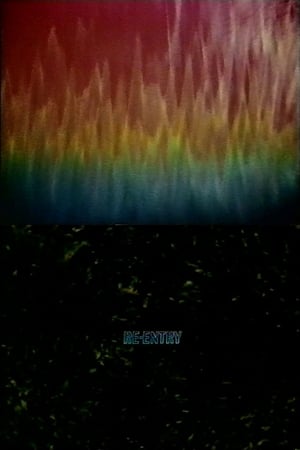
A visual representation, in four parts, of one man's internalization of "The Divine Comedy." Hell is a series of multicolored brush strokes against a white background; the speed of the changing images varies. "Hell Spit Flexion," or springing out of Hell, is on smaller film stock, taking the center of the frame. Montages of color move rapidly with a star and the edge of a lighted moon briefly visible. Purgation is back to full frame; blurs of color occasionally slow down then freeze. From time to time, an image, such as a window or a face, is distinguishable for a moment. In "existence is song," colors swirl then flash in and out of view. Behind the vivid colors are momentary glimpses of volcanic activity.
Originally completed in 2018, the film was largely self-funded, Mr Yen Ooi worked on the script, refining the vision of the film for over a decade, with multiple iterations of the story under names such as 'Beetle Ramen', in which the completed draft of this screenplay was finalised in 2005, this would become the basis of inspiration and 13 years later the final production "Spaghetti Ramen" would be completed. It was then distributed to different indie and international film festivals. Unfortunately due to the passing of the director in the same year, the final processes were incomplete and the film did not get screened anywhere due to not getting the rights clearance. In 2023 however, the film was cleared to screen at WORM, Camera Japan in Rotterdam. This allowed for the first and only screening of the film in the world.
This isn’t a film. It’s a leaked ritual. Somewhere between analog prayer and digital disease, a collection of gestures tried to become human again. They failed. Children orbit the fence like insects around an electric hymn. A figure holds a violin but never plays — his silence is louder than the sound. The man in the branches hasn’t fallen in years. The killer appears, or doesn’t — but you’ll feel him beneath the cuts, mouthing things you’ll wish you didn’t understand. There are bodies, sometimes clothed in flesh, sometimes not. There is scripture, mangled and reversed — not to mock it, but to unlock it. The voice speaks, but only when you stop listening. This is the place where lost footage remembers you. Where noise prays back. CHOKE ECHO was compiled under duress by 0xHamza in 2025 using material never meant to be rearranged. Watch it if you must — but it will keep watching after you close the tab.
ĀTMAN is a visual tour-de-force based on the idea of the subject at the centre of the circle created by camera positions (480 such positions). Shooting frame-by-frame the filmmaker set up an increasingly rapid circular motion. ĀTMAN is an early Buddhist deity often connected with destruction; the Japanese aspect is stressed by the devil mask of Hangan, from the Noh, and by using both Noh music and the general principle of acceleration often associated with Noh drama.
Organized in 12 discrete chapters, Sixty Six is a milestone achievement, the culmination of Klahr’s decades-long work in collage filmmaking. With its complex superimpositions of imagery and music, and its range of tones and textures at once alluringly erotic and forebodingly sinister, the film is a hypnotic dream of 1960 and 1970s Pop. Elliptical tales of sunshine noir and classic Greek mythology are inhabited by comic book super heroes and characters from Portuguese foto romans who wander through midcentury modernist Los Angeles architectural photographs and landscapes from period magazines.
Animation by japanese artist Keiichi Tanaami for John Lennon's song "Oh Yoko!" -- the song was released in 1971, and the animation made in 1973. Keiichi Tanaami (田名網 敬一, Tanaami Keiichi, born in 1936 in Tokyo) was one of the leading pop artists of postwar Japan, and was active as multi-genre artist since the 1960s as a graphic designer, illustrator, video artist and fine artist until his death in 2024.
In Madonna, Tanaami employs his signature collage-style animation, combining pop art influences, retro aesthetics, and surrealistic motifs. The film explores themes of desire, fantasy, and memory, often referencing elements of post-war Japanese culture and American pop culture.