Charlotte Uhlenbroek travels to Madagascar to follow the story of three mother ring-tailed lemurs struggling to survive one of the driest and hottest seasons in decades. One lemur has already lost her baby, the other two have a fight on their hands if their infants are to stand a chance, and matters are made even worse when neighbouring lemur tribes invade the mothers' territories.
In the animal world, as in our own, looks aren’t everything. In fact, some of the most aesthetically challenged creatures — from warthogs and proboscis monkeys to bull elephant seals — are also the most fascinating. A stunning variety of these ghastly yet glorious forms are explored in NATURE’s The Beauty of Ugly.
L'Islande terre de feu et de glace
Embark on an epic journey of family, courage, and coming home in this feature-length documentary. Join Athena, the majestic matriarch, as she leads her elephant herd across an unforgiving African landscape filled with vibrant wildlife.
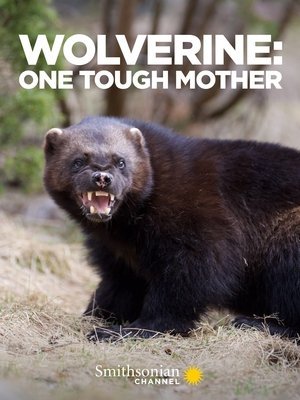
An immersive look into the life of one of the world’s most fabled and iconic species. Set in the wild forests of ‘No-man’s-land.’ Glamorised by Hollywood and villainised by ancestral folklore, the wolverine is both a fabled icon of the Northern Hemisphere and a modern-day superhero. Our heroine of this story, Freya, is a 3-year-old female wolverine – shy and elusive and rarely caught on camera, she inhabits a mysterious and unforgiving world – deep in the rugged wilderness between Russia and Finland. Freya thrives in ‘No-man’s land’ – so named for good reason; it’s a remote and remorseless habitat; no man could survive here
Jimmy is a burglar and a loner, Long-Fingered Fred excels in breaking into cars, while Merlin prefers to target restaurants. Meet the alpha males of the infamous Smits Baboon Gang.
Examines the sea horse, the only fish that swims upright. We watch it use its prehensile tail to wrap around plants and other sea horses. A frontal bulge houses organs including an air ballast. Three fins propel this fish. We see a female place her eggs in a male's pouch where they are fertilized and nurtured until birth in violent contractions. Inside the pouch are nurturing blood vessels. We then follow the growth of an embryo, greatly magnified: we examine its heart beating and its dorsal fin moving. Young sea horses attach themselves to each other. The film ends with images of many sea horses moving on the ocean floor, superimposed on a horse race.
An octopus slithers over objects on land—a doll, a skull—then oozes along the shore into the sea. It secretes its ink. The camera follows it along rocks into deeper water, watching closely as it breathes. Its eye is closed then open. Simple titles, in French and German, suggest what to watch. The octopus alternates the use of breathing tubes on either side. It changes color as cells on its skin contract or dilate. Extreme magnification helps us see these changes. Two struggle, one dies. On shore, fishermen catch them and put them in pails. A single tentacle still has life. Back in the sea, two octopi attack a crab. Soon only a couple of crab legs are visible in the mouth of the victor.
At a marine biology station, a clump of algae reveals polyps, stomachs with limbs, limbs with buds, buds with poison cells. This animal reproduces by buds, which we watch close up in time-lapse images. In another kind of jellyfish, the buds grow inside then live outside for a few days until being on their own. Another produces eggs, sometimes self-fertilized. Some single eggs become buds with colonies. Another clump gathered at low tide consists of filaments of a colony - plumes with poison ends. In images taking 72 hours, we see filaments grow and produce a feeding organ from which a plume emerges. New jellyfish emerge from buds twice a day at set times to form a new colonies.
The successes and failures of a couple determined to live in harmony with nature on a farm outside of Los Angeles are lovingly chronicled by filmmaking farmer John Chester, in this inspiring documentary.
The hunt for a mythic animal once thought to have been extinct for 65 million years: the coelacanth. It can be found 120 metres beneath the ocean off the wild coast of South Africa. French scientists and South African scientists teamed up with experienced Trimix divers, including Peter Timm, who discovered the coelacanths in Sodwana Bay in 2000 and award-winning underwater photographer Mr Laurent Ballesta and his advanced technical dive team to bring you this eye-opening documentary. Click on the play button above to watch a preview.
In the pantheon of predators, it's one of the greatest discoveries since the T-Rex: a snake 48 feet long, weighing in at 2,500 pounds. Uncovered from a treasure trove of fossils in a Colombian coal mine, this serpent is revealing a lost world of giant creatures. Travel back to the period following the extinction of dinosaurs and encounter this monster predator.
Joyce Poole fell in love with wild Africa when she was only seven years old. As a scientist working in the shadow of Mount Kilimanjaro, she made discoveries that changed the way we look at elephants.
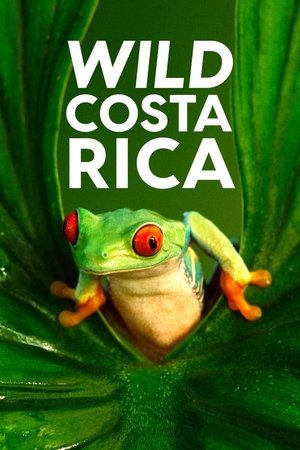
Cost Rica is one of the most diverse places on Earth. This exploration features Costa Rica's unique animal inhabitants, including various monkeys, birds, frogs, even caimans and fruit-eating bats.
In January 2006, a Northern bottlenose whale swam into the River Thames. This is her story and the story of her rescue.
Superpowered Eagles
In Namibia, conservationist Maria Diekmann found herself on the frontline of the battle to save these wanted animals after unexpectedly becoming a surrogate mother to an orphaned baby pangolin named Honey Bun. On an emotional journey, Diekmann travels to Asia to better understand the global issues facing pangolins, before joining forces with a Chinese megastar to help build a campaign to bring awareness to the plight of these surprisingly charming creatures.
Swedish filmmaker Mikael Kristersson directs this austere yet beautiful experimental documentary about two European falcons. Shot over the course of two years, Kristersson manages to fashion a narrative without the use of voice-overs or music, showing the falcons as they forage for food and tend to their eggs. Much of this film, though, is spent viewing the world from the falcons' vantage point -- high up on a 13th century church steeple, watching the groundskeeper tending to the village cemetery and the choir boys growing tired of a long religious procession. ~ Jonathan Crow, Rovi
Deep Sea Chemosynthetic Oases Full Movie. This film exploring hydrothermal vents, cold-seep habitats, and food-falls including whale-falls and the communities at shipwrecks. Footage used belongs to the incredible marine conservation societies of Ocean Networks Canada, CSSF-ROPOS, Schmidt Ocean Institute, MBARI, WHOI and the Ocean Exploration Institute.
The Schmidt Oceanographic Institute (SOI) is a non-profit oceanographic research foundation that has pioneered deep-sea research and discovery since 2009, aboard its former vessel RV Falkor and also its new RV Falkor. Its remotely operated vehicle (ROV), SuBastian, is equipped with a suite of sensors and a 4K camera that has illuminated the depths and streamed live dives around the world. Most of the images shown are filmed and provided by SOI.