When Harvard PhD student Jennifer Brea is struck down at 28 by a fever that leaves her bedridden, doctors tell her it’s "all in her head." Determined to live, she sets out on a virtual journey to document her story—and four other families' stories—fighting a disease medicine forgot.
Appalachian Journey is one of five films made from footage that Alan Lomax shot between 1978 and 1985 for the PBS American Patchwork series (1991). It offers songs, dances, stories, and religious rituals of the Southern Appalachians. Preachers, singers, fiddlers, banjo pickers, moonshiners, cloggers, and square dancers recount the good times and the hard times of rural life there. Performers include Tommy Jarrell, Janette Carter, Ray and Stanley Hicks, Frank Proffitt Jr., Sheila Kay Adams, Nimrod Workman and Phyllis Boyens, Raymond Fairchild, and others, with a bonus of a few African-Americans from the North Carolina Piedmont.
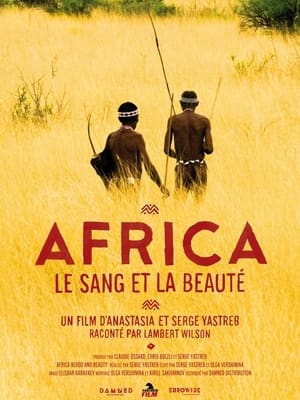
How African artists have spread African culture all over the world, especially music, since the harsh years of decolonization, trying to offer a nicer portrait of this amazing continent, historically known for tragic subjects, such as slavery, famine, war and political chaos.
Explore the evolution of Buzz Lightyear from toy to human in the making of Pixar’s Lightyear. Dive into the origin and cultural impact of everyone’s favorite Space Ranger, the art of designing a new “human Buzz,” and the challenges faced by the Lightyear crew along the way.
While it may be universally acknowledged that she’s one of the great English writers, Giles Coren breaks down his many reasons for hating Jane Austen.
The Smurfs were created in 1958 by the Belgian comic author Peyo (Pierre Culliford, 1928-1992) and they are one of Belgium's most recognized exports. From Brussels to Los Angeles, via Dubai, a journey into the tiny world of the famous little blue people, from the story of the creation of the original comic to the account of their huge global commercial exploitation.
Extranjeros de sí mismos
This documentary is hosted by William Shatner and Leonard Nimoy and they take us through the history of Star Trek. We also get to see bloopers from the original series and the current space program and how progression has been in reality, hosted by LeVar Burton.
Follows the plight of real-life dancers as they struggle through auditions for the Broadway revival of A Chorus Line and also investigates the history of the show and the creative minds behind the original and current incarnations.
Georgian director Otar Iosseliani prepares his film Jardins en Automne. Nothing is conventional in the filmmaker's system: Julie Bertuccelli portrays the gestation and production of a film that seems to follow the freest and most unpredictable poetic intuitions of its creator. The constant and hilarious arguments with the producer, Martine Marignac, a Michel Piccoli transformed into an old woman, and the director's peculiar filming system, in which he signals his actors to start with a whistle, paint a picture of one of the most unclassifiable cinematic experiences in contemporary cinema.
An in-depth portrait of British composer, pianist and singer Elton John, pop star and myth of modern culture.
The extraordinary story of how Hollywood changed World War II – and how World War II changed Hollywood, through the interwoven experiences of five legendary filmmakers who went to war to serve their country and bring the truth to the American people: John Ford, William Wyler, John Huston, Frank Capra, and George Stevens. Based on Mark Harris’ best-selling book, “Five Came Back: A Story of Hollywood and the Second World War.”
After a quarter-century of political denial and social stigma, of stunning scientific breakthroughs, bitter policy battles and inadequate prevention campaigns, HIV/AIDS continues to spread rapidly throughout much of the world. Through interviews with AIDS researchers, world leaders, activists, and patients, FRONTLINE investigates the science, politics, and human cost of this fateful disease and asks: What are the lessons of the past, and what can be done to stop AIDS?
De Madrid a la Luna
Denise Crosby takes another look at the huge fans of "Star Trek" and how the series from around the world has affected and shaped their lives.
This is a 1991 documentary film about the legendary artist and filmmaker, Joseph Cornell, who made those magnificent and strange collage boxes. He was also one of our great experimental filmmakers and once apparently made Salvador Dali extremely jealous at a screening of his masterpiece, Rose Hobart. In this film we get to hear people like Susan Sontag, Stan Brakhage, and Tony Curtis talk about their friendships with the artist. It turns out that Curtis was quite a collector and he seemed to have a very deep understanding of what Cornell was doing in his work.
New York based artist, Cindy Sherman, is famous for her photographs of women in which she is not only the photographer, but also the subject. She has contributed her own footage to the programme by recording her studio and herself at work with her Hi-8 video camera. It reveals a range of unexpected sources from visceral horror to medical catalogues and exploitation movies, and explores her real interests and enthusiasms. She shows an intuitive and often humorous approach to her work, and reflects on the themes of her work since the late 1970s. She talks about her pivotal series known as the `Sex Pictures' in which she addresses the theme of sexuality in the light of AIDS and the arts censorship debate in the United States.
The Road Forward is an electrifying musical documentary that connects a pivotal moment in Canada’s civil rights history—the beginnings of Indian Nationalism in the 1930s—with the powerful momentum of First Nations activism today. Interviews and musical sequences describe how a tiny movement, the Native Brotherhood and Sisterhood, grew to become a successful voice for change across the country. Visually stunning, The Road Forward seamlessly connects past and present through superbly produced story-songs with soaring vocals, blues, rock, and traditional beats.
Presented by Grimposium and Uneasy Sleeper. Blekkmetal is a documentary about the one-off 2015 festival celebrating the origins of Norwegian black metal. Featuring exclusive interviews and footage of Enslaved, Taake, Aeternus, Gehenna, Helheim, Old Funeral, Kampfar, Hades Almighty and Gaahls Wyrd performing classic and rare songs from their catalog, Blekkmetal features an all-Canadian production team including director David Hall (alumnus of Concordia University), metal studies scholars Vivek Venkatesh (Concordia University) and Jason Wallin (University of Alberta), and mobile media scholar Owen Chapman (Concordia University). Blekkmetal is co-produced by the festival’s organizers Ivar Bjørnson, Jannicke Wiese-Hansen and Kirsti Rosseland.
The film portraits the stage previous to the outbreak of the Mexican Revolution, from the end of Porfirio Díaz´ government, the social volatility, the ephemeral government of Madero and the presence of the working class in the figures of Villa and Zapata, until the signing if the Constitution of 1917. All of this through moving images, filmed during those events mainly by the Alva brothers, filmmakers of that time. Those images let us perceive the contradictory and shuddered glance of the people of that period.