Feature-length documentary about the greatest diver of all time. Four-time Olympic champion Greg Louganis has faced more than his share of challenges. In 2011, he is far from the public eye and struggling to pay his mortgage. Now, the openly gay, HIV+ world-class athlete returns to diving to mentor the USA Olympic hopefuls. This may be his best chance to regain the notoriety -- and financial stability -- he enjoyed at the height of his career.
Legendary drag performer Ocaña in performance with a cardboard Marilyn on the west side of the Berlin Wall.
Starting with a long and lyrical overture, evoking the origins of the Olympic Games in ancient Greece, Riefenstahl covers twenty-one athletic events in the first half of this two-part love letter to the human body and spirit, culminating with the marathon, where Jesse Owens became the first track and field athlete to win four gold medals in a single Olympics.
Part two of Leni Riefenstahl's monumental examination of the 1938 Olympic Games, the cameras leave the main stadium and venture into the many halls and fields deployed for such sports as fencing, polo, cycling, and the modern pentathlon, which was won by American Glenn Morris.
An experimental half-documentary half-fiction about a young person’s routine of getting to sleep and waking up.
Ella Fitzgerald's voice is a phenomenon and unrivalled to this day. She had the perfect pitch and perfect intonation. Ella's voice spanned three octaves, her phrasing seemed effortless. There is almost no style of music, in which she did not excel, and her numerous - now legendary - recordings of the 'Great American Songbook' with pieces of US composers such as George and Ira Gershwin, Harald Arlen, Cole Porter or Duke Ellington, remained a benchmark for the "right" interpretation of those songs for generations of singers. In the film the focus will be on the voice of Ella Fitzgerald. We want to unravel the secret of her voice through many different people (musicians, singers, critics etc.), who will tell about what impact her voice had on them and still has. We want to learn more about Ella´s life to find out what made her sing like she did and only she could.
One Saturday morning, filmmaker Madison Thomas has a revelation: she’s just like her mother. As she thinks about a friend going through tough times, she feels the sudden urge to clean. Through the scrubbing and wiping and rinsing, Madison's thoughts drift to her mother — and her obsessive need to tidy. Madison’s mother survived a traumatic childhood: her own mother never reconciled what she went through at residential school. Cleaning offers moments of control that she didn’t have as a child. She’s fought hard, against all odds, to become a strong woman. They say trauma is in the genes, that it’s passed from one generation to the next. But strength is inherited too. Through rituals as simple as spending time together and smudging, Madison and her mother are beginning to mend the cycle of pain in their family. Declutter is an intimate look into a private moment between mother and daughter and the strength that carries them both.
Working men and women leave through the main gate of the Lumière factory in Lyon, France. Filmed on 22 March 1895, it is often referred to as the first real motion picture ever made, although Louis Le Prince's 1888 Roundhay Garden Scene pre-dated it by seven years. Three separate versions of this film exist, which differ from one another in numerous ways. The first version features a carriage drawn by one horse, while in the second version the carriage is drawn by two horses, and there is no carriage at all in the third version. The clothing style is also different between the three versions, demonstrating the different seasons in which each was filmed. This film was made in the 35 mm format with an aspect ratio of 1.33:1, and at a speed of 16 frames per second. At that rate, the 17 meters of film length provided a duration of 46 seconds, holding a total of 800 frames.
In the summer of 1977, NASA sent Voyager 1 and Voyager 2 on an epic journey into interstellar space. Together and alone, they will travel until the end of the universe. Each spacecraft carries a golden record album, a massive compilation of images and sounds embodying the best of Planet Earth. According to Carl Sagan, “[t]he spacecraft will be encountered and the record played only if there are advanced space-faring civilizations in interstellar space. But the launching of this bottle into the cosmic ocean says something very hopeful about life on this planet.” While working on the golden record, Sagan met and fell madly in love with his future wife Annie Druyan. The record became their love letter to humankind and to each other. In the summer of 2010, I began my own hopeful voyage into the unknown. This film is a love letter to my fellow traveler. - Penny Lane
Set in the heights of the Bolivian Andes, Mamachas del Ring is the story of Carmen Rosa the Champion, an indigenous woman who struggles to make it on her own in the male-dominated world of Bolivian professional wrestling.
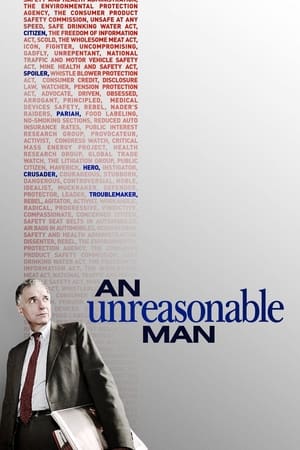
This video focuses primarily on the implications of the structure and format of television, especially the consequences of concision, and how these factors can shape the messages of the medium. In addition, other issues, such as how democracies handle dissenters, and how the mainstream media have treated the challenges of Noam Chomsky's media critiques are explored. The media construct reality, and in the conclusion we see the author participating in that very process.
Beginning with Noam Chomsky's response to a college student who role-plays "Jane U.S.A."--someone who naively believes she lives in a democratic society in which she can create her own destiny--the viewer is presented with a cross-section of typically lively Chomsky encounters. Central to a functioning democracy is the necessity of free access to information, ideas and opinions. But what should be our democratic right turns out to be limited and shaped by the biases of insitutions and ideologies within the mass media. Chomsky shows how governments, corporations and other elites manufacture the consent of the public to serve their interests.
CERN and the University of California-Santa Barbara are collaborating in the search for the elusive substance that physicists and astronomers believe holds the universe together -- dark matter. Where is this search now in the realm of particle physics and what comes next?
The 5th anniversary of the inner-German wall to West Germany and West Berlin is on the agenda. The necessity of erecting the border is illustrated by comparing the situation in 1939 and the situation in the summer of 1961 with regard to the "threat of intervention" by the Western powers. Berlin people and GDR border guards are interviewed.
"I'm walking through my city...", sings a cheerful pop singer. She fervently praises the new metropolis of East Berlin. As an emphatically lively, often anthemically condensed revue, the film tells of the "growth and development of our new capital". Accompanied by cheerful music, the camera indulges in high-altitude views, shows squares whose fountains, benches and green spaces are designed to make you forget that you are in a big city, as well as visitors from all over the world in top hotels. An emphatically cheerful, yet meaningful insight into the brave new GDR world.
In Raiano, Italy, the feast of S. Venanzio is celebrated every year. Beside the official celebrations, the most secret and oldest ceremony is the "Cult of Stones": the devotees enter the caves where the saint used to live according to tradition, and rub their bodies on the stones to heal from evil.
From inside Bolivia's craziest prison a cocaine worker, a drug mule and his little sister reveal the countries relationship with cocaine.
In 2005 Beverly Charpentier declared an oath of allegiance to French writer Catherine Robbe-Grillet. In doing so she gave up her freedom for the rest of her life. The Contract portrays two strong women's unconventional love story, two women who have chosen to explore their love in a unique way, without compromise.
Muffins for Granny is a remarkably layered, emotionally complex story of personal and cultural survival. McLaren tells the story of her own grandmother by combining precious home movie fragments with the stories of seven elders dramatically affected by their experiences in residential school. McLaren uses animation with a painterly visual approach to move the audience between the darkness of memory and the reality that these charismatic survivors live in today.
Brazilian documentary short about the life of Edna — actress of Iracema.