One of the most defining moments in American history is the story of an unlikely friendship between the Reverend George Whitefield and Benjamin Franklin.
A comic study of 20th-century history, reconstructing the life of writer, creator and professional prisoner Tulse Luper. Born in 1911 Newport and last heard of in 1989, Luper’s life is pieced together from the evidence found in 92 suitcases scattered across the globe. In the first of three parts, we follow Luper through three distinct episodes: as a child during the First World War; as an explorer in Mormon Utah; and as a writer in Belgium during the rise of fascism.
A young Prince Asoka works to perfect his skills in battle and also deals with family conflict. During a struggle with one of his step-brothers, his mother urges Asoka to escape to stay alive. While away, Asoka meets Kaurwaki and falls in love, but must use his skills as a warrior to protect her. A dangerous and heartbreaking web of conspiracy follows, which leads Asoka to embrace a Buddhist path.
In early 20th-century Montana, Col. William Ludlow lives on a ranch in the wilderness with his sons, Alfred, Tristan, and Samuel. Eventually, the unconventional but close-knit family are bound by loyalty, tested by war, and torn apart by love, as told over the course of several decades in this epic saga.
Set in the 15th century, the story follows the formation of the Kazakh state after the death of Genghis Khan and the usurpation of power by one of Khan's descendants, leading the sultans Kerei and Janibek to resort to some nomadic tribes to remove the usurper, hoping for a better life and freedom.
The true story of the most decorated dog in American military history - Sgt. Stubby - and the enduring bonds he forged with his brothers-in-arms in the trenches of World War I.
In the final days of the American Civil War, an emigre Hungarian military officer attempts to map the situation of the enemy. Many veterans of the 1848 War of Independence in Hungary fought on the northern side. Experienced Fiala, Boldogh who struggles with homesickness and the reckless Vereczky all experience their enforced emigration in different ways and news of impending peace elicits different reactions from them all.
Paris, France, during the First World War. While thousands of soldiers die every day on the battlefields, Henri Landru, a seemingly respectable furniture dealer, married and father of four children, relentlessly feeds his own sinister factory of death.
Early twentieth century. The future poet, the nurturer of lyrics of love, Julius Janonis, is maturing among the students of Šiauliai Gymnasium. The son of a poor peasant, sick with tuberculosis, spotted a classmate, Milda, from a wealthy family admiring his talent. Unfortunately, at a high society party held at Milda’s parents house, where Julius reads his poems, guests make fun of the poet. When World War I comes, Janonis is taken to Voronezh, to the Lithuanian diaspora.
In 1911, a willful and determined man from peasant stock named Charles Saganne enlists in the military and is assigned to the Sahara Desert under the aristocratic Colonel Dubreuilh.
Disillusioned by years of futile bloodshed, General Chang Ta initially refuses the emperor’s call to defend the collapsing dynasty. It is his wife, Chen Pi-niang, a woman of exceptional intelligence and resolve, who urges him to answer his duty. At Tzu Lang Chow, she bids him farewell with a lock of her hair, a symbol of devotion and sacrifice, as he marches toward a seemingly hopeless battle. While Chang Ta fights at the front, Chen Pi-niang organizes local militias and leads a daring volunteer fleet of fishing boats to deliver supplies and strike the enemy. As defeat closes in and betrayal looms, husband and wife each face their fate with unyielding loyalty to their country.
Lillie, a determined American woman, ventures overseas to join Dr. Jude at a remote medical mission in the Ottoman Empire (now Turkey). However, Lillie soon finds herself at odds with Jude and the mission’s founder, Woodruff, when she falls for the titular military man, Ismail, just as the war is about to erupt.
The true story of how businessman Oskar Schindler saved over a thousand Jewish lives from the Nazis while they worked as slaves in his factory during World War II.
Entatsu, Achako and Torazo: Chuji Kunisada's First Smile of the New Year
唄祭けんか道中
After the Hungarian army was annihilated by the Mongols at the battle of Mohi, only the castle of Esztergom stood in the Mongolians' way of invading the rest of Europe. Batu Khan, the grandson of Genghis Khan, reaches the walls of Esztergom with his invincible troops. The castle's defenders, led by Eusebius, the canon of Esztergom, and a Spanish mercenary, Captain Simon, are preparing for the final battle. The sudden arrival of Cardinal Cesareani, the Papal Legate, coinciding with the Mongol Lunar New Year celebrations and the mystical practices of Eusebius, combine to offer the defenders a small glimmer of hope.
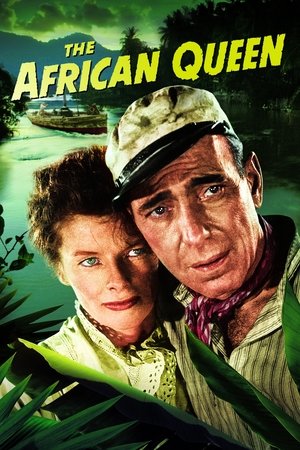
At the start of the First World War, in the middle of Africa’s nowhere, a gin soaked riverboat captain is persuaded by a strong-willed missionary to go down river and face-off a German warship.
In the immediate aftermath of the fall of Srebrenica in 1995, Aida, receiving word that her sons who were taken by Serbian forces may be alive and held in a camp, launches a desperate search through a refugee center crowded with thousands of displaced women. As hope collides with silence, the women come to the realization that no outside help is coming unless they help themselves. Led by Aida, they confront the injustice and deceptions of a political system built on backroom deals with war criminals.
The sinking of the RMS Titanic remains one of the most enduring and mysterious tragedies of the 20th century. For decades, investigators and amateurs alike have floated theories for why it occurred and who was to blame for the extraordinary loss of life, but no one answer could fully explain what happened. Until now. To mark the 100th anniversary of the infamous disaster, Smithsonian Channel will premiere Titanic's Final Mystery. The two-hour special investigates a century of theories and uncovers astonishing new forensic evidence that proves the most likely theory for the case.
A dying man in his forties recalls his childhood, his mother, the war and personal moments that tell of and juxtapose pivotal moments in Soviet history with daily life.