Moskau 1941 - Stimmen am Abgrund
Alex Jones exposes the growing militarization of American law enforcement and the growing relationship between the military and police. Witness US training with foreign troops and learning how to control and contain civilian populations. You will see Special Forces helicopter attacks on South Texas towns, concentration camps, broad unconstitutional police actions, search and seizure and more.
This series incorporates the latest animated 3D films to explore recent discoveries about human history, especially in Asia.
In the docudrama "Les Derniers Secrets de l'humanité" (The Last Secrets of Humanity), author and director Jacques Malaterre and paleoanthropologist and professor at the Collège de France Yves Coppens reveal the incredible adventure of Asian prehistory. How does science help to reconstruct these bygone times in images? Thanks to discoveries made at excavation sites and in analysis and genetics laboratories, researchers are now revealing this distant, vanished past.
Examines documents and traces of the atrocities that took place at the Auschwitz concentration camp. Years after the end of the war, expert analysis of the remnants of these documents has helped shed light on the stories of prisoners.
Il a besoin
Le roi Arthur, l'envers du mythe
Le Siècle des couturières
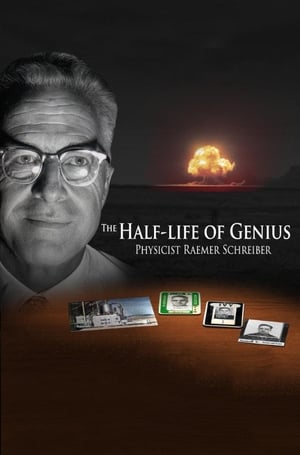
The Manhattan Project was an enormous undertaking that required the efforts of many of the world's most brilliant intellectuals. Hundreds of physicists, mathematicians, and engineers were needed to design, build, and test the world's first atomic weapon and the Unites States government did everything in its power to lure these individuals to the Manhattan Project. Documentary to include: Interviews with Scientists conducted by the World War II Foundation Interviews with World War II Historians Interviews with WWII veterans Interviews with those who worked with John Gray in the world of Atomic Energy Interviews with authors who have written extensively about the Manhattan Project Interviews with people from the world of academia. This film is personal: One of those assigned to the project was my uncle John Edmund Gray, a University of Rhode Island graduate with a brilliant mind. —Tim Gray
Former major league baseball player Moe Berg lives a double life working for the Office of Strategic Services in World War II Europe.
The story of the Cuban Missile Crisis in 1962—the nuclear standoff with the USSR sparked by the discovery by the Americans of missile bases established on the Soviet-allied island of Cuba.
Archival footage, animation and music are used to look back at the eight anti-war protesters who were put on trial following the 1968 Democratic National Convention.
BERG investigates a historical site through an alternate shift between documentary and fictional representation. A soundscape produced from samples from a series of mainstream Spy Movies overlaps a selection of classic shots, inspired by the most repetitive cinematic clichés that are to be found in the espionage genre.
Les aventurières du vélo
A disturbing collection of 1940s and 1950s United States government-issued propaganda films designed to reassure Americans that the atomic bomb was not a threat to their safety.
In the 19th century, China held the monopoly on tea, which was dear and fashionable in the West, and the British Empire exchanged poppies, produced in its Indian colonies and transformed into opium, for Chinese tea. Inundated by the drugs, China was forced to open up its market, and the British consolidated their commercial dominance. In 1839, the Middle Empire introduced prohibition. The Opium War was declared… Great Britain emerged as the winner, but the warning was heeded: it could no longer depend on Chinese tea. The only alternative possible was to produce its own tea. The East India Company therefore entrusted one man with finding the secrets of the precious beverage. His mission was to develop the first plantations in Britain’s Indian colonies. This latter-day James Bond was called Robert Fortune – a botanist. After overcoming innumerable ordeals in the heart of imperial China, he brought back the plants and techniques that gave rise to Darjeeling tea.
The incredible story of Bill Gaede, an Argentinian engineer, programmer… and Cold War spy.
In the first decades of the 20th century, when life was being transformed by scientific innovations, researchers made a thrilling new claim: they could tell whether someone was lying by using a machine. Popularly known as the “lie detector,” the device transformed police work, seized headlines and was extolled in movies, TV and comics as an infallible crime-fighting tool. Husbands and wives tested each other’s fidelity. Corporations routinely tested employees’ honesty and government workers were tested for loyalty and “morals.” But the promise of the polygraph turned dark, and the lie detector too often became an apparatus of fear and intimidation. Written and directed by Rob Rapley and executive produced by Cameo George, The Lie Detector is a tale of good intentions, twisted morals and unintended consequences.
From the acclaimed director of American Movie, the documentary follows former Los Angeles police officer turned independent reporter Michael Ruppert. He recounts his career as a radical thinker and spells out his apocalyptic vision of the future, spanning the crises in economics, energy, environment and more.
The story of Russian writer and Soviet dissident Aleksandr Solzhenitsyn (1918-2008) and his masterpiece, The Gulag Archipelago, published in Paris in 1973, which forever shook the very foundations of communist ideology.