Angdu is no ordinary boy. Indeed, in a past life he was a venerated Buddhist master. His village already treats him like a saint as a result. The village doctor, who has taken the boy under his wing, prepares him to be able to pass on his wisdom. Alas, Tibet, Angdu’s former homeland and the centre of his faith, lies far away from his current home in the highlands of Northern India. On top of that, the conflict between China and Tibet makes the prospect of a trip there even more daunting. Undeterred by these harsh facts, the duo set off for their destination on foot, accompanied by questions of friendship and the nature of life. With its narrative approach steeped in a serene sense of concentration, this documentary film, composed over a period of eight years, stands as a fundamental experience in its own right.
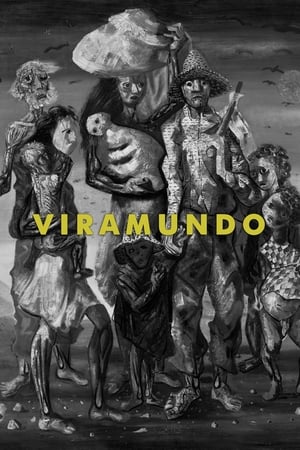
Viramundo shows the saga of the northeastern migrants that arrive in São Paulo, beginning with a train arriving and ending with a train leaving São Paulo in a cycle repeated every day. Viramundo's aim was to question why the military coup d'état in Brazil happened without any popular resistance or revolution or reaction of the society.
Switzerland still carries out special flights, where passengers, dressed in diapers and helmets, are chained to their seats for 40 hours at worst. They are accompanied by police officers and immigration officials. The passengers are flown to their native countries, where they haven't set foot in in up to twenty years, and where their lives might be in danger. Children, wives and work are left behind in Switzerland. Near Geneva, in Frambois prison, live 25 illegal immigrants waiting for deportation. They are offered an opportunity to say goodbye to their families and return to their native countries on a regular flight, escorted by plain-clothes police officers. If they refuse this offer, the special flight is arranged fast and unexpectedly. The stories behind the locked cells are truly heartbreaking.
A chronicle of the first nine years of Pope Francis' pontificate, including trips to 53 countries, focusing on his most important issues - poverty, migration, environment, solidarity, and war - while also giving rare access to the public life of the pontifical.
Partitions draws on photographs, state documents, audio recordings and footage of domestic spaces and routines, to tell a story of Sindhi migration following the Partition of India in 1947. Inspired by the life of a woman who was born in Hyderabad, Sindh, grew up in Madras (Chennai) and lived the rest of her life as a Singaporean, the film juxtaposes fragmented recollections of the past with enduring practices of the present.
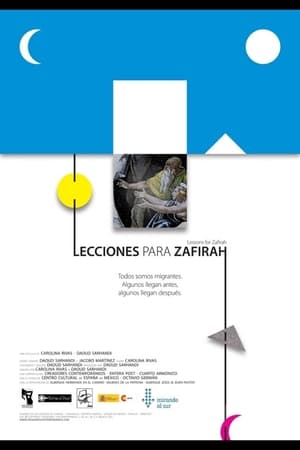
A metaphor of the Flood in our times, The Flood is the rain of violence that washes over us. Noah´s Ark is the train that runs through Mexico toward the United States and migrants are the species attempting to save their lives. For the directors, cinema moves people not just by condemnation, but by confronting and fostering emotions which lead to new, constructive ideas. This documentary became a cinematographic diary for their first viewer, their three-year-old daughter, Zafirah.
Documentary about a "transportation commando" in Germany with the goal to deport 200 people to Albania...
The Mejia family emigrated from Oaxaca to Fresno, California 40 years ago. Filmmaker Trisha ZIff filmed the family in 1996, and returns now to see the changes that have settled over them, and follows the family on their return to Mexico.
A migrant boat has been stranded in the Mediterranean Sea for 30 hours. As authorities ignore calls for help, the Sea-Watch Crew, an NGO, launches an urgent search.
Forastero
Found footage: California in the 1950's and 60's. A young Indian couple enjoys their personal American dream come true in their home somewhere in the suburbs of San Francisco. In great detail they pose with their newly achieved wealth in front of their Super-8 camera. Just like postcards, they would send these film rolls to their joint families back in India. Around the same time, an American missionary couple visits the city of Calcutta to shoot a Christian propaganda film. The drastic reality with poverty and famine in the streets of the Indian metropolis fits perfectly into their wicked plan: To promote the faith in Jesus by showing the misery that pagan believers are doomed to suffer from.
A meeting between two strangers sparks the desire to understand each other through the medium of cinema. They both simultaneously start recording their surroundings on camera and crafting the resulting footage. They, Elettra from Italy and Hazem from Gaza, become the subjects of this film that documents their first moments together. It depicts a multi-faceted reality in which North and South confront each other in a discussion on rights and inequalities, a reality in which we witness a migration towards one another, while capturing an intimate way of making a film together.
Dublin, June 2024: thousands of men seeking asylum in Ireland are homeless. Olivia and her group of volunteers are trying to find safe locations where the men can sleep each night, but the government is actively enforcing its new policy against homeless encampments, and the far-right are lurking.
Four migrants share their experiences about living in Georgia for the past several years.
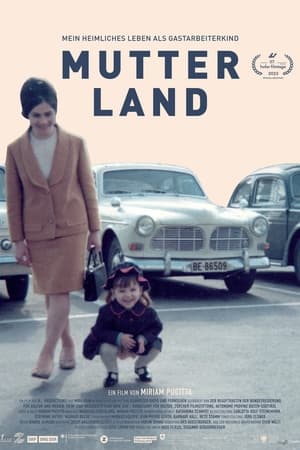
Director Miriam Pucitta grew up as the child of Italian migrant workers in Switzerland in the 1960s and 1970s. She herself has only fragmentary memories of this time; her mother and other relatives evade Miriam's questions. Together with her daughter Giulia, she researches her family's living conditions in Switzerland and finds a new understanding of her parents' difficult decisions.
When Pak Tin Estate is going to be demolished, the residents will move to a new place, but how about the dead residents? Where could they go? Ho Ying-kuen who majors in Myth and Poetry, and Playwriting, leads us to a time and space of a demolishing public estate. We will come across the residents of the estate, a mother with her two sons selling incenses, and two monkeys having conversation about their mother. A mixture of fiction, experimental and documentary images, Lost Cemeteries studies about filial piety and death with a strange and interesting approach.
The Chola kingdom is under threat from forces both internal and external, and with crown prince Aaditha Karikalan, his younger brother Arunmozhi Varman and the emperor, Sundara Cholar separated by situations, it is up to a messenger to ensure the safety of the kingdom. Can he succeed in his mission, especially with Karikalan's former girlfriend, Nandhini, plotting to bring down the entire Chola empire?
Talking About Visibility
At 34, French traveler Dimitri Poffé tested positive for Huntington's disease, a rare, hereditary, incurable disorder that slowly erodes body and mind. His father died of it; his sister has fought its symptoms for over a decade. Genetic studies predicted Dimitri's own symptoms would begin between 35 and 40 — a countdown he could not stop. Rather than wait, he got on a bicycle. Alone, he rode 18,000 kilometers from Mexico City to Ushuaia, crossing deserts, jungles, mountains and endless plains, a route as unpredictable as the disease itself. What began as defiance became something larger: a story of resilience, solidarity and the strength to reclaim life on your own terms. More than a test of physical limits, The Present is a reminder that when the future is uncertain, the present is still ours to live — one pedal stroke at a time.
A light and somewhat satirical look at the problems and pleasures of Continental holiday travel. A passenger on the Hook Continental Express from Liverpool St. imagines the possible destinations of his fellow passengers.