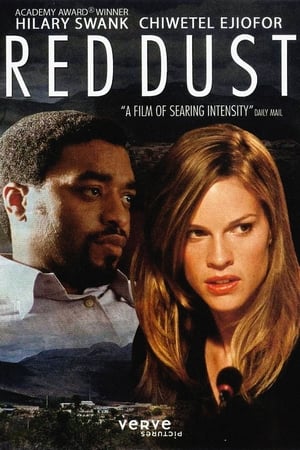
The time is the late '80s, a crucial period in the history of South Africa. President P.W. Botha is hanging on to power by a thread as the African National Congress (ANC) takes up arms against apartheid and the country tumbles toward insurrection. A British mining concern is convinced that their interests would be better served in a stable South Africa and they quietly dispatch Michael Young, their head of public affairs, to open an unofficial dialogue between the bitter rivals. Assembling a reluctant yet brilliant team to pave the way to reconciliation by confronting obstacles that initially seem insurmountable, Young places his trust in ANC leader Thabo Mbeki and Afrikaner philosophy professor Willie Esterhuyse. It is their empathy that will ultimately serve as the catalyst for change by proving more powerful than the terrorist bombs that threaten to disrupt the peaceful dialogue.
A young man in 1981 South Africa must complete his brutal and racist two years of compulsory military service while desperately maintaining the secrecy of his homosexuality.
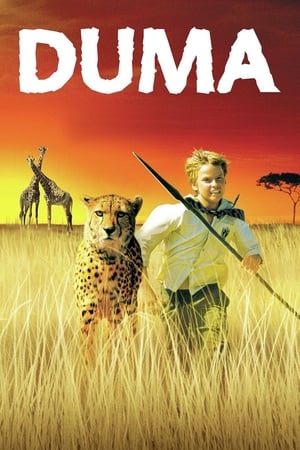
An orphaned cheetah becomes the best friend and pet of a young boy living in South Africa.
Eastern Cape, South Africa. A lonely factory worker, Xolani, takes time off his job to assist during an annual Xhosa circumcision initiation into manhood. In a remote mountain camp that is off limits to women, young men, painted in white ochre, recuperate as they learn the masculine codes of their culture. In this environment of machismo and aggression, Xolani cares for a defiant initiate from Johannesburg, Kwanda, who quickly learns Xolani's best kept secret, that he is in love with another man.
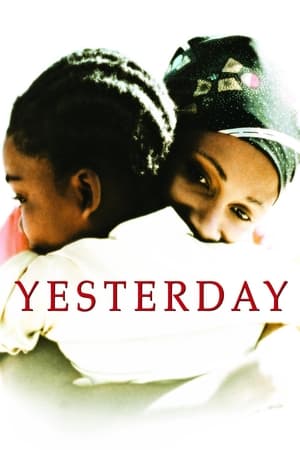
After falling ill, Yesterday learns that she is HIV positive. With her husband in denial and young daughter to tend to, Yesterday's one goal is to live long enough to see her child go to school.
When the great potato famine hits Ireland, the diaspora begins as thousands emigrate. Among those leaving the Emerald Isle is Katie O'Neill and her husband, who decide that the promised land is South Africa and make their way there. Once there, they discover the hardships that are the reality of the homesteader experience.
The true story of anti-apartheid activists in South Africa, and particularly the life of Patrick Chamusso, a timid foreman at Secunda CTL, the largest synthetic fuel plant in the world. Patrick is wrongly accused, imprisoned and tortured for an attempt to bomb the plant, with the injustice transforming the apolitical worker into a radicalised insurgent, who then carries out his own successful sabotage mission.
What would your family reminiscences about dad sound like if he had been an early supporter of Hitler’s, a leader of the notorious SA and the Third Reich’s minister in charge of Slovakia, including its Final Solution? Executed as a war criminal in 1947, Hanns Ludin left behind a grieving widow and six young children, the youngest of whom became a filmmaker. It's a fascinating, maddening, sometimes even humorous look at what the director calls "a typical German story." (Film Forum)
The true story of a white South African racist whose life was profoundly altered by the black prisoner he guarded for twenty years. The prisoner's name was Nelson Mandela.
After leading his football team to 15 winning seasons, coach Bill Yoast is demoted and replaced by Herman Boone – tough, opinionated and as different from the beloved Yoast as he could be. The two men learn to overcome their differences and turn a group of hostile young men into champions.
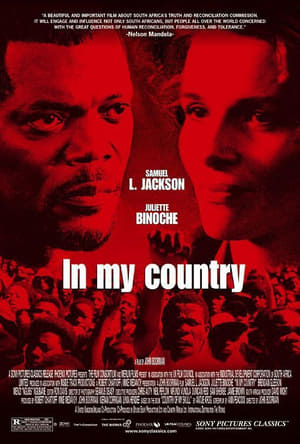
An American reporter and an Afrikaans poet meet and fall in love while covering South Africa's Truth and Reconciliation Commission hearings.
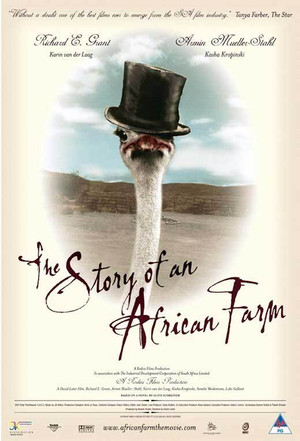
The 1870's. South Africa. Life is normal at the farm on the slopes of a Karoo Kopje.Things change when the sinister, eccentric Bonaparte Blenkins with bulbous nose and chimney pot hat arrives. Their childhood is disrupted by the bombastic Irishman who claims blood ties with Wellington and Queen Victoria and so gains uncanny influence over the girls' gross stupid stepmother.
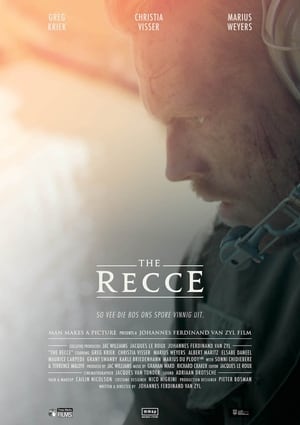
A failed track coach finally finds someone who he believes has what it takes to win. The Comrades Marathon is a 90-k race in South Africa. An aging running coach, Barry, wants to field a winner; he's working with four men from a factory, but when he's fired to make way for a smooth, corporate type, he's at loose ends. Then he sees Christine, a Namibian immigrant who runs to forget her troubles. He offers to coach her and soon she's living at his house, following his diet and training regimen. But his single-mindedness gets to her: she wants a job and a place of her own. Plus, the man who replaced Barry likes her and wants her away from Barry. Can runner and coach (woman and man, African and European) sort out their complex relationship before the race? Written by
In the early years of the 20th century, Mohandas K. Gandhi, a British-trained lawyer, forsakes all worldly possessions to take up the cause of Indian independence. Faced with armed resistance from the British government, Gandhi adopts a policy of 'passive resistance', endeavouring to win freedom for his people without resorting to bloodshed.
Set against a political backdrop in Africa, the story spanning several years, unfolds around the powerful interaction between two women, their strong sexual allure, and their search to find meaning through it all.
A professional wrestler struggles to reconcile his onstage and offstage personas.
In 1879, during the Anglo-Zulu War, man-of-the-people Lt. Chard and snooty Lt. Bromhead are in charge of defending the isolated and vastly outnumbered Natal outpost of Rorke's Drift from tribal hordes.
Inspector Rizzo in Napoli gets a message from a policeman from South Africa who wants to meet him. Immediately before this meeting the South African policeman is killed. Dying he shows Rizzo a picture of his young son Bodo. Rizzo travels to Johannesburg to find out what the policeman was working on and to find Bodo.
Just after the Anglo-Boer War, a dispute arises when Ester returns home from a concentration camp only to find that her cousin and her English-speaking husband have moved into Ester's house.
Confronted by Apartheid and a father who was Minister of Censorship, Ingrid Jonker searched for a home, searched for love. With men like Jack Cope and André Brink she found much love, but no home. Later, in his first speech to the South African Parliament Nelson Mandela read her poem "The Dead Child of Nyanga" and addressed her as one of the finest poets of South Africa.