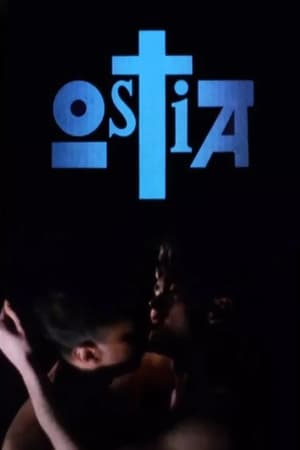
Ostia is a fascinating short film directed by Julian Cole and produced for the Royal College of Art, which reconstructs the events leading up to the murder of Pier Paolo Pasolini. Ostia relocates the proceedings to London and stars Derek Jarman as Pasolini. The film features an evocative dream sequence which is accompanied by poignant excerpts from Pasolini’s own poetry, as read by Jarman.
A short documentary exploring the ongoing relevance and power of 'Salò o le 120 giornate di Sodoma'.
Behind the scenes footage of Pasolini and crew filming 'Salò o le 120 giornate di Sodoma'.
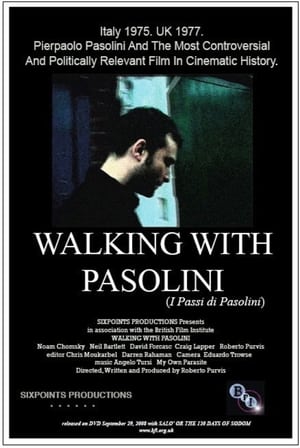
A documentary about Pier Paolo Pasolini and his film 'Salò o le 120 giornate di Sodoma'.
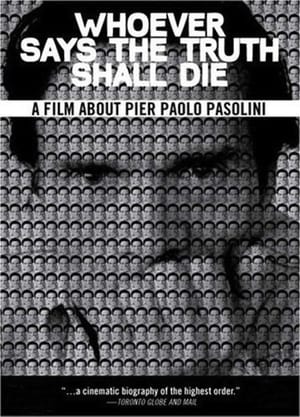
Philo Bregstein tells us this film looks at Pasolini's life and art to explain why he died. The film traces Pasolini's life chronologically - family roots, hiding during World War II, teaching, moving to Rome, being arrested and acquitted many times, publishing poems, getting into film, being provocative, and being murdered. Interviews with Alberto Moravia, Laura Betti, Maria Antonietta Macciocch, and Bernard Bertolucci are inter-cut with readings of Pasolini's poems and with clips from four films - primarily the Gospel According to St. Matthew - to illustrate his changing ideas and points of view. Bregstein makes a case for Pasolini's being lynched.
Portrait of Pier Paolo Pasolini and his literary and cinematographic activity in the proletarian Rome.
Sir Robert Chiltern is a successful government minister, well-off and with a loving wife. All this is threatened when Mrs Cheveley appears in London with damning evidence of a past misdeed. Sir Robert turns for help to his friend Lord Goring, an apparently idle philanderer and the despair of his father. Goring knows the lady of old, and, for him, takes the whole thing pretty seriously.
A politically naive Viennese butcher manages to survive the Nazi occupation of Austria and the second world war.
A chronicle of the rise and brief career of rock 'n' roll star Buddy Holly, who aspires to play music the way he wants it to sound. Holly and his band, the Crickets, are first invited to record in Nashville, where they encounter creative differences with the producing staff. Later they play a major booking at the Apollo Theater, scheduled there under the mistaken assumption that they're a black band. Holly's career eventually goes solo -- until the tragic day the music dies.
After being deserted by her parents, 11-year old Miyori shuts her heart from the rest of the world and denies any form of human relationships. She was entrusted in the care of her grandmother who lives near a forest. Miyori will take a walk in the forest where she felt a strong sense of loneliness in the forest which seems to have nothing. However, she soon encounters unbelievable things...
It's the 22nd of December. Sixteen years have passed since the revolution, and in a small town Christmas is about to come. Piscoci, an old retired man is preparing for another Christmas alone. Manescu, the history teacher, tries to keep up with his debts. Jderescu, the owner of a local television post, seems not to be so interested in the upcoming holidays. For him, the time to face history has come. Along with Manescu and Piscoci, he is trying to answer for himself a question which for 16 years has not had an answer: "Was it or wasn't it a revolution in their town?"
An embittered penitentiary social worker receives an unwelcome blast from the past when the case file of his father, a convicted murderer who has been emotionally broken by prison life, lands on his desk.
Mid-level gangster Wah falls in love with his beautiful cousin, but must also continue to protect his volatile partner-in-crime and friend, Fly.
An Italian professor seeks refuge in the quiet, peaceful ruins of an old building.
A young widow flees from Rome during WWII and takes her lonely twelve-year-old-daughter to her rural hometown but the horrors of war soon catch up with them.
The plot takes place in the revolutionary year of 1848. It takes us to Príbelice, where Janko Kráľ returns from Pest after the March Revolution, to acquaint the Slovak people with the famous Twelve Points, together with his friend, teacher Ján Rotarides. They were voted on at the last Hungarian Diet in Bratislava with the promise of freedom and equality for Slovaks.
Vivre pour t'aimer
Ríša, a student of law, neglects his studies in favour of parties and pranks. His angry father refuses to continue helping him out of his debts. Ríša, however, is not entirely beyond hope. He decides to go and stay for a while with his uncle, a priest, who lives in Moravia, in order to prepare for his exams. He meets Helenka, the timid daughter of the local gamekeeper, at a village ball and is enchanted by her. The days pass and their idyllic relationship begins to tire Ríša. He begins to tell Helenka about his former debauched life the about the broken hearts of beautiful women. Helenka is hurt and refuses to see Ríša anymore. His uncle, the priest, is incensed at his behaviour and orders his nephew out of the house. Ríša tries desperately to find Helenka so he can make it up to her.
Ole Ernst stars as an energetic conman lured into trying to set a factory on fire to catch in on the insurance. The plan backfires and both the factory owner, his wife and the conman hunted by the police must flee to Sweden.
At the turn of the 10th and 11th centuries Boleslav's kingdom fell apart in the fratricidal war between the Přemyslovci and the other clans the main profiteer of this being the German emperor. At that time it seemed as if the Czech state and the lineage of its princes was awaiting its end..." It is with these words that the tale of this film begins, whose narrative is based upon the the play by František Hrubín of the same name.