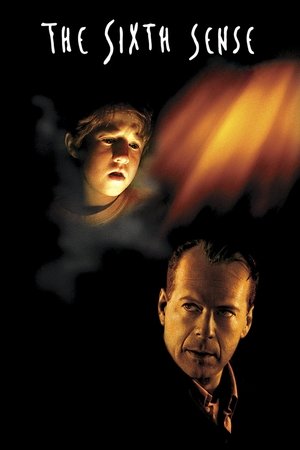
Following an unexpected tragedy, child psychologist Malcolm Crowe meets a nine year old boy named Cole Sear, who is hiding a dark secret.
The movie's plot is based on the true story of a group of young computer hackers from Hannover, Germany. In the late 1980s the orphaned Karl Koch invests his heritage in a flat and a home computer. At first he dials up to bulletin boards to discuss conspiracy theories inspired by his favorite novel, R.A. Wilson's "Illuminatus", but soon he and his friend David start breaking into government and military computers. Pepe, one of Karl's rather criminal acquaintances senses that there is money in computer cracking - he travels to east Berlin and tries to contact the KGB.
A group of people gather at a Copenhagen suburban home to break all the limitations and to bring out the 'inner idiot' in themselves.
Bruce Banner, a genetics researcher with a tragic past, suffers massive radiation exposure in his laboratory that causes him to transform into a raging green monster when he gets angry.
Max, haunted by the disappearance of his little sister Lara, lives as a recluse in a world filled with memories and visions of Lara. Unable to find peace, he desperately clings to the hope of finding her again, living in constant torment. This short film explores his descent into madness and his ultimate desire to be with his sister again.
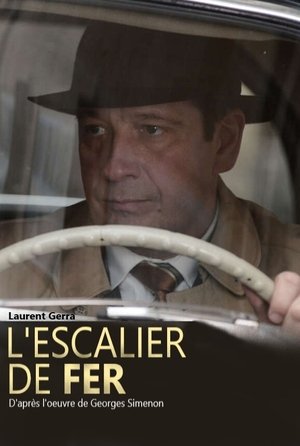
When the young detective Paul Nerteaux finds the third slashed female corpse of illegal Turkish immigrants, he decides to ask for support to the experienced dark retired detective Jean-Louis Schiffer to chase the serial killer. Together, they infiltrate in the Turkish mafia trying to find the answer to the crimes. Meanwhile, the worker Anna Heymes is being submitted to a brain treatment and has severe headaches and glimpses of memories and visions. When these two parallel events collide, disclose that the Turkish organization "The Wolves" is behind them.
Interstices
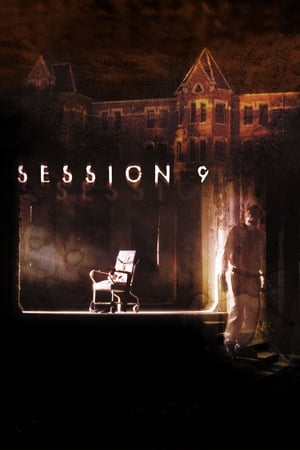
Tensions rise within an asbestos cleaning crew as they work in an abandoned mental hospital with a horrific past that seems to be coming back.
On November 13, 2015, the attacks in Paris and Saint-Denis, carried out by three Islamist commandos and claimed by ISIS, were the deadliest in France since the end of World War II. In the months that followed, the November 13 Program was launched by the CNRS and Inserm to study the construction of individual and collective memory around an event that profoundly marked French society. Today, the testimonies of 27 volunteers—among some 1,000 people—who participated in the study form a mosaic of experiences that shows how trauma extends beyond the immediate circle to permeate the national collective memory.
In 1848, Phineas Gage suffers an unspeakable brain injury when a tamping rod plunges through his skull, causing dramatic shifts in his personality. His physician Dr Harlow watches over his recovery and must choose whether or not to fight for this outcasts place in the local community.
Kiki, a 9-year-old boy who loves Ultraman and watches it every day as a way to escape his less harmonious family life. He has a deep-seated trauma caused by his parents' constant arguments, which leads him to visualize their fights as epic battles between Ultraman and the monster, reflecting his inner turmoil.
A young painter battling depression finds solace in her art and alcohol, but her inner thoughts eventually surface, forcing her to confront them. Through this introspection, she undergoes a transformative journey.
Professor Henri Laborit uses three people's stories to discuss behaviourist theories of survival, combat, rewards and punishment, and anxiety: René is a technical manager at a textile factory and must face the anxiety caused by corporate downsizing; Janine is a self-educated actress/stylist who learns that the wife of her lover is dying and must decide to let them reunite; and Jean is a controversial career-climbing writer/politician at a crossroads in life.
Yale University, 1961. Stanley Milgram designs a psychology experiment that still resonates to this day, in which people think they’re delivering painful electric shocks to an affable stranger strapped into a chair in another room. Despite his pleads for mercy, the majority of subjects don’t stop the experiment, administering what they think is a near-fatal electric shock, simply because they’ve been told to do so. With Nazi Adolf Eichmann’s trial airing in living rooms across America, Milgram strikes a nerve in popular culture and the scientific community with his exploration into people’s tendency to comply with authority. Celebrated in some circles, he is also accused of being a deceptive, manipulative monster, but his wife Sasha stands by him through it all.
On his wedding day, Joseph nervously admits that his wife is not quite like other women. But his beautiful bride is more than just the "impulsive, compulsive, obsessive" woman he thinks he knows. And when Joseph discovers she is hiding troubling secrets, it sends them both on a sexual odyssey that will either destroy or redeem their relationship.
When the suspect of an arson case refuses to cooperate with the investigation, the detectives search his house and find a locked-up little girl. She doesn't talk and there are no clues to her identity, so assistant psychology professor Narumi Saku is asked to counsel her.
Composer Herman completely goes into writing his work "Cycle", losing absolutely all connection with the outside world. One evening, he falls asleep and when he wakes up, he begins to understand that his composition begins to come to life.
Dvitva
A meek, mild-mannered man begins to suspect that his beautiful wife is poisoning him after he realizes that his acute stomach aches occur only after he eats at home. As a result, he investigates the death of his predecessor-- his wife's first husband.
While fixing up their summer cottage, Michel and his family run into a man who claims to have gone to high school with Michel.