memory file 01
Amidst the ivy-draped remnants of once-notorious public housing projects, FOR THOSE THAT LIVED THERE weaves a visual tapestry, navigating the poignant impacts of gentrification, the displacement of Black legacies, and the emergent migrant narratives. Against Chicago's ever-evolving skyline, this evocative exploration immerses audiences into the soul of a neighborhood transformed.
Ankit Tiwari works as a security guard in NOIDA, Uttar Pradesh. But his real work lies in his passion for Hip-Hop music, which he has to balance while trying to provide for his family.
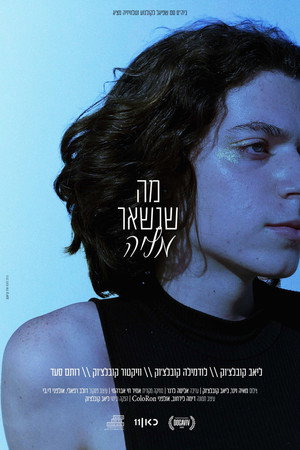
Liav (24) decides to look back at the girl he once was. Seeking to understand the painful decision to stop his gender transition process while it was in full swing and return to being a man, he embarks on an intimate journey to reconnect with his previous, younger self. He pieces together the figure of Lia - a vibrant young woman who experienced a spiritual metamorphosis, but also a severe trauma that led her to abandon her identity. Between past and present, between Lia and Liav, questions of identity, masculinity and femininity surface, attempting to understand what remains when turning back the clock - and what cannot be reclaimed.
A short Czech film which documents a large family and the house they have built by hand.
The primary motif of the documentary is the journey. A metaphorical journey, a spiritual journey, a tangible journey, a forest path, a road, a sidewalk, a drug trip, or a journey abroad. The director pastes together a collage of micro-stories of people and places that comment on the journey. Her documentary oscillates between playful absurdism, existentialism and existential questions, environmentalism, and social commentary. The dynamism and rhythm of the narrative are then determined by the jumps between different forms of video, such as analogue film, digital film, and mobile phone filming.
An idiot for some, a genius for others. Zoran is an urban legend of a Serbian block of flats who allegedly travelled the whole world without a single ID on him. After that, he went nuts due to politics, war and MDMA. “I saw it with my own naked eye,” nodded a half-blind old man. Though a clear answer to the question who Zoran really was is not to be expected at the end of this semi-serious manhunt, it is more than sure that even if he did not exist, the locals must have had to think him up.
Washed up adult film star Buster Coffey attempts to get his career back.
Like at the New Year’s Eve, showers of colourful light cut through the darkness. While fireworks dissolve into nothing after a thunderous sound, shattered glass leaves material artifact. Sharp pieces then become a reminder of the real track that fireworks leave in the sky.
Elen Řádová and Tomáš Mašín’s student work draws on the genre of action films, which are characterized by emotionally intense and violent scenes. Excerpts from period blockbusters are supplemented with visual effects and edited in a way that drives the particularities of the action film genre to the point of absurdity. The resulting visual whirlwind thus deliberately escalates—and thereby diminishes—the dramatic impact of the original footage.
Janka Vidová made this video while studying in the New Media Studio of Michael Bielický. The artist borrowed an analogue video camera from the studio and filmed her visit to the region of her hometown in Slovakia. Using visual effects and instrumental music, she edited the resulting footage into a poetic film that captures the dreamy atmosphere of the snowy countryside.
The word trauma has many shades. The documentary Confession opens up the topic of sexual harassment in the church, which the director has experienced first-hand. She looks back at the world before the trauma, and searches for answers herself to the questions of whether she will be able to come out of it after some time, and whether she will find the courage to tell her parents about it.
Director Tereza Tara fell ill at the age of twenty-five. She captured her ten-year-long journey to recovery, which took her deep into the past and to the edge of the abyss, in the form of a personal and poetic video diary. With her weakened kidneys, she visited doctors, psychosomatic experts, and an alternative healer who urged her to surrender herself into the hands of God. Gradually, she began to see the condition of her dual organs as a reflection of her unbalanced relationship with her mother, her partner, and her own body. She finally understood that if she wanted to find a cure for her diseased kidneys and start living a better life, she needed to understand herself better first.
The film portrait of a face made of shit thematizes the individual's ideas about his own freedom. Antonín dolák, philosopher and YouTuber, feels free when he gets rid of all social conventions. He loses his face, takes off his mask and talks openly about the socially taboo topics that line his life. However, a conflict arises between him and the staff, when Dolak loses control over the depiction of himself.
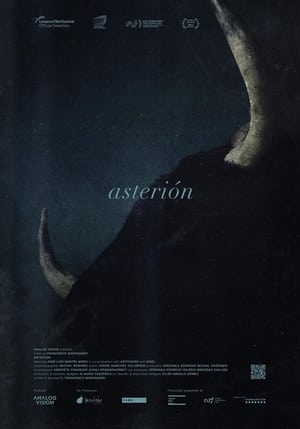
Through rhythmic re-composition of fragmented images, semi-surreal situations are explored in a documentary style of observation of a man's obsession with a powerful animal, the black horned bull, and the Spanish process of taxidermy through which he attempts to embody its beauty and strength, turning into a Minotaur. The subdued basement space in which the man meticulously studies the motionless flesh of the animal is preceded by a sunlit, empty arena in Spain, the stage in which the bull is presented in its full glory before facing man.
This film is an imprint on the film strip, an imprint in the mind just like a memory of my father’s garden where a child is playing; an imprint of the father on the garden as a reflection of his character; an imprint of the garden on the father; an imprint of him on a person. As if the seeds were falling from his beard, skin, or hair and become the garden, roots, sprouting and growing, just like a child.
The film poem about pesticides reflects on the return to the natural food chain, in which insect pest serve as food for the higher order. The harmonic cycle of life and death, the temple that is the wildflower field resounding with the inebriating sound of crickets chirping and wheat spikes rustling in the wind, is invaded by the human, the ultimate consumer with no natural predator.
Author and her crew go on a field trip to a kindergarten to ask the children what they would like to do when they grow up. The children have very clear ideas about their future, which the director visualises with the ease and artistic shorthand typical of children's drawings.
A documentary exploring the importance of film preservation through the work of the IFI Irish Film Archive
Ľudia a telefon