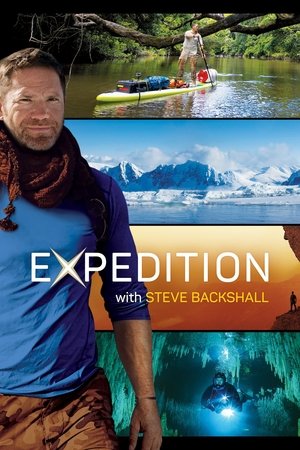
British show about possible x-files style stories.
Now more than ever, terrorist groups are obtaining nuclear weapons. With increasing cases of theft and re-sale at dozens of Russian sites, it's becoming more and more likely for terrorists to succeed.
一代洪商
Slyšte, Slované
A history of the French Revolution from the decision of the king to convene the Etats-Generaux in 1789 in order to deal with France's debt problem. The first part of the movie tells the story from 1789 until August 10, 1792 (when the King Louis XVI lost all his authority and was put in prison). The second part carries the story through the end of the terror in 1794, including the deaths by guillotine of Louis XVI, Marie-Antoinette, Danton, and Desmoulins.
Following three iconic train journeys from the air and on the ground, we discover the iconic landscapes of New Zealand, a country with the geographic diversity of an entire continent. On the way we learn about the extra-ordinary construction challenges of the 4,000 kilometre network.
Sharpe is a British series of television dramas starring Sean Bean as Richard Sharpe, a fictional British soldier in the Napoleonic Wars. Sharpe is the hero of a number of novels by Bernard Cornwell; most, though not all, of the episodes are based on the books. Produced by Celtic Films and Picture Palace Films for the ITV network, the series was shot mainly in Turkey and the Crimea, although some filming was also done in England, Spain and Portugal. The series originally ran from 1993 to 1997. In 2004, as part of ITV's new set of drama, ITV announced that it intended to produce new episodes of Sharpe, in co-production with BBC America, loosely based on his time in India, with Sean Bean continuing his role as Sharpe. Sharpe's Challenge is a two-part adventure; part one premiered on ITV on 23 April 2006, with part two being shown the following night. With more gore than earlier episodes, the show was broadcast by BBC America in September 2006.
Suicide Cults is a gripping exploration into the lives of former cult members. David Koresh devotees detail their years inside Mount Carmel and a Jim Jones follower recalls how she narrowly escaped death during the largest mass suicide in US history.
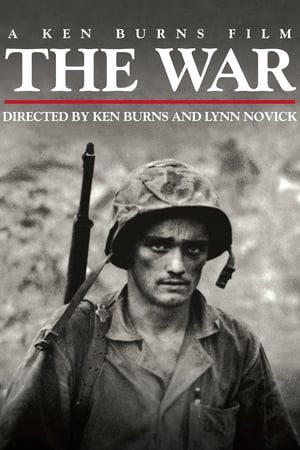
The reunion of old friends, first-person accounts, and rarely seen footage paint an extraordinary and deeply profound picture of what it was like to live through one of history's longest wars.
Paris, une histoire capitale
The American Revolution was at once a war for independence, a war of conquest, a civil war, and a world war, fought by neighbors on American farms and between global powers an ocean or more away. It impacted millions from Vermont’s Green Mountains to the swamps of South Carolina, from Indian Country to the Iberian Peninsula. In defeating the British Empire and giving birth to a new nation, the American Revolution turned the world upside-down. Thirteen colonies on the Atlantic Coast united in rebellion, won their independence, and established a republic that still endures. The American Revolution will present the story of the men and women of the Revolutionary generation, their humanity in victory and defeat, and the crisis that they lived through.
GET THE NAME RIGHT looks to set the record straight with an unauthorised Māori perspective of our place names told in an entertaining way whilst providing a platform to settle a few debates along the way.
On May 25, 1961, President John F. Kennedy made a historic speech where he pledged to send astronauts to the moon before the end of the decade. Eight years later, on July 20, 1969, Apollo commander Neil Armstrong stepped out of the lunar module and made a giant leap for mankind - a step that symbolized one of the most remarkable feats in human history. From that moment on, the exploration of our universe has achieved unimaginable feats with hundreds of missions stretching light years into the distant galaxy. This exciting documentary series takes viewers into the past, present and future of NASA.
Examine how ancient civilisations built some of the most magnificent structures on the face of the Earth, many centuries before the industrial revolution.
Les Grandes batailles du passé
Hosted by the iconic Henry Winkler, each 60-minute episode of this nostalgia-drenched series tells the stories of the things we did—for fun, for money, or out of plain boredom—that you can’t do anymore. Pastimes, practices, and products that were once allowed—even encouraged—which you will never see again in modern America.
These unorthodox military innovations were not developed by chance, each was constructed to solve a tactical or strategic problem, such as overcoming Nazi defences on D-Day, mounting a surprise attack over water, or safely moving an agent back and forth across enemy lines. The US smart bomb piloted by live pigeons, a jet pack used by flying soldiers, an incendiary bombing program that used bats released from aircraft, and a giant Catherine Wheel are all covered in this fascinating series. World’s Weirdest Weapons explores never before seen weapons and introduces viewers to the extraordinary people that invented these ingenious devices.
Victoria Wood's Nice Cup of Tea
Set during the 18th century Napoleonic Wars, Horatio Hornblower, a young and shy midshipman, rises through the ranks to become an admiral.
A documentary series that gives a historical account of the events of World War II, from its roots in the 1920s to the aftermath and the lives it profoundly influenced.