Circus Tuomento is a documentary about Finland's most famous tightrope walker, Antti Tuomento (b.1968). After the tragic break of his circus career, he focuses on building his own city. About a dozen fascinating, organic buildings have been made in the garden. The city with its museum, church and theater can be seen as an attempt to take fate into one's own hands – and to build an entire alternative world. The second narrator of the film, Antti's father, novel writer Matti Tuomento (1933-2016), lived with the weight of his own failed career as an artist, his repulsion towards fatherhood and his own childhood trauma. He poured his own childhood trauma and artistic collapse over his family. Trauma, which has moved from one generation to the next, has now turned into Antti's fascinating city. It is one of the most important art environments in our country. Antti has declared the city of Pelimannimäki as an independent kingdom.
In New Jersey, the Good Grief community focuses on a holistic way of dealing with grief, where children can give in to rage in ‘the volcano room,' and say goodbye to a dying teddy bear patient in ‘the hospital room.' Over the course of a year, we follow the weekly meetings and get close to Kimmy, Nicky, Peter, Nora, Nolan, and Mikayla and their close companion: grief. It is sometimes heartbreaking, but also humorous, to experience the questions about life and death through their open and curious minds. Grief is high and heavy as a mountain, but it helps you understand what has happened, and that death is irreversible.
The jaguar is the third largest of the big cats and pound for pound the most powerful. Our jaguar patrols a home range of over one hundred square kilometers in Brazil deep in the heart of the world's largest tropical rainforest.
Follows the lives of famous viners and longtime best friends Jack Gilinsky and Jack Johnson.
As a Bauhaus photographer, Lucia Moholy (1894-1989) was a pioneer of New Objectivity. Her husband László Moholy-Nagy was appointed to the Bauhaus in 1923. They worked there together and László became famous as the inventor of the photogram, a photo without film. Lucia's contribution to this only became known later. When the Czech-born Jew was forced to leave Germany in 1933 after the Nazis seized power, she was unable to take her most important possession, her glass negatives, with her. She struggled to keep her head above water in London and worked for the British secret service on the microfilming of valuable documents. With her vision of microfilm as freely accessible information for all, she is now regarded as a pioneer of the Internet. After the war, Lucia set out in search of her glass negatives.
With a hybrid style blending political essay and road movie, this documentary by Santiago Bertolino takes us into the heart of the Amazonian reality. Following Marie-Josée Béliveau, an ecologist and ethnogeographer, they journey together along the 4000 km from the mouth of the Amazon River in Brazil to one of its sources in Ecuador where they meet with the guardians of the forest. As a result, we witness powerful and spontaneous testimonies from local communities who are doing everything to preserve what remains of their lands, which are disappearing due to the inexorable advance of Western modernity.
Using cutting-edge scanning technology and state-of-the-art CGI, a team of experts creates the first high-resolution 3D digital twin of the Titanic wreck. Through a groundbreaking immersive investigation, they uncover the ship’s final moments, shedding light on the acts of heroism and cowardice aboard—and revealing the true story behind the sinking of the “unsinkable” ship.
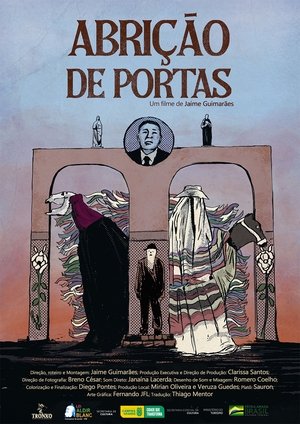
Rio Doce - 60 Dias Depois
A História Pelos Olhos de Quem a Viu
Língua do Corpo
Vidas prestadas
A journey through the Brazilian Amazon, guided by the eyes of Renato, a Carioca turned Amazorioca. A reflection on identity, the legacy of an ancestral territory, and the cost of progress. An ode to the forest and the fragility of what remains.
An ocean separates them, the Atlantic. A granddaughter sets out to trace her grandfather's footsteps. She saw him often, but they never really met. At 91, Réal Arsenault has a life worth telling. A painter who left his mark on the history of contemporary art in Quebec, he was also very active in politics, working alongside supporters of a free and independent Quebec. This film will pay tribute to his life and his art, but it will also question what we leave behind on Earth, the legacy we pass on to our children and grandchildren, and the importance of communication within a family.
Korea, 1910s: documentary footage filmed in Seoul, at the now-destroyed site of Donuimun (the Great West Gate of the city), and the port of Chemulpo, present-day Incheon.
Hanchul has been running a small neighborhood supermarket in Hoengseong, Gangwon Province, for decades. Over time, he faces the wear and tear of the store's belongings.
In a world obsessed with happiness, so many of us are feeling more lost than ever. After a life-altering accident, Tim travels across four countries to explore how we define happiness — and whether we’re even asking the right questions. What he discovers could change the way we live, and what we value, forever.
Drawing on 45 years of Horizon archive, Dr Kevin Fong presents a documentary showing how the intriguing possibility of life on Mars has fuelled man's quest to visit the Red Planet.
Téléphone is a great success story in French rock: 300,000 albums sold in 1979. The group was born on December 16, 1976, at a surprise concert at the American Center in Paris. Four instrumentalists, four self-taught, four musicians untroubled by the successive waves of fashions from across the Atlantic and the Channel: Jean-Louis Aubert, singer and songwriter; Louis Bertignac, guitarist; Richard Kolinka, drummer; Corinne Marienneau, bassist. From titles: “Métro c'est trop”, “La bombe humaine”, “Crache ton venin”... Portraits and interviews, trances and crowd-pleasers at the Palais des Sports and the Fete de l'Humanité, a look behind the scenes. Jean-Marie Périer, with seven cameras in hand, now captures the phenomenon in a feature-length film. Camera movements, editing on a giant triple screen and Dolby Stereo sound all serve to highlight the quartet's harmony and vitality.
In the early 70s, Barbara discovered herself backstage on her French tour. The artist plays with intimacy and camera glances. Between concerts, she talks to herself and the men in her life.
Right in the heart of Hackney, The Cock Tavern is no ordinary East London pub. Renowned for its real ales, larger-than-life regulars, and a dose of eccentric charm, it also plays host to one of the capital’s quirkiest underground traditions: the pickled egg eating competition. How Fast Can You Eat a Pickled Egg? is a short documentary that dives headfirst into this bizarre yet beloved ritual, capturing the characters, chaos, and community spirit that make the event truly unforgettable. From local legends chasing eternal glory to wide-eyed newcomers testing their limits, the film is a funny and heartfelt portrait of a place where tradition is steeped in vinegar—and victory tastes oddly sulphuric.