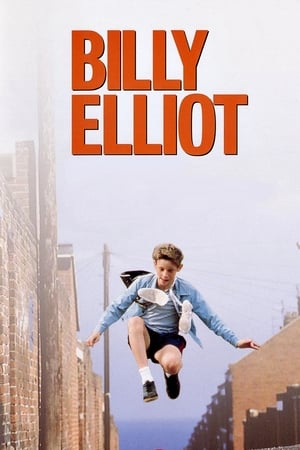
County Durham, England, 1984. The miners' strike has started and the police have started coming up from Bethnal Green, starting a class war with the lower classes suffering. Caught in the middle of the conflict is 11-year old Billy Elliot, who, after leaving his boxing club for the day, stumbles upon a ballet class and finds out that he's naturally talented. He practices with his teacher Mrs. Wilkinson for an upcoming audition in Newcastle-upon Tyne for the royal Ballet school in London.
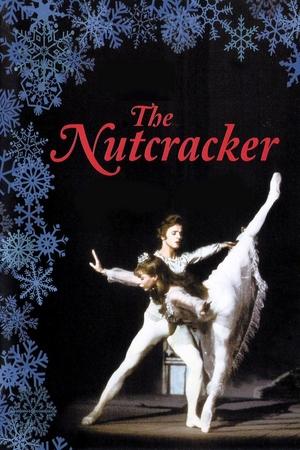
The Nutcracker is Mikhail Baryshnikov's breathtaking and critically acclaimed Emmy-nominated production. This spectacular performance is danced by the magnificent team of Baryshnikov, one of the greatest classical dancers of the century, and Gelsey Kirkland, both showcased at the peak of their careers, with members of the American Ballet Theatre.
The Royal Ballet Company brings Squirrel Nutkin, Tom Thumb, Hunca Munca, Jemima Puddle-Duck, Jeremy Fisher, Pigling Bland, and Pigwig to the screen doing pirouettes and pas de deux in this filmed ballet production directed by Reginald Mills. The film more properly belongs, however, to choreographer Frederick Ashmore, composer John Lanchbery, and costume designer Rostislav Douboujinsky. This literal adaptation concerns the shy Beatrix Potter and how, when all of the toy animals in her room come to life, she emerges from her shell and begins to enjoy life. Sequences include a rowdy dance with Tom Thumb and Hunca Munca destroying a collection of plaster food, a midnight pas de deux between Pigling Bland and Pigwig, and a corps de ballet of dancing mice.
The first modern-day world premiere of Lully's last ballet-comedy.
The story of Don Quixote tells of the old knight who dreams of chivalry and his comic squire, Sancho Panza. This performance by the Kirov has been hailed as one of the greatest large cast ballet productions ever recorded on film. The tremendous resources of the Kirov Ballet flash and dash through the four acts of joyous Petipa and Gorsky choreography making Don Quixote a thrilling visual treat. This delightful spectacle features the great Soviet dancers Tatyana Terekhova and Farouk Ruzimatov as the lovers Kitri and Basilio. Don Quixote is performed by Kirov star Vladimir Ponomaryov. Filmed live at the Kirov Theatre in Leningrad.
A dance story about Tchaikovsky, illuminating the long-hidden moments of his life. Through his compositions, Pyotr Ilyich Tchaikovsky influenced and shaped classical ballet like few other composers. The myth of his music remains unbroken to this day. Cayetano Soto draws an engaging portrait of a man who could not live his life the way he wanted to. In "Tchaikovsky", the view behind the glorious moments of a biography is revealed - in brokenness, courage and genius. Recorded at the Leipzig Opera.
Good triumphs over evil in this fairy tale that sets magic, romance, and tragedy to Tchaikovsky’s timeless score. One of the most iconic works in the ballet literature, this revival features Rudolf Nureyev’s career-defining choreography. Production celebrates 50th anniversary of the production choreography by Nureyev.
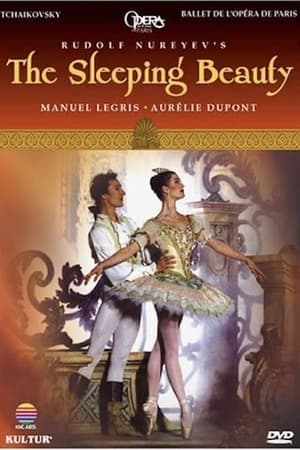
The Sleeping Beauty remains, as Rudolf Nureyev often called it, the 'ballet of ballets'. It is the most accomplished and the most brilliant, as well as one of the most spectacular of the 19th century, and the most representative of the 'noble' style of classical dancing. Performed by Opera National de Paris in 2000.
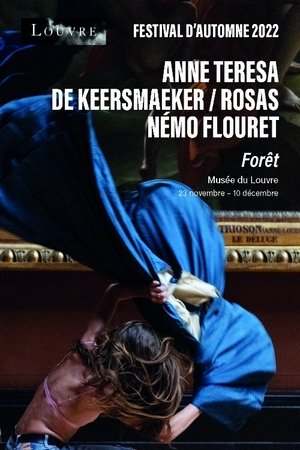
Whirlwinds, burning forests, erased cities – the centuries-old artworks housed in the Louvre strongly resonate with our present time. Forêt follows a new generation of Rosas dancers moving amidst these artworks, bridging past and present. Choreographed by Anne Teresa De Keersmaeker and Némo Flouret in 2022, the performance was designed for the Louvre’s Grande Galerie and its famed 'red rooms,' home to Italian masterpieces and 19th-century French Romantic art. Evi Cats captured this performance, with a camera that moves almost imperceptibly between the dancers and the audience, alternating between intimate close-ups and wide shots of the imposing scenery.
Dance film inspired by the life and work of the artists Camille Claudel and Auguste Rodin.
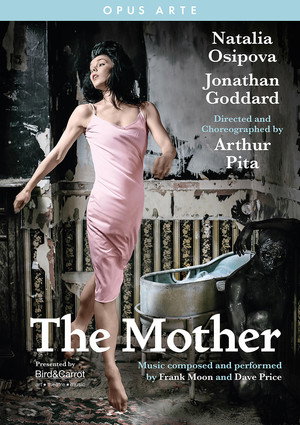
The Mother is a powerful, narrative dance production choreographed and directed by Arthur Pita - a master storyteller. Inspired by Hans Christian Andersen’s dark tale, The Story of a Mother, this sumptuously designed production stars international dance superstar Natalia Osipova and multi-award winning dancer Jonathan Goddard. This is an inventive new production which conjures up a dangerous, kaleidoscopic world, combining narrative dance and drama. In setting out to save her sick child a young mother journeys into the unknown to face life and death. Will she succumb to the forces of evil, or will the power of motherhood prevail?
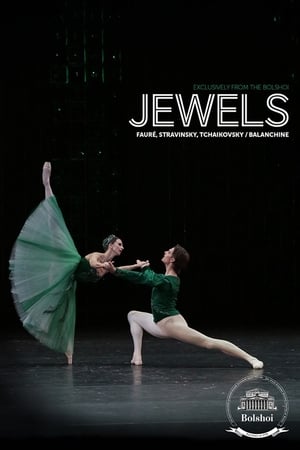
George Balanchine's jewel-themed triptych, strikingly choreographed to the music of Faure, Stravinsky and Tchaikovsky. This three act masterpiece is renowned as the world's first full-length abstract ballet. The Russian-born co-founder of the New York City Ballet, Balanchine was inspired by the artistry of jewellery designer Claude Arpels to create a trio of distinct movements revealing the essence of each precious stone. Each part also evokes three different cities: Paris, New York and St. Petersburg. 'Emeralds' was conceived as a tribute to the French romantic school, with music by Gabriel Faure. The fiery and energetic 'Rubies' taps into the rich tradition of Broadway musicals, with music by Stravinsky. 'Diamonds' honours the grandeur of Imperial Russia and the Maryinsky Theater, choreographed to the music of Tchaikovsky. With its jewel-like costumes, this is a celebration of the influences on the choreographer who was described as the father of American ballet.
Four outstanding works by world-renowned Czech dancer and choreographer Jiří Kylián performed for the first time by the National Theatre Ballet. The National Theatre Ballet has prepared a special premiere entitled Kylián – Bridges of Time for this year's celebrations of the founding of the republic. This project will not only dignifiedly support this important anniversary, but also pay tribute to the famous Czech native, choreographer Jiří Kylián, who has undoubtedly become an icon of world dance. The evening will present four works to the audience – Psalm Symphony, Bella Figura, Petite Mort, and Six Dances.
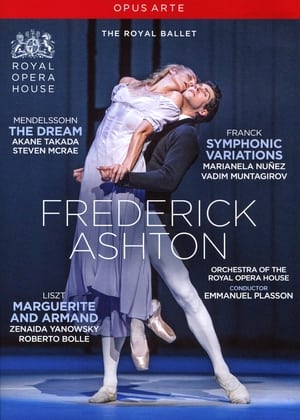
The Dream: Frederick Ashton’s delightful interpretation of Shakespeare’s A Midsummer Night’s Dream is a classic of The Royal Ballet’s repertory. Symphonic Variations: Ashton was inspired to create a ballet on the four seasons – but as he began to choreograph he refined and purified until the ballet shook off its original meaning, emerging as an abstract celebration of movement and physicality. Marguerite and Armand: Marguerite, a Parisian courtesan, lies on her deathbed. She recalls her tragic love affair with Armand in a series of feverish flashbacks.
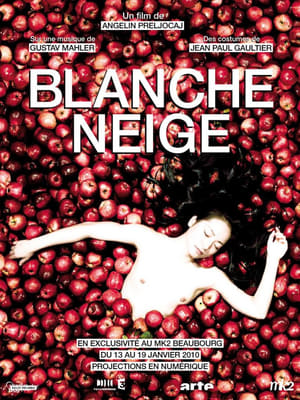
To speak of that ballet is very difficult because the theme is so popular as a fairy tale, adapted by Perrault from German folklore and then recuperated from the same folklore by the Grimm brothers, and what's more turned into an unforgettable film by Walt Disney. Angelin Preljocaj was thus trying to break a mould in which that character and her story had been cast seemingly for ever. And it is a success. Because first the setting, the stage direction are very interesting and rich. Rich are the costumes. Rich are the main ideas of the setting like the enormous magic mirror coming down from the sky, or like the deep underground mine turned into a vertical surface on which the seven dwarfs are dancing like dragon-flies on their strings.
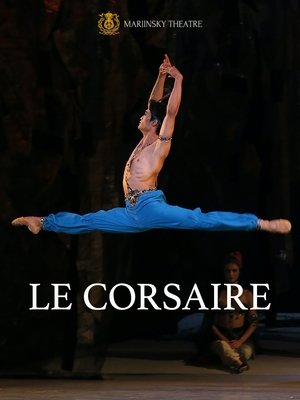
The Mariinsky Theater presents Le Corsaire, a ballet in three acts, with a libretto based on the poem The Corsair by Lord Byron.
Eugen Suchoň's ballet Angelika is historically the first Slovak ballet in staged form, depicting the story of a musically gifted but poor and underestimated girl who is wrongly accused of theft. In the 2014/2015 season, the SND Ballet undertook the staging of the first Slovak ballet. Composer Eugen Suchoň (1908 - 1993), one of the founders of Slovak musical modernism, wrote the ballet pantomime Angelika for Slovakia as a seventeen-year-old pupil of the Music School. The work was found in the composer's estate along with other compositions from the so-called pre-Opus period. Mauro di Candia, who choreographed and directed the first staging of Suchoň's work, presents the staging concept of the ballet Angelika as an original, precise and pure ballet form within a contemporary choreographic language, combined with the musical elements of Suchoň's melodic score.
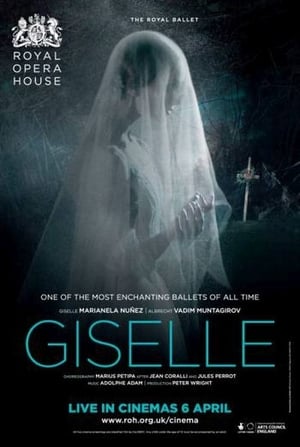
The peasant girl Giselle discovers the true identity of her lover Albrecht – and that he is promised to another. Giselle kills herself. Her soul enters the ranks of the Wilis – shades of young women who died before their wedding day. All men that come across their path are compelled to dance themselves to death, and Albrecht falls into their trap. Giselle’s intercession saves Albrecht and releases her soul from the Wilis’ power.
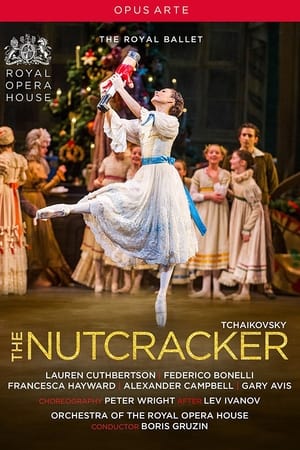
The young Clara creeps downstairs on Christmas Eve to play with her favourite present – a Nutcracker. But the mysterious magician Drosselmeyer is waiting to sweep her off on a magical adventure. After defeating the Mouse King, the Nutcracker and Clara travel through the Land of Snow to the Kingdom of Sweets, where the Sugar Plum Fairy treats them to a wonderful display of dances. Back home, Clara thinks she must have been dreaming – but doesn’t she recognize Drosselmeyer’s nephew?
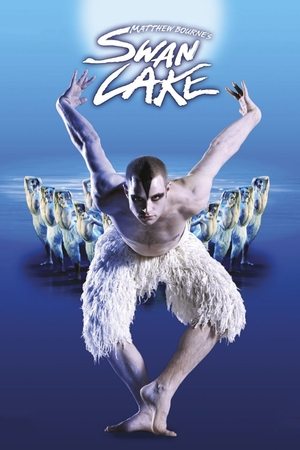
Matthew Bourne choreographs this performance of Tchaikovsky's ballet, filmed live in London. The show, the longest running ballet on both Broadway and the West End, follows the story of Prince Siegfried, who promises his love to swan maiden Odette, only to be tricked by magician Von Rothbart. The stars include Richard Winsor, Dominic North, Nina Goldman, Madelaine Brennan, Steve Kirkham and Joseph Vaughan.