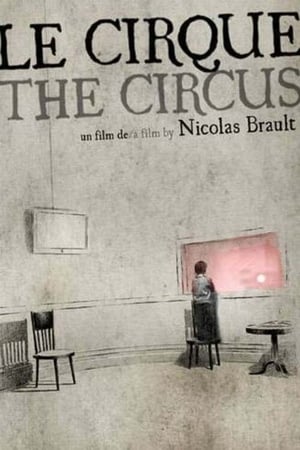
In the vestibule of a hospital room, a young boy waits to see his dying mother. The clamor and spiralling movements of bodies around him intensify, forming a grotesque circus—a cacophonous circle that pushes the child back, depriving him of one final touch of his mother's hand. Using rotoscoped drawings suggestive of charcoal sketches, as well as 3D and object animation techniques, The Circus compels viewing with its unsettling realism. Colour is employed metaphorically to subtly express the promise and the memory of maternal affection. Nicolas Brault's highly personal film, suffused with poetic modesty, casts a poignantly sincere gaze on the heartbreak of a child facing the fearful, mysterious experience of his mother's death.
Poème Électronique is an 8-minute piece of electronic music by composer Edgard Varèse, written for the Philips Pavilion at the 1958 Brussels World’s Fair. The Philips corporation commissioned Le Corbusier to design the pavilion, which was intended as a showcase of their engineering progress. The pavilion was shaped like a stomach, with a narrow entrance and exit on either side of a large central space. As the audience entered and exited the pavilion, the electronic composition Concret PH by Iannis Xenakis (who also acted as Le Corbusier's architectural assistant for the pavilion's design) was heard. Poème électronique was synchronized to a film of black and white photographs selected by Le Corbusier which touched on vague themes of human existence.
In 1971, graduate student Gloria Orenstein received a call from Surrealist artist Leonora Carrington that sparked a lifelong journey into art, ecofeminism and shamanism. This short film uses art, animation and storytelling to celebrate this wild adventure. Now more than 40 years later, award-winning Dr. Gloria Feman Orenstein is a feminist art critic and pioneer scholar of women in Surrealism and ecofeminism in the arts. Her delightful tale brings alive an often unseen history of women in the arts.
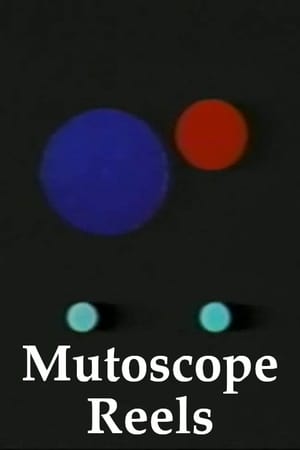
An mutoscope motion picture installation commissioned for the 86th anniversary of the Guggenheim museum. Later preserved and turned into a short film. Preserved by the Academy Film Archive in 2000.
On a lonely night, a girl searching for her missing dog is transported to a magical world, where she reunites with her friend in an unexpected form. As she explores this whimsical realm, she confronts memories from her life.
NOSTALGIA
A visual essay on the stimuli that draw a bridge to past memories of my life; a real documentary about where I was and where I am, what I did and what I do; a reflection of the person I was and continue to be.
Le Royaume des Dôlle
Nevena arrives to her family home in the countryside, where she is welcomed by her mother and grandmother. The time spent there brings unexpected changes—Nevena faces her grandmother's aging, the relationship between mother and daughter is put to the test, and through the lens of her camera, Nevena tries to preserve tender moments and the last remaining memories.
Childhood memories of fishing with grandpa grow so vivid they visit the protagonist's present experience.
Nested Sequence
In 1950s Italy, two middle-aged brothers go on a magical odyssey through their past as they take part in the world's most beautiful car race: the Mille Miglia.
A generational trauma through the lens of an Asian American teenager through food and poetry.
La Vénus de Rabo
An animation short featuring various art styles about the loss of identity.
Deluge weaves together memories of childhood in Bandra and portrays the events of the 26th July floods which drowned Mumbai in 2005 - This short film stems out of the director's childhood belief that his father, who had been overseas would bring an entire ship into the city to save him and his brother.
A young man returns to the beach that holds meaningful memories, both good and bad.
This is the story of my grandfather, Tiago Florit, who for 50 years was a film operator at the Teatre Principal de Maó, in Menorca. It is a review of his life, from his birth to his death, in a cinematographic key. A true love story to cinema.
If God came down to earth and try to earn a living in Bombay, most probably he would become successful as a voice over artiste, lending his voice to thousands of Hindi movies and even more documentaries and public service films in India.
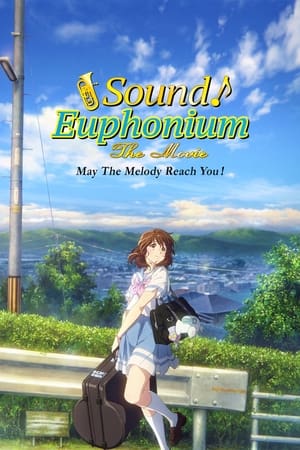
Autumn is in the air as the Kitauji High School concert band prepares for the National Competition. The band hears troubling news that Asuka Tanaka, vice president of the club and one of the key euphonium players in the band, may quit! Asuka is beautiful and charismatic and everyone relies on her, but she also has a cool side and never reveals her true self. Kumiko doesn’t get along with Asuka initially, but her feelings change when she learns that Asuka may actually drop out. Asuka has feelings about the euphonium that she cannot tell anyone else…