France, 1914, during World War I. On Christmas Eve, an extraordinary event takes place in the bloody no man's land that the French and the Scots dispute with the Germans…
When the First World War breaks out in 1914, Josef Schwejk, a naive dog dealer in Prague, joins the Imperial Army.
Testament of Youth is a powerful story of love, war and remembrance, based on the First World War memoir by Vera Brittain, which has become the classic testimony of that war from a woman’s point of view. A searing journey from youthful hopes and dreams to the edge of despair and back again, it’s a film about young love, the futility of war and how to make sense of the darkest times.
Professor Niall Ferguson argues that Britain's decision to enter the First World War was a catastrophic error that unleashed an era of totalitarianism and genocide.
A family suffers greatly during the First World War.
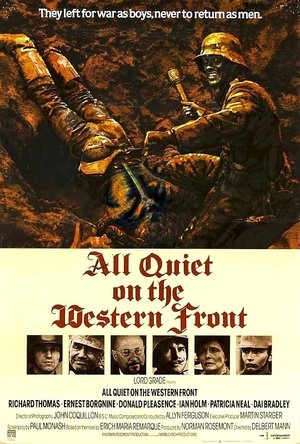
At the start of World War I, Paul Baumer is a young German patriot, eager to fight. Indoctrinated with propaganda at school, he and his friends eagerly sign up for the army soon after graduation. But when the horrors of war soon become too much to bear, and as his friends die or become gravely wounded, Paul questions the sanity of fighting over a few hundreds yards of war-torn countryside.
Sergeant Michael Dunne fights in the 10th Battalion, AKA The "Fighting Tenth" with the 1st Canadian Division and participated in all major Canadian battles of the war, and set the record for highest number of individual bravery awards for a single battle
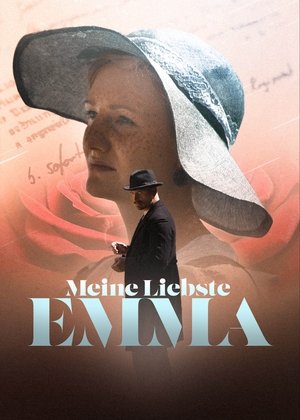
Celebrating the end of World War II and liberation of their city, a group of students is set on holding a cultural evening. They invite Ema, a reclusive piano teacher from the same building, to play for them. Ema declines, but starts reminscing back on her own life and the historical events that have seemingly overshadowed it.
Joint montage of the first three silent films about Švejk: Good Soldier Švejk (1926, director: Karel Lamač), Švejk on the Front (1926, director Karel Lamač) and Švejk in Russian Captivity (1926, director: Svatopluk Innemann, model Karel Vaněk). The lead role was played by Karel Noll, who was very popular at the time. The last silent sequel Švejk v civilu (1927) exists independently, but the copy of the film is badly damaged.
The events in Sarajevo in June 1914 are the backdrop for a thriller directed by Andreas Prochaska and written by Martin Ambrosch, focusing on the examining magistrate Dr. Leo Pfeffer (Florian Teichtmeister) investigating the assassination of Archduke Franz Ferdinand. Trying to do his job in a time of lawlessness and violence, intrigues and betrayal, Leo struggles to maintain his integrity and save his love, Marija, and her father, prominent Serbian merchant. But the events of Sarajevo have set into motion an inescapable course of events that will escalate to become … the Great War.
In November of 1918 as World War I was ending, a unit of American soldiers goes behind enemy lines to find a lost platoon of African American soldiers.
With Jean-Baptiste at the front, Louise takes care of Bébé with the help of Uncle Pierre. The letters she receives from Jean-Baptiste worry her, but Pierre distracts Bébé with a box of tin soldiers. That night, Bébé has a dream of his soldiers vanquishing the enemy, and the next morning, Jean-Baptiste surprises the family by returning home.
Les Fiancés de 1914
In 1917, the First World War is raging. Julien is from Luxemburg, so instead of having to go to war he studies piano in Paris. One day his friend Jacques, also a musician and now a fighter pilot on the front, invites him to spend a few days in his family's empty house in Bray. The housekeeper, a beautiful stoic woman lets Julien in, but his friend is late and he is obliged to wait. In the meantime, he starts reminiscing of the pre-war days spent with his friend and Jacques' girlfriend Odile.
A young Catholic priest from Boston confronts bigotry, Nazism, and his own personal conflicts as he rises to the office of cardinal.
The story of an idle rich boy who joins the US Army's Rainbow Division and is sent to France to fight in World War I, becomes friends with two working class men, experiences the horrors of trench warfare, and finds love with a French girl.
In 1911, a willful and determined man from peasant stock named Charles Saganne enlists in the military and is assigned to the Sahara Desert under the aristocratic Colonel Dubreuilh.
This film takes us into the harsh realm of BC's early coal mines, canneries, and lumber camps; where primitve conditions and speed-ups often cost lives. Then, the film moves through the unemployed' struggles of the '30s, post WWII equity campaigns, and into more recent public sector strikes over union rights.
In times of World War I, a group of boisterous young ladies occurs to them that they could help the boys of the front writing letters to them and, thus, becoming their godmothers of war. Madeleine writes to the soldier Jacques Bertin, but, out of prudence, instead of giving her true identity, she impersonates her late grandmother. When the soldier comes on leave and wants to see her, the mistake will bring humorous consequences.
Denise lives with her grandparents on a farm and secretly meets Robert. When she tells her grandparents that she wants to marry Robert, they refuse outright, so the two lovers will have no choice but to elope and marry in the nearby town. On the eve of having a child, war breaks out and Robert is mobilized.