A portrait of Palestinian political leader Yasser Arafat (1929-2004).
A crime she committed in her youthful past sends Piper Chapman to a women's prison, where she trades her comfortable New York life for one of unexpected camaraderie and conflict in an eccentric group of fellow inmates.
Terry Wogan's Friday Night
The life of the intellectual Samgin, depicted against the backdrop of the grand panorama of Russian life from 1877 to 1917.
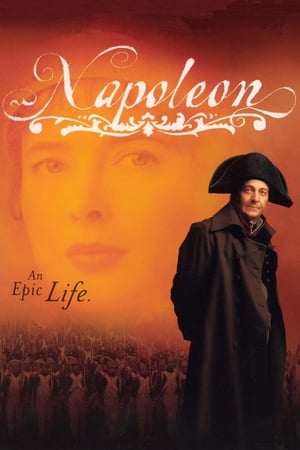
A masterful soldier, tactician and statesmen, Napoleon Bonaparte's courage and love for his country sees him rise from an unpaid general consumed with ambition to the most powerful man in Europe, then his fall, and exile.
In the middle of the Cold War, a Soviet submarine runs aground outside Karlskrona and suddenly Sweden finds itself at the center of events. Prime Minister Thorbjörn Fälldin tries to resolve the conflict and avoid a world war between two nuclear powers while struggling with a wise foreign minister and a belligerent commander-in-chief.
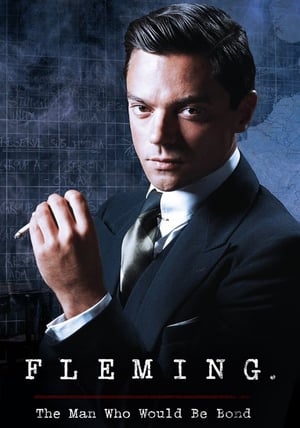
Set at the outbreak of WWII – mischievous playboy Ian Fleming is untroubled by the specter of impending war – chasing women, collecting rare books and living off his family fortune. Forever in the shadow of his brother Peter, and an eternal disappointment to his formidable mother Eve, Fleming dreams of becoming the ‘ultimate’ man – a hero, a lover, a brute and the one who always gets the girl. He is finally given some direction in his life when he’s recruited by the Director of Naval Intelligence to help in the effort against the Nazis. Suddenly, Fleming finds his chance to shine and prove his worth.
A historical saga about the second caliph and Commander of the Faithful Omar Bin Al-Khattab and his pivotal role in the Islamic State.
For Palestinians, 1948 marks the “Nakba” or “catastrophe”, when hundreds of thousands were forced out of their homes. For Israelis, the same year marks the creation of their own state. This four-part series attempts to present an understanding of the events of the past that are still shaping the present.
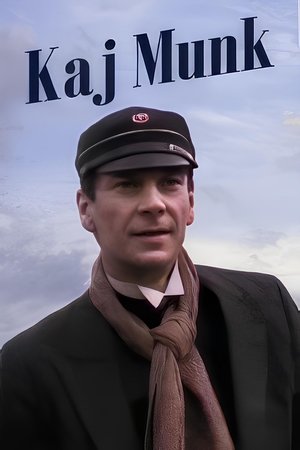
Kaj Munk
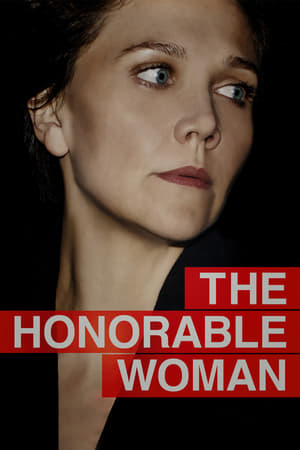
Nessa Stein, the daughter of a Zionist arms procurer who as a child witnessed his assassination. Now an adult, Nessa inherits her father's company and changes course from supplying arms to laying data cabling networks between Israel and the West Bank. Her efforts to reconcile the Israelis and Palestinians lands her an appointment to the House of Lords and creates an international political maelstrom.
Beautiful People is a British comedy drama television series based on the memoirs of Barneys creative director Simon Doonan. The series takes place in Reading, Berkshire, in 1997, where thirteen-year-old Simon Doonan and his best friend Kylie dream of escaping their dreary suburban surroundings and moving to cosmopolitan London "to live amongst the beautiful people." The first episode aired on BBC Two on 2 October 2008 and recorded overnight ratings of 1.5 million viewers and positive critical reaction. Episodes are self-contained, but do follow a loose story arc throughout the course of each series. The second and final series finished airing on 18 December 2009.
Through the eyes of 14-year-old Benjamin, and set over the course of a long, hot, Queensland summer, the Law family navigate a series of sometimes disastrous events which become memorable milestones, and serve as a reminder that at the end of the day family can sometimes feel more like a sentence than a choice.
Jimmy Perry and David Croft wrote some of Britain's favourite sitcoms, but these classic comedies are also a unique chronicle of 20th century Britain.
In 1935, financially strapped widow Louisa Durrell, whose life has fallen apart, decides to move from England, with her four children (three sons, one daughter), to the island of Corfu, Greece. Once there, the family moves into a dilapidated old house that has no electricity and that is crumbling apart. But life on Corfu is cheap, it's an earthly paradise, and the Durrells proceed to forge their new existence, with all its challenges, adventures, and forming relationships.
Chronicle of the attack perpetrated by the Palestinian terrorist group Black September in the Olympic Village during the 1972 Munich Summer Games.
This devil of a man plunges the viewer into the very heart of the Voltaire whirlwind, that incandescent mind who shook his century. The series follows his meteoric rise, his exiles, his battles and flashes of genius, in a Europe still tightly bound by absolutism. We discover an unbowed, charming, formidable man whose pen makes ministers, kings and fanatics tremble. Between glittering salons, damp prisons and passionate loves, Voltaire crosses the Age of Enlightenment like a meteor. Each episode reveals a confrontation, a flight, a victory wrested through the sheer force of intellect. Carried by elegant direction and a sweeping, novelistic energy, the series paints a vibrant portrait of a fighter for freedom. A journey into the life of a man who never stopped thinking, loving and provoking.
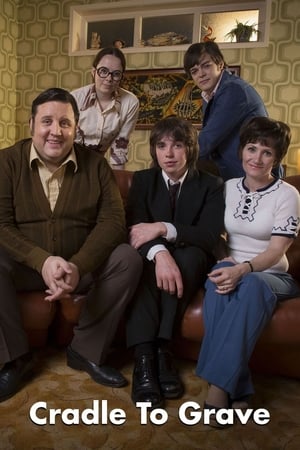
Multi-generation family sitcom set in the 1970s, loosely based on Emma Kennedy's memoirs. The Kennedy family pursue every opportunity they can to climb the social ladder on their housing estate.
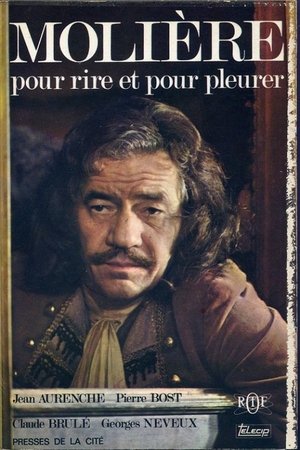
Molière pour rire et pour pleurer recounts the life of Jean‑Baptiste Poquelin, from his childhood in an artisan family to his rise as Molière, a central figure of French theatre. The series shows his difficult decision to abandon the family trade and join Madeleine Béjart to found L’Illustre Théâtre, marked by debts and repeated setbacks. While touring the provinces, he shapes his style and discovers the power of comedy. Back in Paris, he makes a name for himself with Les Précieuses ridicules, but his sharp satires provoke fierce opposition, especially during the Tartuffe scandal. Supported by Louis XIV, he continues despite attacks, literary rivalries, and tensions within his troupe, particularly with Armande Béjart. The miniseries also follows his growing exhaustion, his determination to perform at any cost, and his final breath after Le Malade imaginaire, the ultimate symbol of an artist who lived — and died — for the stage.
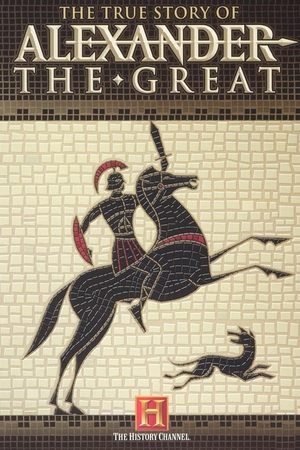
Tutored by Aristotle, helpless witness to his father's assassination, and a brilliant, pioneering tactician, Alexander the Great had conquered the known world--and sealed his legacy as one of history's most remarkable rulers--by the age of 25. In the year 334 B.C., 20-year-old King Alexander of Macedonia decided to bring the farthest reaches of the world under one domain. Over the next 12 years, he led a grand army across more than 20,000 miles and eventually brought all of Asia under his control, only to perish from battle wounds at the age of 32. Incorporating dramatic onsite reenactments with high-end computer graphics and the expertise of renowned scholars, THE TRUE STORY OF ALEXANDER THE GREAT is a special presentation from THE HISTORY CHANNEL®, examining the life and career of this military genius, impassioned lover, and fearless leader.