Marvin, a heavy-drinking widower meets Tige, an 11-year-old orphan. With nowhere else to go, Tige moves in with Marvin and they develop a close friendship. Marvin wants to adopt Tige but knows that he is too poor to give him a good home. Then he discovers who Tige's father is a rich suburbanite who doesn't even know Tige exists. Should Marvin, and can he, give up the boy he loves, and who loves him, in favor of a stranger with the right genes and bank balance?
Geeky teenager David and his popular twin sister, Jennifer, get sucked into the black-and-white world of a 1950s TV sitcom called "Pleasantville," and find a world where everything is peachy keen all the time. But when Jennifer's modern attitude disrupts Pleasantville's peaceful but boring routine, she literally brings color into its life.
Mexican beauty Camilla hopes to rise above her station by marrying a wealthy American. That is complicated by meeting Arturo Bandini, a first-generation Italian hoping to land a writing career and a blue-eyed blonde on his arm.
Valentina Moreno, a single mother who works as a housekeeper for a wealthy Manhattan family, takes decisive action when something from her past threatens to ruin her personal and professional relationships.
Ralph Burton is a miner who is trapped for several days as a result of a cave-in. When he finally manages to dig himself out, he realizes that all of mankind seems to have been destroyed in a nuclear holocaust. He travels to New York City only to find it deserted. Making a life for himself there, he is flabbergasted to eventually find Sarah Crandall, who also managed to survive. Together, they form a close friendship until the arrival of Benson Thacker who has managed to pilot his small boat into the city's harbor. At this point, tensions rise between the three, particularly between Thacker, who is white, and Burton, who is black.
Uptight lawyer Peter Sanderson wants to dive back into dating after his divorce and has a hard time meeting the right women. He tries online dating and lucks out when he starts chatting with a fellow lawyer. The two agree to meet in the flesh, but the woman he meets — an escaped African-American convict named Charlene — is not what he expected. Peter is freaked out, but Charlene tries to convince him to take her case and prove her innocence. Along the way, she wreaks havoc on his middle-class life as he gets a lesson in learning to lighten up.
An insecure Briton and a Briton of Jamaican descent share a London apartment together.
Venice, 1596. Bassanio begs his friend Antonio, a prosperous merchant, to lend him a large sum of money so that he can woo Portia, a very wealthy heiress; but Antonio has invested his fortune abroad, so they turn to Shylock, a Jewish moneylender, and ask him for a loan.
A young Pakistani Briton manages a rundown laundrette with his lover while dealing with tension in his family, the local Pakistani community, and a persistent mob of skinheads.
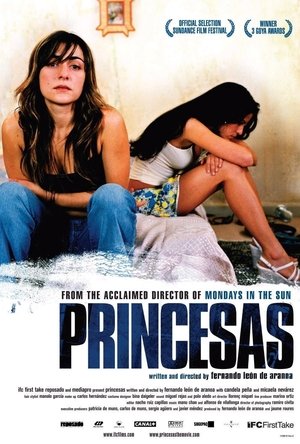
Carlota has an open war with the caretaker of her community, Candela, whom she considers a person at risk. Carlota did not always know that HIV does not understand social status, gender or sexual orientation, she had to learn it by having it closer than she could ever have imagined.
Filmed in the coal country of West Virginia, "Matewan" celebrates labor organizing in the context of a 1920s work stoppage. Union organizer, Joe Kenehan, a scab named "Few Clothes" Johnson and a sympathetic mayor and police chief heroically fight the power represented by a coal company and Matewan's vested interests so that justice and workers' rights need not take a back seat to squalid working conditions, exploitation and the bottom line.
Through the eyes of a British "documentary", this film takes a satirically humorous, and sometimes frightening, look at the history of an America where the South won the Civil War.
Imagine what it would be like if black settlers arrived to settle a continent inhabited by white natives? In 1788, the first white settlers arrived in Botany Bay to begin the process of white colonisation of Australia. But in Babakiueria, the roles are reversed in a delightful and light-hearted look at colonisation of a different kind. This satirical examination of black-white relations in Australia first screened on ABC TV in 1986 to widespread acclaim with both critics and audiences alike. This is the story of the fictitious land of Babakiueria, where white people are the minority and must obey black laws. Aboriginal actors Michelle Torres and Bob Maza (Heartland) and supported by a number of familiar faces from the time, including Cecily Polson (E-Street) and Tony Barry, who starred in major ABC-TV hits such as I Can Jump Puddles and his Penguin award-winning Scales of Justice. Babakiueria was awarded the United Nations Media Peace Prize in 1987.
Frustrated when network brass reject his sitcom idea, producer Pierre Delacroix pitches the worst idea he can think of in an attempt to get fired: a 21st century minstrel show. The network not only airs it, but it becomes a smash hit.
After a brief flash-forward to Frank Sinatra as an old man, saying "I miss my guys," the movie's main narrative begins during high points in the solo careers of the Rat Pack: Dean Martin has become a big success despite the breakup of his partnership with Jerry Lewis; Sinatra's career is at its peak; Sammy Davis, Jr., is making a comeback after a near fatal car crash, and standup comic Joey Bishop is gaining exposure as an opening act for the other three. The Pack becomes complete when Sinatra reconciles with actor Peter Lawford, who has been ostracized since being seen out publicly with Sinatra's ex-wife, Ava Gardner.
Día a día
A man from an upper class family is manipulated into laundering drug money by his brother.
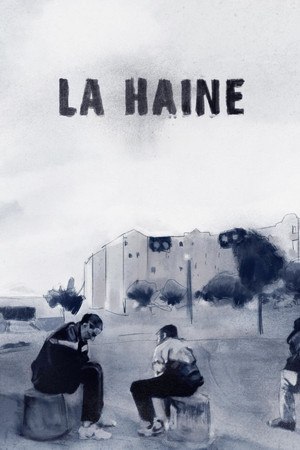
After a chaotic night of rioting in a marginal suburb of Paris, three young friends, Vinz, Hubert and Saïd, wander around unoccupied waiting for news about the state of health of a mutual friend who has been seriously injured when confronting the police.
The true story of a brilliant but politically radical debate team coach who uses the power of words to transform a group of underdog African-American college students into a historical powerhouse that took on the Harvard elite.
Robin is 16 and has had enough: permanent trouble at school and at home. On the run from his dull everyday life, he joins a group of skinheads. The clique strengthens their sense of belonging by beating up foreign youths. This is how the "apolitical" boy slips into the right-wing scene, and it's not easy to get out of it. When they injure a Turkish girl during a robbery, Robin, of all people, is questioned by the police.