Memento Mori is a morbidly beautiful journey into the world of alternative post mortem arrangements and an illuminating meditation on death, dying and our relationship with our bodies once they are no longer ours.
Twenty years ago, Garnet Frost nearly lost his life hiking near Scotland’s Loch Arkaig. The near-death experience still haunts him to this day, and, in particular, a peculiar wooden stick he discovered serendipitously right before he was rescued. Believing the staff (as he calls it) is actually a marker for a fortune hidden nearly 300 years ago, Garnet embarks on a treasure hunt to search for the lost riches. But beneath the search for gold lies a poignant pursuit for life’s meaning and inspiration.
Filmmaker Jon Alpert turns the camera on his own family in this intimate portrait of his aging father. As illness and declining vitality reshape his life, the film captures a deeply personal struggle with dignity, humor, and the bonds that hold a family together.
Janneke has been working as a volunteer in palliative terminal care for over twenty years, both in the hospice and in people's homes. In The Night Watchman we see Janneke both in her daily life and while waking. Scenes in which surprising parallels and paradoxes show Janneke's position in her life and how they seem to embrace death at first sight.
Recorded on 25 Feb 2018 at the Alex Theater in Glendale, CA.. immediately after the show, Smith suffered a near-fatal heart attack, With this stand-up special to show for it after his recovery, he riffs on marriage, fatherhood, friends and his work (or lack thereof).
Groundbreaking psychiatrist and author Elisabeth Kübler-Ross dedicated her career to working with the incurably ill. In this intimate documentary filmed near the end of her life, Kübler-Ross relates her life story, from childhood to her final years. Friends, family members and colleagues weigh in with insightful observations and share their memories of this remarkable woman whose innovative concepts helped spawn the field of thanatology.
A big hearted community celebrates life by fronting up to death. Set against the stunning backdrop of the industrial seaside town of Port Kembla, a feisty and resilient community group have determined to take back the responsibility that most of us leave to someone else — to care for their own dead. Scattered throughout are stories that cut to the core revealing why this small band have decided to take on a practice that for most is taboo. As their plans for community-based funerals gather momentum one of their own is diagnosed with a life-threatening illness. Tender is at once a heartbreakingly beautiful and beautifully funny glimpse of an extraordinary community taking on one of the most essential challenges of human life … its end.
At Baycrest, an old-age home in Toronto, we follow a social worker as she talks to residents, particularly Max, Claire, Ida, and Rachel. The film opens on Claire's birthday, she's 89; Max, a tiny cheerful man, is her close friend. Rachel is lonesome, missing her son, complaining he rarely visits. Ida relies on memory for her solace. Helen has no memory and doesn't recognize her daughter; her moods swing. Murray keeps his cap on and likes women. Staff members bring medication, provide care, and offer small talk. Memory is fleeting: Claire re-experiences the death of a close companion several times, each time without remembering her previous grieving. Lives are circumscribed
Et si la mort n’existait pas ?
Et si la mort n’était qu’un passage ? : Comment s’y préparer ?
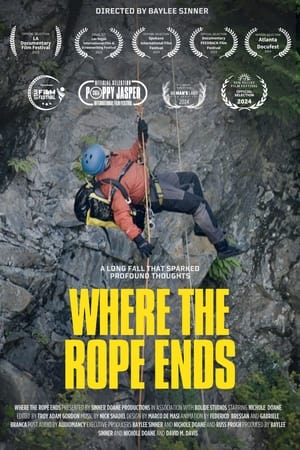
In her relentless pursuit of happiness, Nichole found herself drawn to the exhilarating realm of canyoneering. Little did she know that this new daring interest would lead to a life-altering 60-foot fall, during which she would catch a glimpse of the happiness she was chasing. A perilous volunteer search and rescue mission brought Nichole to safety only to face a new set of challenges and severe physical injuries. Determined to regain her former life, Nichole disregarded her pain and learnings and continued the repetitive cycle of pushing toward a perceived happiness that was always just out of reach. At her lowest point, Nichole was forced to quit pushing against her reality, to sit still and ultimately uncover the secret path to happiness.
Switzerland is the only country in the world that allows foreigners to come and die on its territory. Since its founding in 1998, more than a thousand people have traveled to Zurich to end their lives with the help of the organization Dignitas. "Dignitas - Death on Prescription" is a documentary about an organization that provides people with terminal and incurable illnesses, intense unrelenting pain, and depression with a peaceful death. The organization's founder, lawyer Ludwig Minelli, is often the target of insults, especially from politicians, despite the fact that most Swiss citizens support the option of medically assisted suicide.
Filmmaker Diego Gutiérrez knows that he is soon to lose two loved ones: his mother Gina Coppe and his best friend Danniel Danniel. Both ask him to film them during this final phase of their lives—Gina in her apartment in Mexico City, Danniel in a Dutch restaurant where he feels at home. What stories do they want to leave behind?
Portrait of the last year of the life of famous New York drag queen Consuela Cosmetic.
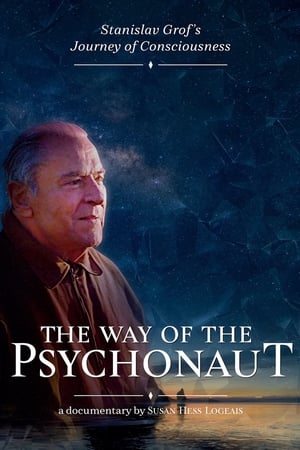
The Way of the Psychonaut explores the life and work of Stanislav Grof, Czech-born psychiatrist and psychedelic psychotherapy pioneer. Stan’s quest for knowledge and insights into the healing power of non-ordinary states of consciousness, influenced the discipline of psychology and profoundly changed many individual lives. One of those transformed by Stan is filmmaker Susan Hess Logeais. The documentary utilizes Susan’s personal existential crisis as a gateway to Grof’s impact, from the micro to the macro.
Dertien Dagen
Dying to live
In this thought-provoking film, director Paul Perry uses recent research into near-death experiences to answer the question that's plagued humans since the beginning of time: Is there life after death? Through interviews with near-death researchers and accounts from those who've returned from the abyss -- along with case studies, event recreations and spiritual artwork -- the film makes the case that life continues long after our last breath
This film is about the experience of dying. Five terminal patients in a Palliative Care Unit share the last days of their lives and deaths with a film crew.
First film by Nobel Prize laureate Gao Xingjian.