A daring, compelling and controversial take on the life of prince Abdulaziz Al Saud (Ibn Saud), founder of Kingdom of Saudi Arabia.
The film begins in 1857, when India was ruled by the British East India Company. Mangal Pandey is a sepoy, a soldier of Indian origin, in the army of the East India Company. Pandey is fighting in the Anglo-Afghan Wars and saves the life of his British commanding officer, William Gordon. Gordon is indebted to Pandey and a strong friendship develops between them, transcending both rank and race.
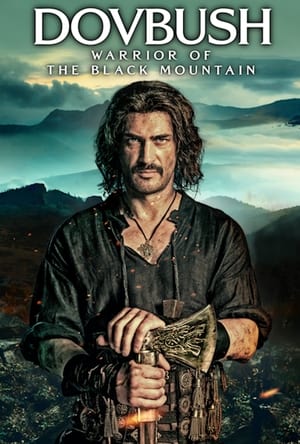
In the early eighteenth century, foreign rule means dark times for the Hutsuls of the Carpathians. The two Dovbush brothers become opryshkos - mountain outlaws. But the two brothers become enemies - one cares only about money, the other - Oleksa - fights for his people. The Carpathians are convulsed with a wave of uprisings. The aristocracy uses its military might to try to kill Dovbush and destroy his legend. But Dovbush outwits them. The desperate lords devise a devious plan and attack the invincible outlaw's Achilles heel - his love for his childhood sweetheart, Marichka. Who will be the assassin to attack the Opryshko whose immense strength and bravery inspired folk tales? Will the lords' treacherous plan destroy the hero before he can lead his people to freedom?
Two Soviet humans previously unknown to each other are transported to the planet Pluke in the Kin-dza-dza galaxy due to a chance encounter with an alien teleportation device. They must come to grips with a language barrier and Plukian social norms (not to mention the laws of space and time) if they ever hope to return to Earth.
Inspired by real events, this ribald comedy pits an unlikely gang of students against their principal after she bars safe-sex activities on campus. Protesting Principal Weller's muzzling of free speech, the teens stage a bold and hilarious rebellion.
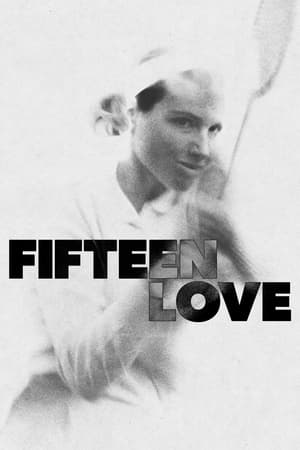
Alexandra has been playing tennis for as long as she can remember. After years of training under the instructions of her father, Julio (a retired tennis player who intends to relive his victories through his daughter), she has become one of the most promising junior tennis players in the Spanish circuit. During one of the most important tournaments of the 1978 season, the increasing pressure from her father will exert on and off the court will begin to affect her mental health. With the arrival of adolescence and the questions it brings, Alex will realize that, perhaps, this is not her destiny.
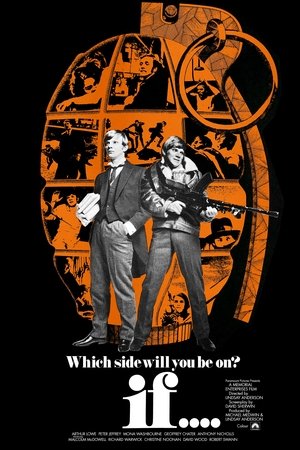
Idealistic and naive Dr. Jason arrives at a school for delinquent girls and immediately begins to try to make a difference in the lives of some of the inmates. Oblivious to the sadistic treatment of the girls by the matrons, it takes a rebellious girl named Loretta to open his eyes. Assisted by a female staff member, Jason finally gets proof of the abuse and threatens the head of the school with exposure unless he is given full rein to run things.
Lisbon, 1938. Mr. Pereira is the editor of the culture section of an evening paper. Although fascism is on the rise in Europe, like in nearby civil war Spain or even inside Portugal itself in the form of Salazar's regime, Pereira only concerns himself with writing bios and translating French novels. Things change after he hires a young writer as his assistant, getting to know also his girlfriend – both opponents to the regime – and reluctantly helps them when they begin to get in trouble for subversive activities. Eventually, he's forced to take a stand...
The story of William da Silva Lima, the last survivor of the group that founded the Comando Vermelho at the end of the 1970s. It shows him living together with the political prisoners incurred under the same National Security Law and his leadership in the Ilha Grande Prison creating a type of unheard of conduct and solidarity in the Brazilian prisons. The film goes on to tell of the group's actions on the streets of Rio de Janeiro during the beginning of the 80s when they irritated the police with their daring robberies, as well as portraying the surprising love story between William and Tereza. The narrative weaves its way between the intimate conflict and the spectacular assaults and escapes.
In the wake of the 1916 Easter Rising, a married schoolteacher in a small Irish village has an affair with a troubled British officer.
Movie adaptation of the history novel by August Senoa, about Matija Gubec, the leader of peasant revolt of 1573.
Lieutenant General T.J.A. Heikkilä travels to the Republic of Sierranueva together with his military servant Tlaca and Captain Silvio. The trio uncovers political machinations and helps the righteous marquis don Ramiro. Women can't resist the handsome Heikkilä, who takes the heart of even the beautiful Camilla.
"Razakar" is a period drama set in pre-Bangladesh-separation Pakistan, exploring the political tensions of the time. The story follows Jamal, an aspiring Bengali actor, as he grapples with the challenges posed by his uncompromising director, mirroring the larger socio-political conflicts unfolding around them. Through personal struggles and political subtext, the film raises poignant questions about identity and division.
When the Soviet Army marched into Romania in 1944, a part of the Romanian population went “into the mountains” – a diverse assortment of nationalists and fascists, liberals, apolitical farmers and members of the middle-class, who were affected by the Communists’ expropriations. Over a thousand armed resistance groups took refuge in the inaccessible forests of the Carpathian Mountains where they waited in vain for the support of the Western Allies. One of them was led by Ion Gavrilă-Ogoranu, who managed to remain undetected until 1976 when he was arrested. This film depicts the daily existence of this group. It tells the story of a struggle that became an end in itself, as the enemy was constantly in pursuit and arrest meant torture and often liquidation. Hungry and emotionally withdrawn, the group of young men got entangled in a partisan war that could not be won, lost in the landscape of the South Carpathians, accompanied by a vigilant secret police, the Securitate.
In the midst of a volatile regime change in a Francophone African state, Maria Vial is fighting to sustain her family’s coffee plantation. With rebels and the army struggling for control, French peacekeeping forces move out, warning the remaining white residents that they’re on their own. But Maria refuses to be driven off the land, even as tragedy looms.
Rome, 1870. Opponents of the church power are being sent to prison. Some of the exhausted prisoners are asking for the mercy of Pope. Others, like Augusto Parenti, prefer to fight for their rights until the end. His wife, Teresa is a simple woman, who gets involved with the rebels.
In 1921 Dublin, the IRA battles the "Black & Tans," special British forces given to harsh measures. Irish-American medical student Kerry O'Shea hopes to stay aloof, but saving a wounded friend gets him outlawed, and inexorably drawn into the rebel organization by his former professor Sean Lenihan, who has "shaken hands with the devil" and begun to think of fighting as an end in itself. Complications arise when Kerry falls for a beautiful English hostage, and the British offer a peace treaty that is not enough to satisfy Lenihan.
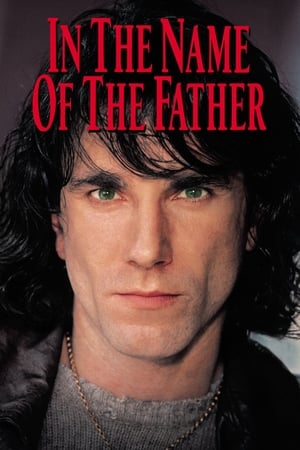
A small-time Belfast thief, Gerry Conlon, is wrongly convicted of an IRA bombing in London, along with his father and friends, and spends 15 years in prison fighting to prove his innocence.
Mark Hunter, a lonely high school student, uses his shortwave radio to moonlight as the popular pirate DJ "Hard Harry." When his show gets blamed for a teen committing suicide, the students clash with high school faculty and the authorities.
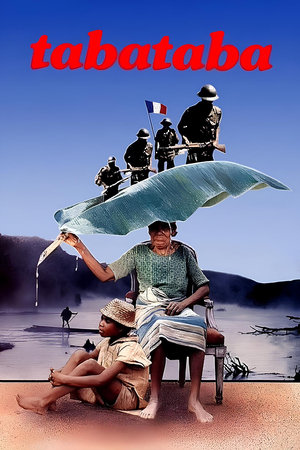
Tabataba tells the story of a small Malagasy village during the independence uprising which took place in 1947 in the south of the country. For several months, part of the Malagasy population revolted against the French colonial army in a bloody struggle. The repression in villages that followed was terrible, leading to fires, arrests and torture. Women, children and the elderly were the indirect victims of the conflict and suffered particularly from famine and illness. One leader of the MDRM Malagasy Party, which campaigns for the independence of the country, arrives in a village. Solo (François Botozandry), the main character, is still too young to fight but he sees his brother and most of the men in his clan join up. His grandmother, Bakanga (Soavelo), knows what will happen, but Solo still hopes his elder brother will return a hero. After months of rumours, he sees instead the French army arrive to crush the rebellion.