An investigation into the downfall of the Montreal Expos, Canada's first Major League Baseball team — and who was ultimately responsible.
"City of Baseball" is a documentary that explores both the past and the present of the Italian baseball league in the seaside resort of Nettuno near Rome. Through league pioneers, current players, fans, and local historians, "City of Baseball" captures the story of how the 1944 Allied invasion of Nettuno brought the American pastime to a town which embraced the sport with a passion that continues today.
This non-narrative short film examines one of the great American icons: the Louisville Slugger baseball bat. The film was conceived by its co-directors, Marlon Johnson and Dennis Scholl, along with the Louisville Orchestra's conductor, Teddy Abrams, to be screened set to a live performance by the orchestra of Claude Debussy's "Jeux".
Born in 1918 in San Diego, Williams was a latchkey child from a broken home, raised by a mother more dedicated to the Salvation Army than to her two sons, and by a father who spent more time away from home than in it. Williams found salvation by doing the one thing he loved most: hitting baseballs. In his rookie season with the Red Sox, where he would spend his entire career as a player, Williams batted .327, socked 31 homers and led the league with 145 RBI. Over the next 21 years, despite losing five seasons of his prime to active service as a U.S. Marine Corps pilot, Williams hit 521 home runs, twice captured the Triple Crown, and became the oldest man ever to win a batting title. He finished his career with a .344 lifetime batting average, was the last man to hit over .400 in a full season, batting .406 in 1941, and was a first-ballot inductee into the Baseball Hall of Fame.
Babe Ruth set a record in 1927 by hitting 60 home runs in one season. 34 years later, Roger Maris broke that record. Another 37 years passed before that record was broken by Mark McGwire. Five days after McGwire's feat, Sammy Sosa broke the brand new record. And the race was on! Fans watched breathlessly as the record passed between the two men and time left in the season dwindled. Relive it all, from Ruth, to Maris, to the final days of the 1998 Sosa/McGwire slug-fest.
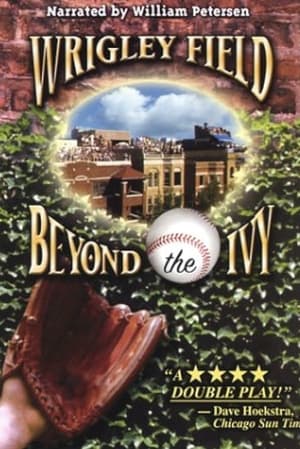
100 Years of Wrigley Field celebrates a century of the greatest moments and best personalities of the ballpark on Chicago's North Side.
In this short film, two starstruck movie fans hire a tour guide and see a plethora of Hollywood stars.
Made in 1990, this compilation video highlights the "Best of the Best" in Baseball.
Yankee Stadium has seen a plethora of legends over the franchise's storied history, but few have left a legacy as unique as Jim Abbott's. On September 4, 1993, the pitcher, who was born without a right hand, threw a no-hitter in front of the Yankee faithful. This astonishing achievement is merely one in a lifetime of perseverance, as Abbott continues to advocate for people with disabilities.
A serial of short instructional films using footage of Babe Ruth to explain the fundamentals of playing baseball.
Follows Matt Harvey throughout his rehab process from Tommy John surgery, providing exclusive behind-the-scenes footage and interviews.
Celebrate the life of baseball’s most enduring legend; Satchel Paige was the single most important player in the old Negro Baseball Leagues
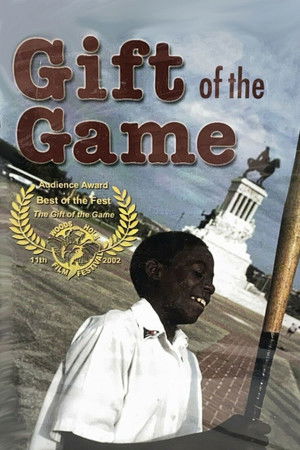
Acclaimed Florida novelist Randy Wayne White travels to Cuba with former pitchers Bill "Spaceman" Lee (Boston Red Sox) and Jon Warden (Detroit Tigers), and a band of baseball enthusiasts to find and revive the children's baseball league founded by American writer Ernest Hemingway in the days before Fidel Castro came to power.
This film is an intimate and moving cinematic record of Shohei Ohtani's journey to MLB stardom. A faithful portrait of his talent development and battle with injuries, and his unique mindset to become a superstar ballplayer breaking all the barriers of race, language, discipline, and culture.
Love them or hate them, the Yankees dominated baseball for more than four decades, then sagged under ownership by CBS until a 42-year-old shipbuilder named George Steinbrenner led a purchase of the team in 1973. He turned that $10m investment into a billion-dollar business, and the 'House that Ruth Built' inspired generations of fans. Deteriorating facilities and changing revenue streams inspired Steinbrenner to build an impressive new stadium marking the end of one grand era and the beginning - perhaps - of another.
A film adaptation of The Boys of Summer by Roger Kahn, this documentary, hosted by comedian Sid Caesar, a Brooklyn boy and lifelong Brooklyn Dodgers fan, dates from 1983. While it discusses the exploits of the team in their grandest era, THE BOYS OF SUMMER focuses more importantly on the team members' lives since the end of The Era.
In Fernando Nation, Mexican-born and Los Angeles-raised director Cruz Angeles traces the history of a community that was torn apart when Dodger Stadium was built in Chavez Ravine and then revitalized by one of the most captivating pitching phenoms baseball has ever seen. Nicknamed “El Toro” by his fans, Fernando Valenzuela ignited a fire that spread from LA to New York—and beyond. He vaulted himself onto the prime time stage and proved with his signature look to the heavens and killer screwball that the American dream was not reserved for those born on U.S. soil. In this layered look at the myth and the man, Cruz Angeles recalls the euphoria around Fernando’s arrival and probes a phenomenon that transcended baseball for many Mexican-Americans. Fernando Valenzuela himself opens up to share his perspective on this very special time. Even 20 years later, “Fernandomania” lives.
When the night of October 16, 2004 came to a merciful end, the Curse of the Bambino was alive and well. The vaunted Yankee lineup, led by A-Rod, Jeter, and Sheffield, had just extended their ALCS lead to three games to none, pounding out 19 runs against their hated rivals. The next night, in Game 4, the Yankees took a 4-3 lead into the bottom of the ninth inning, then turned the game over to Mariano Rivera, the best relief pitcher in postseason history, to secure yet another trip to the World Series. But after a walk and a hard-fought stolen base, the cold October winds of change began to blow. Over four consecutive days and nights, this unlikely group of Red Sox miraculously won four straight games to overcome the inevitability of their destiny. Major League Baseball Productions will produce a film in "real-time" that takes an in-depth look at the 96 hours that brought salvation to Red Sox Nation and made baseball history in the process.
In the fall of 1993, in his prime and at the summit of the sports world, Michael Jordan walked away from pro basketball. After leading the Dream Team to an Olympic gold medal in 1992 and taking the Bulls to their third consecutive NBA championship the following year, Jordan was jolted by the murder of his father. Was it the brutal loss of such an anchor in his life that caused the world’s most famous athlete to rekindle a childhood ambition by playing baseball? Or some feeling that he had nothing left to prove or conquer in basketball? Or something deeper and perhaps not yet understood?
In 1982, Cody Webster and a small group of friends from Kirkland, Washington, sat anxiously in a dugout waiting to take the field for the championship game of the Little League World Series. Their focus was just about what you’d expect from any 12-year-old: hit the ball, throw strikes, cross your fingers and then maybe – maybe – you’ll win. Adults in the stands and watching from home saw a much broader field of play. The memories of American hostages and a crippling oil crisis were still fresh; the economic malaise of the late 1970s still lingered; and the new President was recovering from an assassination attempt even while confronting new threats from the Soviet Union. Meanwhile, back on that tiny baseball field in Williamsport, Pennsylvania, no American team had won a true international Little League World Series Championship in more than a decade. When the Kirkland players rushed from their dugout that day, they stepped onto a much bigger field than the one they saw.