The place is the notorious Starck Club (so called because it was the first major project designed by Philippe Starck in the US.) The Starck Club opened in Dallas in 1984 and not long after hosted the 1984 national Republican Convention. Ironically, it was actually legal to buy MDMA aka ecstasy there, people would put it on their credit cards. The DEA stepped in and made it a category 1 drug on July 1, 1985... In a time when ecstasy was legal & guyliner was cool.
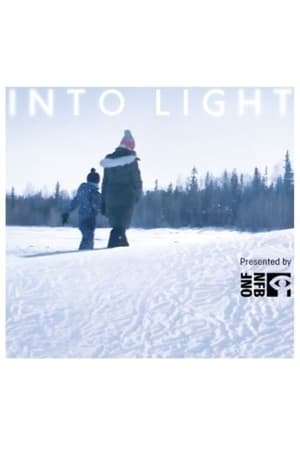
Explore timely, personal stories of LGBTQI+ families who strive to build lives in their communities despite biased legislation and mounting prejudice.
A Boy Named Sue chronicles the transformation of a transsexual named Theo from a woman to a man over the course of six years. Following Theo's physiological and psychological changes during the process, as well as their effects on his lesbian lover and community of close friends, A Boy Named Sue tells a story about gender identity, relationships, and how even things that seem permanent can change.
The LA Sisters are outrageous, controversial, always fabulously dressed men and women who feel they are called to minster to the community as 21st century nuns.
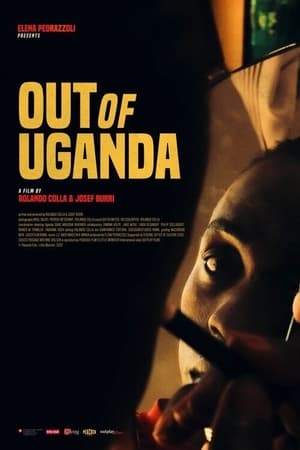
Filmed in Zimbabwe, the film depicts the romantic relationship between two women, and the aftermath of the discovery of their relationship
The video revolution of the 1970s offered unprecedented access to the moving image for artists and performers. This Is Not a Dream explores the legacies of this revolution and its continued impact on contemporary art and performance. Charting a path across four decades of avant-garde experiment and radical escapism, This Is Not a Dream traces the influences of Andy Warhol, John Waters and Jack Smith to the perverted frontiers of YouTube and Chatroulette, taking in subverted talk shows and soap operas, streetwalker fashions and glittery magic penises along the way.
In the form of a documentary, this Final Year Coursework chronicles the career of Selma Light, a transgender woman, drag queen, and activist, a prominent voice in the LGBTQIA+ movement in Florianópolis, Santa Catarina. The construction of the biographical narrative revisits key moments in Selma's career, such as when she traveled with theater companies, her first time as a drag queen, and her debut as a performance artist. Her personal life is also explored, from her childhood in the countryside of Rio Grande do Sul to her acceptance of her gender identity. Her current work adds a new challenge to the struggle of the LGBTQIA+ community in the capital of Santa Catarina: she holds a public office, never before held by a trans person. She has the decision-making power to advance the struggle of the LGBTQIA+ community in the capital of Santa Catarina.
Ballot Measure 9 was an anti-gay amendment proposed to Oregon voters in 1992 by the conservative group, Oregon Citizen's Alliance. This documentary goes behind the scenes of the fight to stop Measure 9. It contains portions of anti-gay videos produced by the Citizen's Alliance as well as news clips and interviews with the people who successfully fought passage of Measure 9.
For the last quarter century, Houston native Arden Eversmeyer journeyed across the country to record hundreds of oral "herstories" with a mostly invisible population that is rapidly disappearing. Old Lesbians honors Arden's legacy by animating the resilient, joyful voices she preserved in the Old Lesbian Oral Herstory Project, from first crush to first love, from the closet to coming out, and finally from loss to connection.
The one-off documentary tells the story of two women travelling by bike across the United States, from Canada to Mexico along the Great Divide. A unique adventure through the most remote areas of the Rocky Mountains, between pristine nature and wild animals. An epic journey that led them to travel 4,000 km and climb 60,000 meters and that, day after day, forced them to face their own limits, their strength and fragilities, and tested their relationship. Because every journey is always a love story.
Disjointed moments from the filmmakers’ daily lives during the past year. Captured on a 1985 VHS camcorder with color and luminosity distorted by its failing color Newvicon tube. Cut with distorted tape-recorded fragments of nostalgic broadcast television ephemera. Scored by whatever was handy— from an ambient electronic song with a surprising amount of pipe organ (Oneohtrix Point Never - Boring Angel) to midi versions of your favorite SNES soundtrack (Donkey Kong Country – Aquatic Ambience, Opening, and Treetop Rock) to a not-quite-right rendition of a song that will make you want to say “Oh, Angelo, that’s tearing my heart out!” (Xiu Xiu – Falling). A voyeuristic peak at home movies that exist somewhere between soon to be forgotten and forgotten long ago. The occasional dot matrix time stamps in the corner of the footage somehow make it harder to place in time.
Two legends contested their identities as women in the court of public opinion: April Ashley, who was immortalized as a trailblazer by embracing her transgender history; and Amanda Lear, who has consciously denied and obfuscated her history for decades. Their divergent paths reveal disparate but intertwined legacies.
In Les Portes d’Arcadie, we are at the heart of a reception center for asylum seekers. The director gives a voice to people persecuted because of their sexual orientation, in their country of origin. Already gone, but not yet in a new home, these displaced people are looking for themselves as much as they are looking for the words to describe what they have known and left behind. What awaits them? It is not certain. But at least they can hope to finally be (re) recognized for themselves. This crossing, as much as this quest for identity, is at the heart of this documentary.
It's a tale of two shocks. 1992, Les Nuits fauves hits theaters. 1993, Cyril Collard dies of AIDS. The artist and his film caused a scandal in 90s France, which suddenly realized the violence of the epidemic and the upheaval it would bring for its children... Collard's work still resonates today, through its depiction of the rage of life and sexual freedom, and the courage it takes to face up to the inevitability of the virus. This documentary is supported by powerful archive footage, allowing us to rediscover the destiny of a striking artist. It is also based on the testimonies of those who knew him and agreed to talk about who he was, the driving forces behind his rebellion and his way of creating. The film is also punctuated by readings from some of the thousands of letters sent to Cyril Collard, revealing what it was about his work that struck a chord with viewers, especially younger ones.
A documentary that chronicles the twenty years of Pride parading in Iceland. Filmmaker Hrafnhildur Gunnarsdóttir has shot the parade from the beginning, with all its pride and power, beauty and sometimes ugliness. She mixes old material and new interviews with activists who reminisce about their participation in the parade, it’s impact on society in general, and what Pride means for the LGBTQ+ community.
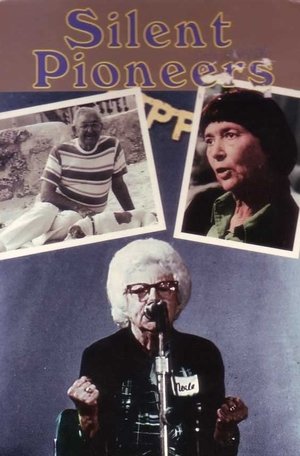
Stories of 12 gay and lesbian survivors of Nazism and the Holocaust.
Welcome to the curious, surprising and always outspoken world of straight men who go Gay4Pay. Curiously, there is a disproportionate percentage of men working in gay porn who identify as straight. Why would a straight man do gay porn? What motivates him to try this or make a career of it? Why is there such keen interest and debate into the sexuality and personal lives of these men? And what does it say about us, the viewer that so much of gay porn is dominated by images of straight men?
Three teenagers — Amelio, Blake and Kira — each begin their gender transition, supported in different ways by their families. This deeply sensitive documentary follows them between ages 15 and 17 as they navigate the emotional and physical challenges of being transgender. For them, puberty brings intense distress, as their developing bodies do not align with their true gender identity. The film explores the difficult questions faced by parents and doctors: whether to medically delay puberty, start hormonal treatment, or wait and risk worsening the teens’ suffering. Through moments of doubt, upheaval and hope, the documentary offers an intimate look at three young people who want only one thing — for the outside world to see them as they know themselves to be.
The original documentary on the Wigstock festival, back in the day when it was a much smaller affair in Thompkins Square Park. A full day of peace, love, and wigs…
He was born different, and chose to become unique. Becoming Lucky Love follows how Luc Bruyère turned his “flaw” into strength and his life into an act of creation. Born without his left arm, he faced the violence of people’s gaze from childhood, sinking into shame and self-destruction. “I was born homosexual, without a left arm — I didn’t fit what a man was expected to be: a figure without nuance, categorical,” Luc confides. Instead of giving up, he chose to transform himself and become what he had always dreamed of: a singer and performer. With his angelic face and magnetic presence, nothing seems to resist him — yet his blazing loves and excesses marked him deeply. Now, on the verge of turning 30, he looks back without filters. Becoming Lucky Love paints the portrait of an avant-garde, captivating outsider who proves that destiny can be endlessly reinvented through strength, poetry, and self-invention.