Short news featurette produced by Pathe-RKO after the Russians launched the first orbiting satellite, Sputnik. It is a patriotic 'call to arms' from the threat posed by this and the need for Americans to spend more on education in general and a college education in particular. A visit to the University of Buffalo highlights its science programs and the need for more graduates from all technical disciplines if America is to rise to the challenge. It bemoans the fact the PhDs earn less than a mechanic and the need to re-order priorities.
Filmmaker Alain Resnais documents the atrocities behind the walls of Hitler's concentration camps.
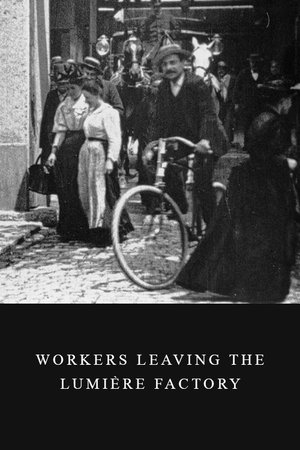
Working men and women leave through the main gate of the Lumière factory in Lyon, France. Filmed on 22 March 1895, it is often referred to as the first real motion picture ever made, although Louis Le Prince's 1888 Roundhay Garden Scene pre-dated it by seven years. Three separate versions of this film exist, which differ from one another in numerous ways. The first version features a carriage drawn by one horse, while in the second version the carriage is drawn by two horses, and there is no carriage at all in the third version. The clothing style is also different between the three versions, demonstrating the different seasons in which each was filmed. This film was made in the 35 mm format with an aspect ratio of 1.33:1, and at a speed of 16 frames per second. At that rate, the 17 meters of film length provided a duration of 46 seconds, holding a total of 800 frames.
The Spanish journalist Manuel Chaves Nogales (1897-1944) was always there where the news broke out: in the fratricidal Spain of 1936, in Bolshevik Russia, in Fascist Italy, in Nazi Germany, in occupied Paris or in the bombed London of World War II; because his job was to walk, see and tell stories, and thus fight against tyrants, at a time when it was necessary to take sides in order not to be left alone; but he, a man of integrity to the bitter end, never did so.
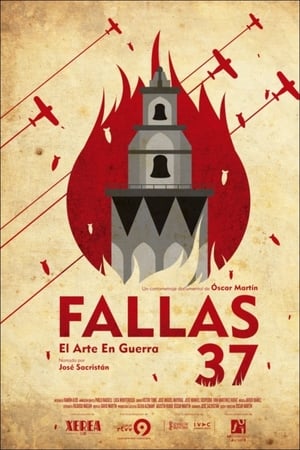
In November 1936, a few months since the beginning of the Spanish Civil War, the government of the Second Republic moves to Valencia. In this situation, several Valencian artists and intellectuals decide to build four fallas — satirical plasterboard sculptures created to be burnt — to mock fascism.
Levitan: That Night
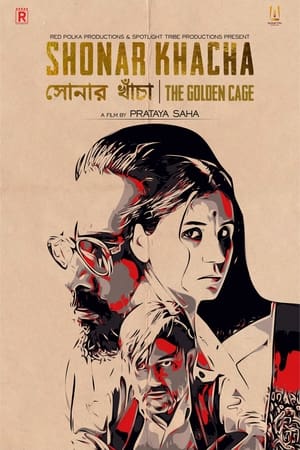
It is an early winter morning in Kolkata in 1989 and the palatial old "Roy Choudhury" house lies dilapidated, housing the last few members of a once huge affluent joint family. Rudro, the younger brother of the last generation, an under-confident, nondescript man in his mid-30s tries to convince Rajatabho, the eldest of the brothers to take up the offer of selling the house in a desperate attempt to save themselves from bankruptcy. Rajatabho, however, is unrelenting. Rudro, later tries to convince Anjali, Rajatabho's wife, to help change her husband's mind. Later in the day, a crying Anjali grinds down sleeping pills on her kitchen slab. She reminisces down memory lane through each nook and corner of the house as she does this. Finally, at dusk, as Anjali stands alone on the terrace holding a bottle of sleeping pills, Rajatabho suddenly arrives and they look eye to eye for the first time in months.
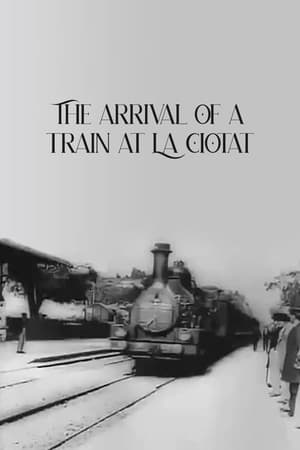
A group of people are standing along the platform of a railway station in La Ciotat, waiting for a train. One is seen coming, at some distance, and eventually stops at the platform. Doors of the railway-cars open and attendants help passengers off and on. Popular legend has it that, when this film was shown, the first-night audience fled the café in terror, fearing being run over by the "approaching" train. This legend has since been identified as promotional embellishment, though there is evidence to suggest that people were astounded at the capabilities of the Lumières' cinématographe.
16th July 1969: America prepares to launch Apollo 11. Thousands of kilometers away, a ragtag group of Zambian exiles is trying to beat America to the Moon.
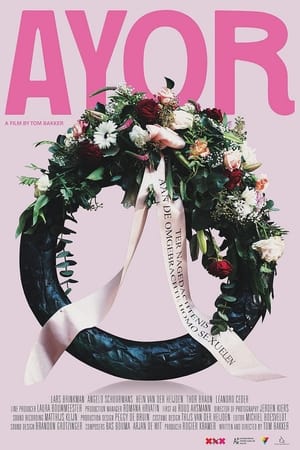
In 1970, during the annual Dutch national commemoration of those fallen in World War II, two men try to make a statement against gay discrimination. In the moments before and after the incident, their doubt, fear and firm belief becomes clear.
A visual interpretation of the massive disarmament rally held in New York City on June 12, 1982. With huge rallies held simultaneously around the world, people gathered together on this day at the height of the Regan-era nuclear standoff with the Soviet Union.
During WW2 a boy tries to save himself and his baby sister from a German soldier.
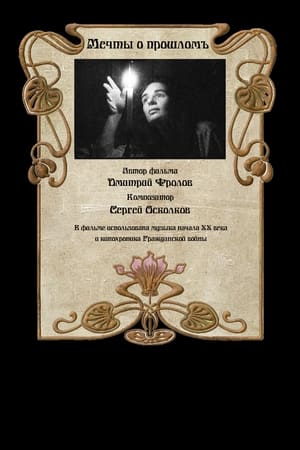
A film about peace, love and war. Dedicated to the 100th anniversary of the end of the Civil War in Russia. The film takes place at the end of the summer of 1917, when Russia and the whole world were at a crossroads between two eras. None of the people could even imagine how much his life would change in the very near future. In a strange way, the atmosphere of the film echoes our current reality and what is happening in Russia today. According to the form of visualization, the film belongs to experimental mockumentary cinema. To give greater authenticity to what is happening on the screen, the shooting was carried out on black-and-white negatives of 16 and 35 mm, hand-operated cameras were used and the material was developed in manual spiral tanks. The documentary chronicle of the Kolchak army of 1919 and the White army in the Far East of 1922 is embedded in the finale of the film.
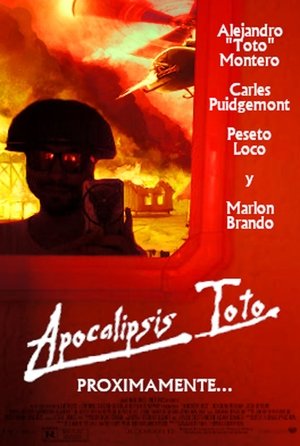
Toto, a worker in Catalonia, analyzes the violence spiral experienced in Barcelona in October 2019.
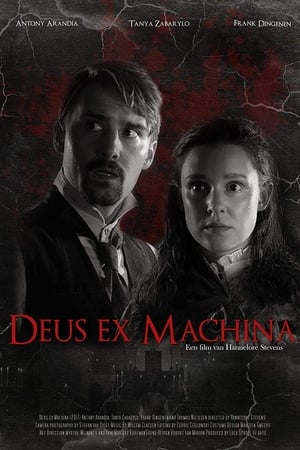
A young, unbelieving couple is being pursued by a terrifying monster. They try to hide in a church, where they meet a priest who seems friendly at first glance, but it soon becomes clear that the priest has less than honorable plans for them. They are trapped.
The Seljuk Empire has expanded, and taken over “the Holy Land”. Pope Gregory VIII gets together a band of valorous warriors from across Europe to defeat Saladin.
This historical drama tells the story of Qin Shihuang, who unified China's vast territory and declared himself emperor in 221 B.C. During his reign, he introduced sweeping reforms, built a vast network of roads and connected the Great Wall of China. From the grandiose inner sanctum of Emperor Qin's royal palace, to fierce battles with feudal kings, this film re-creates the glory and the terror of the Qin Dynasty, including footage of Qin's life-sized terra cotta army, constructed 2,200 years ago for his tomb.
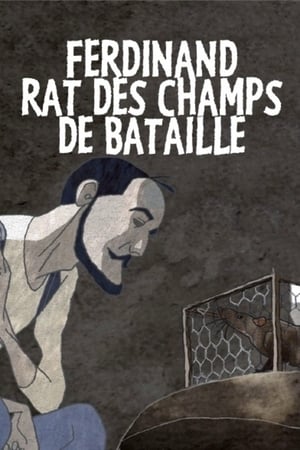
Ferdinand, Battlefield Rat
A short film dedicated to the first female pilot Leyla Mammadbayova. Leyla Mammadbayova, in addition to being the first female pilot of Azerbaijan, also took her place in history as the second female paratrooper of the USSR. The film illuminates the life of Leyla Khanum, full of struggle, in the years 1930-1933. The difficulties faced by women in an environment full of deprivation during that period, Leyla's refusal to wear the veil, her determination despite the condemnation of society, her husband Bahram's support for her struggle, and how this support led Leyla further forward are artistically reflected in the film.
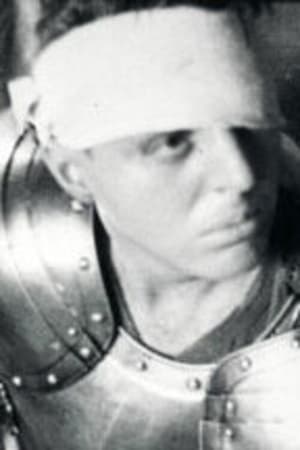
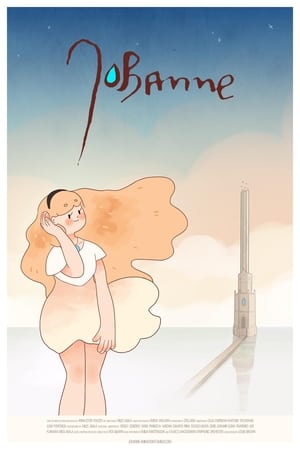
Inspired by Joan of Arc, Johanne follows a day in a life of the eponymous heroine. While set in medieval fantasy town, it explores the very current and urgent theme of preserving one’s humanity while struggling against inhumane environment, from modern feminist perspective.