Mr Surgeoner takes the viewer on an enthralling journey through the SQA Higher History course.
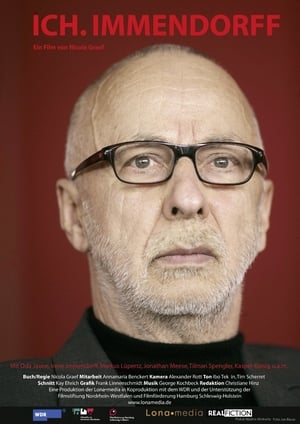
Documentary film about the painter and sculptor Jörg Immendorff who ranks among the most important German artists. The filmmakers accompanied Immendorff over a period of two years – until his death in May 2007. The artist had been living for nine years knowing that he was terminally ill with ALS. The film shows how Immendorff continued to work with unabated energy and how he tried not to let himself be restrained by his deteriorating health.
Filmmaker Alain Resnais documents the atrocities behind the walls of Hitler's concentration camps.
Documentary about filmmakers of the New German Cinema who were members of the legendary Filmverlag für Autoren (Film Publishing House for Authors). Among them are Werner Herzog, Rainer Werner Fassbinder, and Wim Wenders.
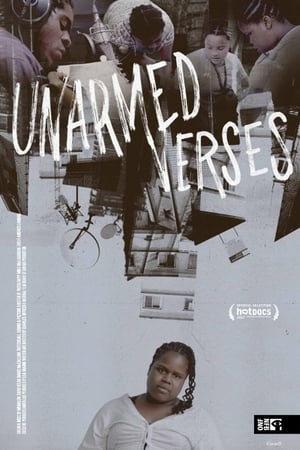
Kathy's family left on a Saturday morning in 1965. The rumble of bulldozers echoed through the neighborhood, and her block was empty. Federally-funded urban renewal had arrived in Charlottesville, scattering dozens of families like Kathy's. The once-vibrant African American community, built by formerly enslaved men and women who had secured a long-denied piece of the American dream, disappeared.
In southern Germany, winter can still be admired in all its glory every year. With its white coat of snow and icicles and myriads of small crystals that look like geometric works of art. In the valleys and on the slopes the snow is still so thick every year that the alpine huts are snowed in up to the windows. Cows and dairymen are safe in their farms at lower altitudes. But not the wild creatures of the mountains! They need strategies to survive the cold season and to defy snow masses, cold and ice. And some seem to do it so easily that they even raise their young in the middle of winter. But how do animals, plants and fungi cope with the annually recurring ice age, which from our perspective is a time of need? The many adaptations in nature prove that winter is an integral part of the natural cycle of the year and the living environment of species. They are adapted to cold and frost. That is why the animals and plants at the edge of the Alps suffer particularly from climate change!
Helke Sander interviews multiple German women who were raped in Berlin by Soviet soldiers in May 1945. Most women never spoke of their experience to anyone, due largely to the shame attached to rape in German culture at that time.
The war in the Ukraine has changed the way many European countries view Russian politics. Suddenly it became clear how dependent countries had become on Russian gas imports for decades and what Vladimir Putin was up to. However, no country needs more gas than Germany. It was only after Russia's invasion of the Ukraine that the German government realized that Russia had long used gas as a weapon to impose its will on states. The instrument created for this purpose is the natural gas production company GAZPROM. So how did Germany become so dependent on Russian gas? The documentary shows how, over several decades and several changes of government, a broad alliance of politicians and business representatives did everything possible to secure Germany's energy supply with cheap Russian gas, while the Kremlin's foreign policy became increasingly aggressive and the warnings of experts went unheeded.
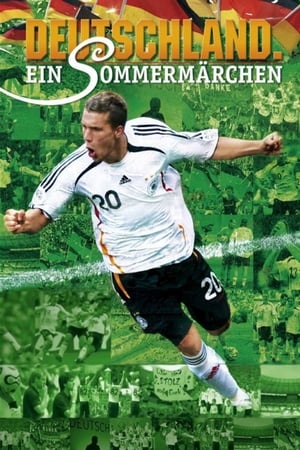
A documentary of the German national soccer team’s 2006 World Cup experience that changed the face of modern Germany.
The film shines a light onto federal chancellor Angela Merkel and her now ending 16-year-long tenure. An era, not an episode. And a vagarious relationship history between the chancellor and the Germans. Who has changed whom here?
Documentary about the German football team at the 1990's World Cup in Italy.
Artists, urban planners and the city of Berlin trying to transform a former GDR ruin into a place for new visions and concepts of city - a place where everything is different than before?
2024 is likely to be a decisive year for Sahra Wagenknecht's political future. In the arena of power, she might assume a role that she is already very familiar with. In the early years following the fall of the Berlin Wall, Sahra Wagenknecht became the "most famous face" of the PDS, the successor party to the SED. Yet, even as the youngest member of the party's executive board, she was considered a "disruptive factor." She is unyielding and swims against the tide. Sahra Wagenknecht does not distance herself from Stalinism, nor from the Berlin Wall, and wishes for a reformed GDR.
Comprised of video shot during the Nazi regime, including propaganda, newsreels, broadcasts and even some of Eva Braun's colorized personal home movies, we explore the way in which the Third Reich infiltrated the lives of the German population, from 1933 to 1945.
A documentary and propaganda film which shows the British Army's preparations for, and the early stages of, the battle of the Somme.
As the only work in this medium by Richter, the film was created for the exhibition Volker Bradke that took place on 13th December 1966 at Galerie Schmela in Düsseldorf. For the purpose of this exhibition, Gerhard Richter addressed the person Volker Bradke in different mediums. In addition to photographs, a banner and a large-scale painting Volker Bradke [CR: 133], the film had been screened. Richter transferred one of the stylistic features of his paintings of that time into film: the blurring.
Observation of the asylum procedure in the Federal Republic of Germany, not limited to depicting an individual case, but rather tracing a basic fate. The film captivates with unpretentious black-and-white images that are emotionally moving and show camp life as an agonizing wait for a decision by bureaucrats.
Directed by German filmmaker Rüdiger Nüchtern, this behind-the-scenes rock documentary captures Amon Düül II, as the progressive rockers record their debut album, "Phallus Dei," in a Munich recording studio in 1968. Blending performance footage with a collection of psychedelic nature clips, Nüchtern's meditative film captures the true essence of the legendary krautrock collective. The movie premiered at the Edinburgh Film Festival.
Leaving internment camps to defend their country in Europe, Japanese-American Nisei soldiers of WWII became the most decorated unit in American history.
This absolutely top-notch documentary by Robert Fischer is a fascinating look back at not just the film in question, but Fassbinder's meteoric career which ended all too soon with his untimely death. Archival footage of Fassbinder is utilized (including several fascinating snippets culled from interviews he did at the disastrous Cannes premiere of Despair), as well as many others involved in the film and its release. Even if you're not a particular fan of Despair, or even in fact of Fassbinder, this is stellar documentary film making and is an intriguing look at one of the most enigmatic masters of the New German Cinema.