From award-winning filmmakers Beverly and Dereck Joubert, comes the unbelievable story of the black rhino and those who are fighting to save the last of these amazing creatures. Infuriated and desperate after witnessing poachers kill the last black Rhino in Botswana, the Jouberts enlisted the help of the Botswana Defense Force and began a massive relocation effort. After years of hard work, a small population of black rhinos is now thriving in Botswana.
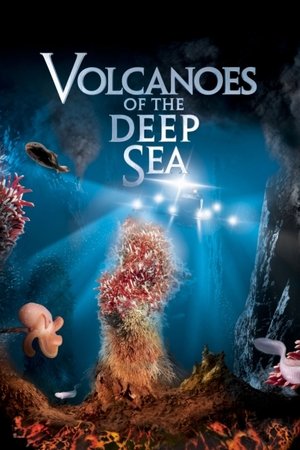
12,000 feet down, life is erupting. Alvin, a deep-sea mechanized probe, makes a voyage some 12,000 feet underwater to explore the Azores, a constantly-erupting volcanic rift between Europe and North America.
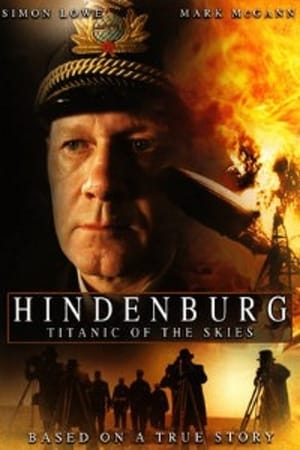
The history of lighter than air transportation culminating in the Hindenburg explosion which gets thoroughly covered and analyzed.
The film explores the background and build-up to this final flight to disaster. Using dramatic reconstruction, archive footage and exclusive interviews with leading historians and engineering experts, the special delves into the political and scientific events that led up to the catastrophe.
On January 8, 2020, Ukraine International Airlines Flight 752 went down as it was leaving Iranian air space. All 176 people on board were killed, many of them Iranian Canadians. For weeks Iranian authorities vociferously denied responsibility, but foreign governments and agencies were certain the plane was shot down by Iranian military, a fact Iran’s government eventually admitted. There were no answers as to why the plane was fired on or even why it was allowed to take off, since hostilities had broken out in the region in preceding days.
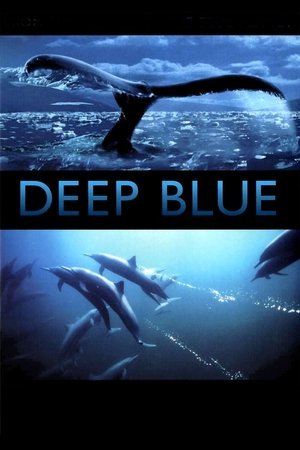
Deep Blue is a major documentary feature film shot by the BBC Natural History Unit. An epic cinematic rollercoaster ride for all ages, Deep Blue uses amazing footage to tell us the story of our oceans and the life they support.
The true story of Joe Simpson and Simon Yates' disastrous and nearly-fatal mountain climb of 6,344m Siula Grande in the Cordillera Huayhuash in the Peruvian Andes in 1985.
Friday, November 7, 2025, marks the fiftieth anniversary of the devastating explosion at the chemical company DSM in the Limburg town of Beek. Kefah Allush takes viewers back to this momentous day. The disaster is depicted through eyewitness accounts, personal memories, and impressive visualizations.
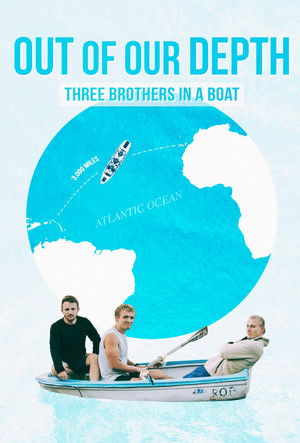
Three brothers with no rowing experience take on the world's toughest row: a 3,000 mile race across the Atlantic with 50ft waves, exhaustion, seasickness and your two siblings - how hard can it be?
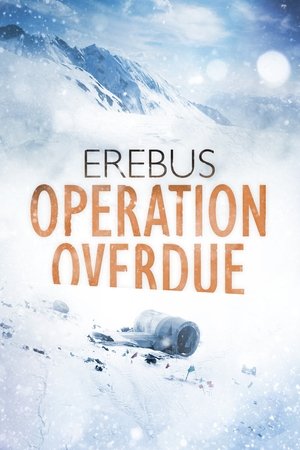
On 28 November 1979, an Air New Zealand jet with 257 passengers went missing during a sightseeing tour over Antarctica. Within hours 11 ordinary police officers were called to duty to face the formidable Mount Erebus. As the police recovered the victims, an investigation team tried to uncover the mystery of how a jet could fly into a mountain in broad daylight. Did the airline have a secret it wanted to bury? This film tells the story of four New Zealand police officers who went to Antarctica as part of the police operation to recover the victims of the crash. Set in the beautiful yet hostile environment of Antarctica, this is the emotional and compelling true story of an extraordinary police operation.
From heart-stopping close shaves and averted disasters to incredible brushes with danger, this show counts up from 1 to 101 to feature some of the most unbelievable near misses of all time.
Neil Oliver describes the worst ever railway accident in the UK, which happened a hundred years ago on 22 May 1915, in which three trains collided at Quintinshill near Gretna Green. One of the trains was a troop train taking soldiers to fight in World War I at the Battle of Gallipoli: many of the dead were in this train which caught fire due to escaped gas from the archaic gas lighting in the carriages. The cause of the crash was attributed to a catastrophic signalman's error, but Neil examines whether there were other contributory factors and whether there was a cover-up to prevent investigation of them, making convenient scapegoats of the signalmen.
The film follows a group of three winter mountaineers and a pair of winter climbers on a typical day out in the Scottish mountains. See how they cope with this potentially hazardous environment and what measures they take to ensure that they both enjoy the experience and return safely. Following on from the film are 11 chapters that expand upon the good practice message, providing information on; navigation, self arrest, clothing and equipment, use of ice axe and crampons, avalanche awareness, and emergency procedures.
The "unsinkable" Titanic was a dream come true: four city blocks long and a passenger list worth 250 million dollars. But on her maiden voyage in April 1912, that dream became a nightmare when the giant ship struck an iceberg and sunk in the cold North Atlantic. More than 1,500 lives were lost in one of the greatest disasters of the 20th century. Now, using newsreels, stills, diaries, and exclusive interviews with survivors, Titanic: The Complete Story recounts the sensational history of the premier liner. In Part I: Death of a Dream, the largest ship ever built is christened in Ireland before a cheering crowd of 100,000. Witness the disaster this trek becomes as numerous iceberg warnings go unheeded and the ship sinks in the icy North Atlantic. In Part II: The Legend Lives On, over-packed lifeboats edge away from the crippled liner as a futile SOS signals flare into the night--leaving 1,500 passengers to a watery grave.
At 7:14 am on 30 June 1908, the largest explosion recorded in human history to date reverberated throughout our planet. The force of the explosion was two thousand times that of the Hiroshima bomb. A woodland area the size of Luxembourg was eradicated in the Siberian taiga. This incident is recorded in history books as the Tunguska catastrophe. To this day, internationally renowned scientists of various disciplines argue about the causes of this disastrous explosion. The documentary discusses the latest and most controversial insights of these leading scientists. It identifies the reasons why Tunguska has evolved into a phenomenon and points out the curious results produced by this mythical event in culture and economy.
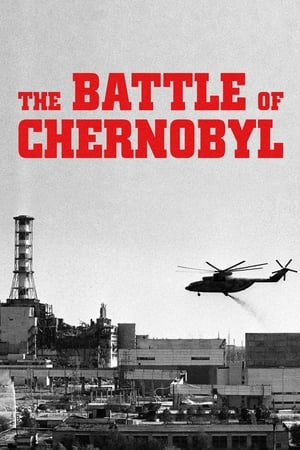
On April 26, 1986, a 1,000 feet high flame rises into the sky of the Ukraine. The fourth reactor of the Chernobyl nuclear power plant just exploded. A battle begins in which 500,000 men are engaged throughout the Soviet Union to "liquidate" the radioactivity, build the "sarcophagus" of the damaged reactor and save the world from a second explosion that would have destroyed half of Europe. Become a reference film, this documentary combines testimonials and unseen footage, tells for the first time the Battle of Chernobyl.
An in-depth look at how Italy's largest cruise ship ran aground off the Italian coast.
Secret Courage: The Walter Suskind Story
Coast Guard film about the importance of life jackets. Stresses safety in boating and shows how boating accidents can happen.
An investigation of "disaster capitalism", based on Naomi Klein's proposition that neo-liberal capitalism feeds on natural disasters, war and terror to establish its dominance.