In 1953, Sir Edmund Hillary & Tenzing Norgay made history as the first people to reach the top of Everest. Now, 50 years later, three sons of Everest's most celebrated climbers return to the mountain to challenge it again. Join their journey as they brave the elements and face death to climb 29,000 feet of wind-blasted rock and ice. And, relive the dramatic history of Everest from great triumphs to deadly tragedies, enduring rivalries and the unsung role of the Sherpa people—as National Geographic exposes the untold stories that lurk in the mountain's epic shadow and takes you on the ultimate Everest experience.
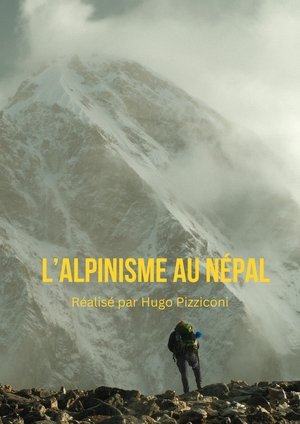
L'alpinisme au Népal
An epic story of adventure, starring some of the most magnificent and courageous creatures alive, awaits you in EARTH. Disneynature brings you a remarkable story of three animal families on a journey across our planet – polar bears, elephants and humpback whales.
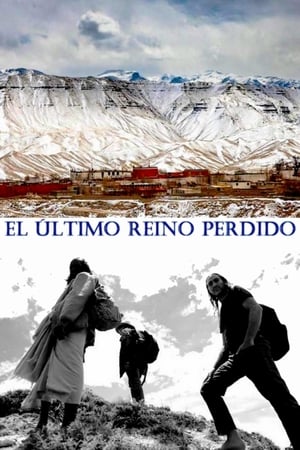
Following in the footsteps of his father, Folco Felzani embarks on an epic journey on foot in search of Mustang, the last lost kingdom, in northern Nepal. The story of a king without a kingdom. The adventure of a son without a father.
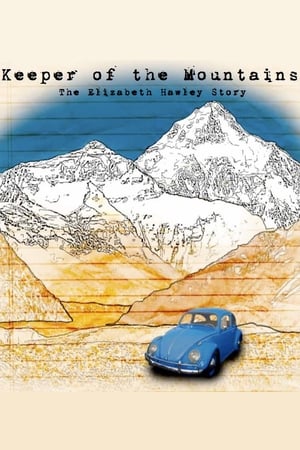
Keeper of the Mountains is a portrait of Elizabeth Hawley and her unlikely key role in the Golden Age of Himalayan mountaineering, her defiance of the traditional gender roles of her day and her decision to settle alone in Kathmandu in 1960, where she has famously lived life on her own terms ever since. Hawley, 91 and a former journalist, maintains the world's largest and most treasured archive of Himalayan mountaineering expeditions and her work is trusted by news organizations and publications around the globe. All this despite never having climbed a mountain herself.
Alexandra David-Néel : Du Sikkim au Tibet Interdit
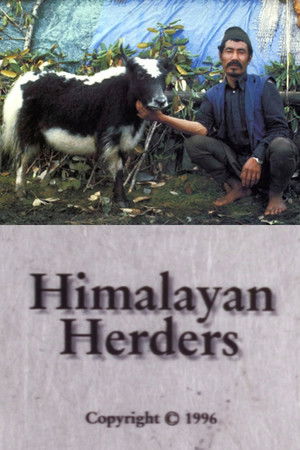
John Bishop and Naomi Bishop present a portrait a peculiar life style of the Himalayan indigenous Sherpa people in their documentary , the Himalayan Herders. The 76 minutes long film is about the diverse culture and life style of herders community near Mt. Everest region of Nepal.The film was made in 1997 as a part of Case Studies in Cultural Anthropology Series.
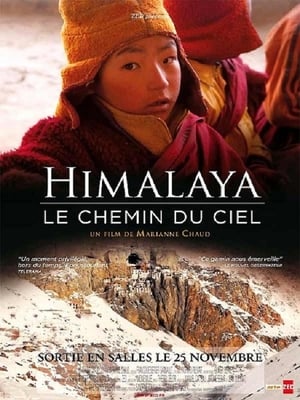
Directed by Marianne Chaud
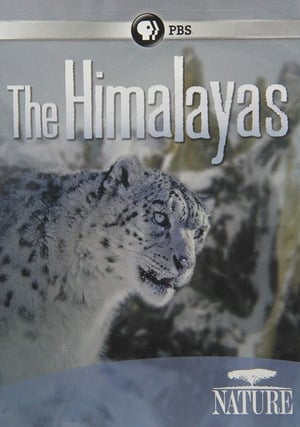
The highest mountain range in the world, the Himalayan range is far reaching, spanning thousands of miles, and holds within it an exceptionally diverse ecology. Coniferous and subtropical forests, wetlands, and montane grasslands are as much a part of this world as the inhospitable, frozen mountaintops that tower above. The word Himalaya is Sanskrit for abode of snow, fitting for a stretch of land that houses the world’s largest non polar ice masses. Extensive glacial networks feed Asia's major rivers including the Ganges, Indus, and Brahmaputra. More than a billion people rely on these glacier-fed water sources for drinking water and agriculture. The Himalayas are not only a remarkable expanse of natural beauty. They're also crucial for our survival.
A man walks in more or less familiar places, walks there as if crossing unknown lands, never encountered before. At each step, he observes the world before his eyes, forcing him to fix it and freeze it in an “other” space and time, on the celluloid of his old camera. This man is Kurt Diemberger, climber and filmmaker of high peaks and distant lands. He is 82 years old, but he lives in the "now" rather than the past, continually exploring the land beneath his feet, in places dear to him in Austria, Italy and the Dolomites, as if he continued his research through the eye of the camera he uses for the observer.
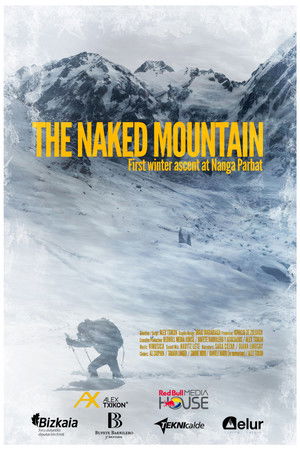
The first winter ascent of Nanga Parbat was achieved in 2016 by Pakistani Muhammad Ali Sadpara and Spaniard Alex Txikón, accompanied by Simone Moro and Tamara Lunger. Alex Txikón made headlines again by attempting K2 in the winter of 2019, then Everest in the winter of 2020 (each time unsuccessfully); but also by participating in the search operations led by Tom Ballard and Daniele Nardi on Nanga Parbat in March 2019, even claiming to have spotted two figures on the face. Confined during the Himalayan season, the Basque climber took the opportunity to work on a film recounting his own adventure on Nanga Parbat four years earlier.
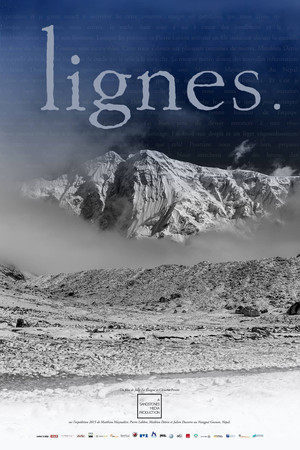
Lignes chronicles the sublime interplay between alpine literature and an expedition seeking the true meaning of mountaineering. Four high-mountain guides—Matthieu Maynadier, Pierre Labbre, Matthieu Détrie, and Julien Dusserre—embark on a project: to summit Nangpai-Gosum, an unclimbed 7,000-meter peak in Nepal, using the "alpine style" adapted to the Himalayas—the toughest and purest approach of all. Through this expedition, Lignes attempts to answer the question: "Why do we climb mountains?" Why, despite the harsh conditions and exhaustion, do these four Alpine guides pursue a perilous dream in a realm that belongs to no one? Lignes finds some answers in the past, drawing on 150 years of alpine literature. Serving as both narrator and seasoned guide, Raymond Renaud takes us on a tour of his books and speaks of the "conquerors of the useless"—from the turn of the century to the present day.
Every spring, tens of thousands of men, women and children leave their villages for a dangerous trek to the high Himalaya to collect Yarsagumbu, a mysterious transmutation between plant and insect. Used in Chinese medicine, it is worth up to 60 000 USD a kilo, more than gold.
Avid for steep slopes, Marco Siffredi (1979-2002) obeys only one rule: not to fall. This gifted kid with hair sometimes blond peroxidized, green or blue clashed in his valley: Chamonix, mecca of mountaineering. His thing was to go up and down on a snowboard. . 90 minutes September 8, 2002, altitude 8848 meters, rare oxygen, his head already brushing the sky and his snowboard running, Marco Siffredi, 23, rushes from the summit of Everest in the Horbein corridor and its slopes at 50 degrees . A year earlier, he had already made the first descent of the mountain on a snowboard. But there remains another corridor… more direct. It's not a challenge, just a reason to be... However, that day, at the top of the roof of the world, his trace is lost...
Six blind Tibetan teenagers climb the Lhakpa-Ri peak of Mount Everest, led by seven-summit blind mountain-climber Erik Weihenmayer.
Partition Libre - Sur Les Traces De Patrick Berhault
K2 Chasing Shadows chronicles Benjamin Védrines' record-breaking 2024 ascent of K2 (8,611m) in 10 hours, 59 minutes, and 59 seconds, without supplemental oxygen: a story that unfolds as much in the mind as on the mountain. In human exploration, each boundary pushed awakens a new thirst. Each feat paves the way for a deeper quest. It is this tension between extreme performance and inner aspiration that drives K2 Chasing Shadows. For Benjamin Védrines, it is a journey of humility, resilience, and a search for meaning amidst the raw beauty of the Pakistani Karakoram. The film exposes the physical demands of a formidable summit, while also exploring fear, loss, and the perilous nature of dreams that demand total commitment. Between unforeseen obstacles, forced retreats and new attempts, Védrines faces the most trying and exhilarating aspects of mountaineering, constantly questioning where true accomplishment lies.
The documentary film Art of Freedom answers the most poignant questions on the phenomenon of Polish expeditions to the Himalayas. Poles have reigned the highest mountaintops of the world for more than 20 years. They not only set down new trails, but new rules of behavior. They set themselves apart with an original style of climbing, endurance, conscientiousness about the overall well-being of the team - and solidarity.
Satyajit Ray's poetic documentary was commissioned by the Chogyal (King) of Sikkim at a time when he felt the sovereignty of Sikkim was under threat from both China and India. Ray's documentary is about the sovereignty of Sikkim. The film was banned by the government of India when Sikkim merged with India in 1975. The ban was finally lifted by the Ministry of External Affairs in September 2010. Preserved by the Academy Film Archive in 2007.
Full length Mountain Bike film following global superstars Darren Berrecloth, Cam McCaul and Casey Brown on the journey to search for the mythical Yeti deep in the Himalayan Mountains. Mind blowing terrain and an epic adventure awaits!