This pioneering documentary film depicts the lives of the indigenous Inuit people of Canada's northern Quebec region. Although the production contains some fictional elements, it vividly shows how its resourceful subjects survive in such a harsh climate, revealing how they construct their igloo homes and find food by hunting and fishing. The film also captures the beautiful, if unforgiving, frozen landscape of the Great White North, far removed from conventional civilization.
This short documentary introduces us to a town where no one pays rent: Simoom Sound in central British Columbia, where loggers live on sturdy river craft. Every week there are visitors: the general storekeeper, the flying postman and most importantly, the forest ranger, who is ever alert to the threat of fire.
A basketball team born out of an egg, in a hockey-crazed city, playing in a baseball stadium, fights for survival and ultimately conquers a nation and the league. This documentary offers an in-depth look at how a fledgling franchise transformed into a cultural phenomenon, uniting communities and reshaping Canada's identity.
Documenting the shared trajectory between Canada’s rise as a global basketball powerhouse and the circumstances that helped shape the country’s multicultural identity.
In 1921 the Kwakiut'l people of Alert Bay, British Columbia, held their last secret potlatch. In 1980 at Alert Bay, the U'mista Cultural Centre (U'mista means "something of great value that has come back") opened its doors to receive and house the cultural treasures which were seized decades earlier and only then returned to the people. The center also took up activities such as recording stories told by elders so that some part of the past would always be alive and teaching children about their heritage in order to make them feel connected to their ancestors. This film documents the cultural significance of these events for today's Kwakiut'l people. It is an eloquent testimony to the persistence and complexity of Kwakiut'l society and to the struggle for redefining cultural identity for them.
Weaving animation and live action, Northlore delves into the transformational stories of people living in Canada’s North and their deep connection to the land and its wildlife.
One Saturday morning, filmmaker Madison Thomas has a revelation: she’s just like her mother. As she thinks about a friend going through tough times, she feels the sudden urge to clean. Through the scrubbing and wiping and rinsing, Madison's thoughts drift to her mother — and her obsessive need to tidy. Madison’s mother survived a traumatic childhood: her own mother never reconciled what she went through at residential school. Cleaning offers moments of control that she didn’t have as a child. She’s fought hard, against all odds, to become a strong woman. They say trauma is in the genes, that it’s passed from one generation to the next. But strength is inherited too. Through rituals as simple as spending time together and smudging, Madison and her mother are beginning to mend the cycle of pain in their family. Declutter is an intimate look into a private moment between mother and daughter and the strength that carries them both.
This is not a film about gun control. It is a film about the fearful heart and soul of the United States, and the 280 million Americans lucky enough to have the right to a constitutionally protected Uzi. From a look at the Columbine High School security camera tapes to the home of Oscar-winning NRA President Charlton Heston, from a young man who makes homemade napalm with The Anarchist's Cookbook to the murder of a six-year-old girl by another six-year-old. Bowling for Columbine is a journey through the US, through our past, hoping to discover why our pursuit of happiness is so riddled with violence.
Since the late 18th century American legal decision that the business corporation organizational model is legally a person, it has become a dominant economic, political and social force around the globe. This film takes an in-depth psychological examination of the organization model through various case studies. What the study illustrates is that in the its behaviour, this type of "person" typically acts like a dangerously destructive psychopath without conscience. Furthermore, we see the profound threat this psychopath has for our world and our future, but also how the people with courage, intelligence and determination can do to stop it.
Filmmaker Gio Petti takes an in-depth look at the city's troublesome transit system in his documentary, Dude, Where's My Bus?. His nearly 2 year-long independent investigation delves into the frustrations of daily commuters in Ottawa and more deeply explores the systemic issues plaguing OC Transpo and their effects on the community. Beginning in the South End Suburbs of Ottawa, Dude, Where's My Bus? peels back layers leading to a broader investigation into issues plaguing the once model transit system. From late buses in neglected areas of the city, sprawl and the greenbelt, to the ever more controversial Confederation Line and the P3 system that built it, Petti aims to explore the impact of policy missteps and broken promises on Ottawa's transit users, with an optimistic look to the future.
Yagorihwanirats, a Mohawk child from Kahnawake Mohawk Territory in Quebec, attends a unique and special school: Karihwanoron. It is a Mohawk immersion program that teaches Mohawk language, culture and philosophy. Yagorihwanirats is so excited to go to school that she never wants to miss a day – even if she is sick.
Hot Docs will commemorate Canada's 150th anniversary of Confederation with the commissioning of In the Name of All Canadians, a compilation of six short documentaries inspired by Canada’s Charter of Rights and Freedoms. From Indigenous rights to multiculturalism to the controversial ‘notwithstanding clause,’ participating filmmakers have each selected a specific aspect of the Charter to explore, looking at how it resonates in the stories of their fellow Canadians.
A core group of architects embraced the West Coast from Vancouver to LA with its particular geography and values and left behind a legacy of inspired dwellings. Today, architects celebrate the influence established by their predecessors.
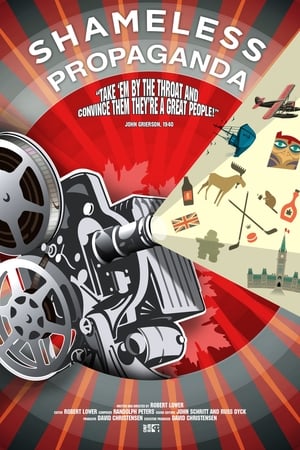
This feature documentary examines its own genre, which has often been called Canada's national art form. Released in the year of the NFB's 75th birthday, Shameless Propaganda is filmmaker Robert Lower's take on the boldest and most compelling propaganda effort in our history (1939-1945), in which founding NFB Commissioner John Grierson saw the documentary as a "hammer to shape society". All 500 of the films produced by the NFB until 1945 are distilled here for the essence of their message to Canadians. Using only these films and still photos from that era, Lower recreates the picture of Canada they gave us and looks in it for the Canada we know today. What he finds is by turns enlightening, entertaining, and unexpectedly disturbing.
Wisconsin's tribe's ongoing fight to protect Lake Superior for future generations. "Bad River" shows the Bad River Band of Lake Superior Chippewa's long history of activism and resistance in the context of continuing legal battles with Enbridge Energy over its Line 5 oil pipeline. The Line 5 pipeline has been operating on 12 miles of the Bad River Band's land with expired easements for more than a decade. The Band and the Canadian company have been locked in a legal battle over the pipeline since 2019.
Life After opens the dialogue surrounding grief and how we experience it. Through conversations with Nicola Winstanley and Carmen Galavan about what grief is and how it affects us, we learn what it really means to live a life after.
Canada was led to war by a bigoted, ignorant, self-obsessed Minister of Militia, who may well have been clinically insane, but the importance of Canada's contribution in that war owes a great deal to him. The man of course, was Colonel - later made Lieutenant General by his own hand - Sam Hughes. Sam's Army is a compelling portrait of a complex man and the formidable military he built. Sam Hughes was not your standard-issue military leader. Canada's World War I Minister of Militia and Defence concentrated power in his own hands, insisted that the Canadian military use the ill-conceived Ross rifle and liberally promoted his cronies. But there was no denying Hughes was a visionary. He assembled the world's largest-ever volunteer army and bucked superiors to keep his ferocious fighting force together in one Canadian Corps.
A documentary recounting the kidnappings of British Trade Commissioner James Cross and Quebec Vice-Premier & Minister of Labour Pierre Laporte by the FLQ on October 5, 1970 in Quebec.
This film joins five of the world's leading whale researchers on a scientific expedition around Canada's Vancouver Island. Spectacular photography and sound recording, both above and under water, provide an imtimate look at killer, gray, and humpback whales, and the world they inhabit. Island of Whales examines the communication, habitat, food supply and behaviour of whales. What emerges is a picture of creatures more sophisticated and complex than ever before imagined. At the end of the film, we are left with one compelling question: Can these magnificent creatures survive in the face of declining food supplies and pollution?
Oldemors reise