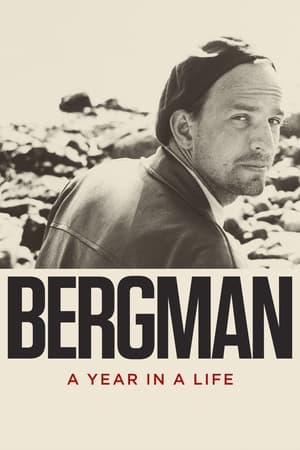
The year 1957 was one of the most prolific for the Swedish filmmaker Ingmar Bergman: he shot two films, released two of his most celebrated films and produced four plays and a TV movie while juggling with a complicated private life.
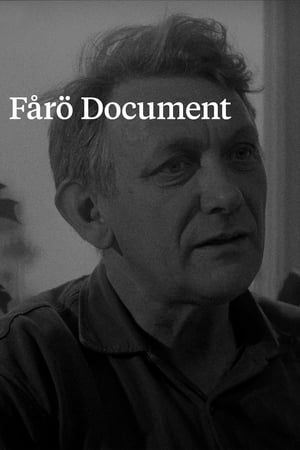
Bergman interviews the locals of Fårö in this fascinating documentary. An expression of personal and political solidarity with the fellow inhabitants of his adopted home, the island of Fårö in the Baltic Sea, this documentary investigates the sometimes deleterious effects of the modern world on traditional farming and fishing communities. The young, especially, voice doubts about remaining in such a remote, quiet place.
Super-8 footage captured while filming Bergman Island. In voice-over, filmmaker Mia Hansen-Løve offers intimate reflections on her creative process on the island of Fårö and her relationship with Bergman and Swedish cinema.
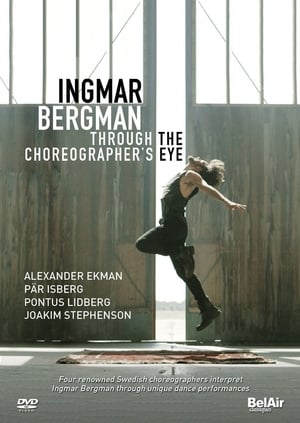
Four of Sweden's most innovative choreographers travel to Ingmar Bergman's home on Fårö to explore and get inspired. The result is a unique contemporary dance film.The renowned Swedish choreographers Alexander Ekman, Pär Isberg, Pontus Lidberg and Joakim Stephenson, with principal dancers Jenny Nilson, Nathalie Nordquist, Oscar Salomonsson and Nadja Sellrup from the Royal Swedish Ballet, interpret Ingmar Bergman through four unique dance performances reflecting on human relations and intense feelings. The dances are linked together with images of the epic natural beauty of Fårö and Bergman's poetic home Hammars, including the voice of the master himself - Ingmar Bergman - revealing his thoughts about movements and music.
Filmmaker Kogonada reflects on women and mirrors in the films of Ingmar Bergman.
Ingmar Bergman speaks with Gunnar Bergdahl.
In the sixties, Swedish filmmaker Ingmar Bergman (1918-2007) built a house on the remote island of Fårö, located in the Baltic Sea, and left Stockholm to live there. When he died, the house was preserved. A group of very special film buffs, came from all over the world, travel to Fårö in search of the genius and his legacy. (An abridged version of Bergman's Video, 2012.)
Language is like memory. If it is not used, it slowly fades. Stockholm is not like Zagreb, but it is like any capital city. I was there when it happened, without having time to say 'thank you' for everything. The book is excellent, each chapter is like Andersson's tableau – a separate whole in which over time you notice the thoughtful layers of tragicomic human life.
The working class girl from Landala, Gothenburg, through the fine art of theatre and all the way to Hollywood.
A highfalutin art movie crumbles into a meta-fictional disaster that betrays its director’s incompetence in real time, and it’s all on film.
An English-German filmmaking couple retreat to Fårö for the summer to each write screenplays for their upcoming films in an act of pilgrimage to the place that inspired Ingmar Bergman. As the summer and their screenplays advance, the lines between reality and fiction start to blur against the backdrop of the Island's wild landscape.
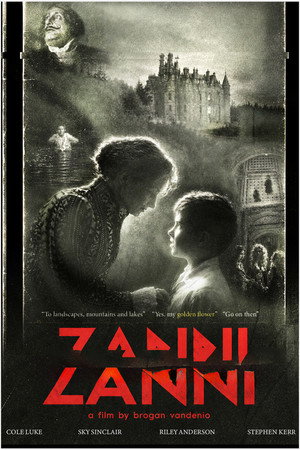
A period drama set between Scotland and Italy.
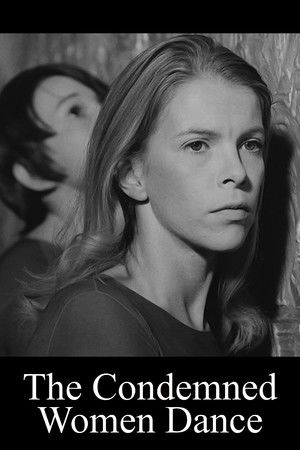
The film shows four women moving in a crowded, closed room to the music of Monteverdi. They represent women living by passing on a role that is passed down to them for generations. Two of the dancers are damned souls that come to life, the third is death and the fourth a child born free, but forced into the other female roles.
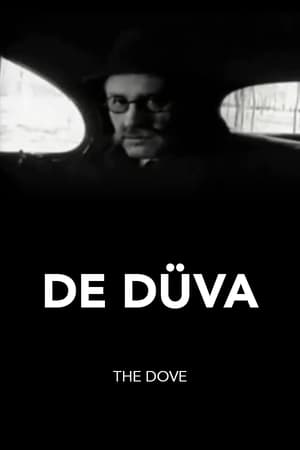
De Düva is a 1968 Oscar-nominated American short film that parodies the films of Swedish director Ingmar Bergman, including Wild Strawberries and The Seventh Seal. The film borrows heavily from the plot lines of some of Bergman's most famous films. The dialogue, seemingly in Swedish, is actually a Swedish-accented fictional language based on English, German, Latin, and Swedish, with most nouns ending in "ska." The film was nominated for an Oscar for Best Live Action Short Film.
As Alex struggles with disturbing hallucinations, his wife Vera tries to help, until they both experience their own profound revelations.
No Days Off for Death” is a film that depicts an altered rendition of our own world to explore themes of grief and over corporatisation, the narrative takes place from two perspectives that ultimately come together; one of a nameless Grim Reaper (only referred to as “Death”) who only wants to take a long overdue holiday from their endless mundane work in the corporate underworld and a grieving man (Max) contemplating committing suicide after a breakup leaves him at the end of his rope. When Death is sent on a job to see that Max goes through with his plan, they decided to try and convince Max to keep on living, an altruistic act Max reluctantly engages with even if death just wants their holiday.
Together impossible goals can be reached. Like playing a song as a tribute to your favorite rock band, putting together 1000 musicians playing perfectly in synch. It’s what Rockin’1000 achieved, a group of Italian friends who became a global community bringing musicians from all around the world. We Are The Thousand is the story of how the largest band on the planet came to be: over nineteen thousand musicians, amateurs and pros from every age group and social background, united by one passion: rock’n’roll. This is the story of how the idea of virtuous community can positively influence every single member, encouraging them to pursue their dreams while giving the best they have to offer.
Comedy guru Del Close, mentor to everyone from Bill Murray to Tina Fey, sets out to write his autobiography for D.C. Comics. As he leads us through sewers, mental wards, and his peculiar talent for making everyone famous but himself, Close emerges as a personification of the creative impulse itself. He's a muse with BO and dirty needles, offering transcendence despite (or because of) the trail of wreckage behind him.
In the slums of Kampala, two men from opposite sides of the world come together over a shared love for America’s greatest hero: Rambo. Against all odds, the two make their own action movies with no money — and bring joy to millions of people on the internet. Welcome to “Wakaliwood.” Through comedy and kung-fu, "Once Upon a Time in Uganda" chronicles the unlikely friendship between Isaac Nabwana, a director hailed as “Africa’s Tarantino,” and Alan Hofmanis, a film programmer from New York. While Isaac tirelessly makes feature after feature, Alan brings his films to international audiences. But tensions flare as Isaac’s star rises — threatening their partnership and all of Wakaliwood.
Several high-budget epic films became Omar Sharif (1932-2015) a film star. He was an actor, but also a bridge player, a womanizer, a bon vivant; he was a man full of contradictions, who enjoyed card games more than movies; he was an eternal nomad who spent half his life in a hotel.