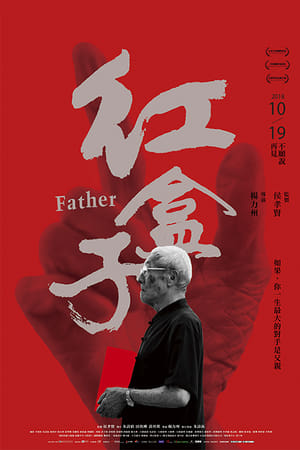
In 1961, father and son travel to Porto Alegre. Their severance leads both to unknown realities.
Everyone knows the story of Paul Revere and his famous midnight ride to warn colonial forces of the British approach. But history books don't tell of the man who sent Revere on his mission: Joseph Warren, America's least remembered founding father. Uncover the forgotten history of Warren and stories of other unsung heroes in our fight for independence in The American Revolution.
Street art, creativity and revolution collide in this beautifully shot film about art’s ability to create change. The story opens on the politically charged Thailand/Burma border at the first school teaching street art as a form of non-violent struggle. The film follows two young girls (Romi & Yi-Yi) who have escaped 50 years of civil war in Burma to pursue an arts education in Thailand. Under the threat of imprisonment and torture, the girls use spray paint and stencils to create images in public spaces to let people know the truth behind Burma's transition toward "artificial democracy." Eighty-two hundred miles away, artist Shepard Fairey is painting a 30’ mural of a Burmese monk for the same reasons and in support of the students' struggle in Burma. As these stories are inter-cut, the film connects these seemingly unrelated characters around the concept of using art as a weapon for change.
A documentary about a teacher who sends a group of pupils out of the classroom when one of them does not own up to talking behind the master's back.
Paratrooper commander Colonel Mathieu, a former French Resistance fighter during World War II, is sent to Algeria to reinforce efforts to squelch the uprisings of the Algerian War. There he faces Ali la Pointe, a former petty criminal who, as the leader of the Algerian Front de Liberation Nationale, directs terror strategies against the colonial French government occupation. As each side resorts to ever-increasing brutality, no violent act is too unthinkable.
During the ill-fated Hungarian revolution of 1956, Karcsi Szabo, star player on the water polo team, is torn between his love for a revolutionary student and his training for the Melbourne Olympics.
Kid brothers Remi and Akin get to spend a gift of a day with their estranged father Folarin. They go on a voyage into Lagos observing the colossal city for the first time and the hoops their father must deal with to provide. All this happens in the backdrop of a huge 1993 presidential election result which calls into question his ability to get them home.
1911. Lenin organizes the first Bolshevik party school near Paris, in the small town of Longjumeau. Through a chain of historical parallels and associations, this time is intertwined with the events of the Paris Commune, the October Revolution and the political struggles of the post-revolutionary years.
A dramatic history of Pu Yi, the last of the Emperors of China, from his lofty birth and brief reign in the Forbidden City, the object of worship by half a billion people; through his abdication, his decline and dissolute lifestyle; his exploitation by the invading Japanese, and finally to his obscure existence as just another peasant worker in the People's Republic.
A chronicle of the civil uprising against the regime of Ukrainian president Viktor Yanukovych that took place in Kyiv in the winter of 2013/14. The film follows the progress of the revolution: from peaceful rallies, half a million strong in the Maidan square, to the bloody street battles between protesters and riot police.
John Mew thinks we're all ugly. And modern living is to blame. For decades he's waged a lonely war against orthodontics and that teenage rite of passage - braces. With his son now taking up the fight, Mew's fringe theories suddenly find an enthusiastic audience online.
When the revolution in Nicaragua won its victory nearly 40 years ago, the world began to dream. A young generation was taking the reins in a country of grand utopias. From West Germany alone, 15,000 “brigadists” travelled to help rebuild the war-torn country: liberals, greens, unionists, social democrats, leftists and church representatives harvested coffee and cotton, built schools, kindergartens and hospital wards. No movement has mobilised so many people. What became of the hopes and dreams of the revolutionaries and their supporters?
In this short film directed in the style of Andrei Tarkovsky, eternity and the downfall of the Soviet empire are explored in a deeply symbolic and poetic way. The film follows a protagonist as they traverse a desolate landscape, reflecting on the transient nature of life and the inevitability of death. Through a series of dreamlike sequences, the audience is presented with a powerful meditation on the idea of eternity, and how it can be seen in the rise and fall of empires. The film culminates in a powerful scene of the protagonist standing atop a hill, looking out at the ruins of the Soviet empire, and contemplating the eternal cycle of life and death.
March/April 1917. The first world war is already a couple year to pace. A sealed train with Russian emigrants keeps on driving from Zürich Germany and Sweden to Sint-Petersburg. The outlaws stand under the guidance of Vladimir J. Lenin. Two senior officers support the revolutionary bomb "to ensure that everything runs smoothly. Yet there are some unpleasant clashes between Socialists and enthusiastic workers who are worried about the war. During train travel there comes an end to Lenin's affair with the gracious Inessa, and his wife Nadja is prepared take back him. The triumphant entrance in St. Petersburg will exceed all expectations....
Documentary film with play scenes about the rise and fall of the short-lived Bavarian Soviet Republic in 1919 from the perspective of various well-known poets and writers who experienced the events as contemporary witnesses.
El día más largo
Biographical film about Eyne Kuliyeva, who was the first woman to be the head of a local governance in 1920s Soviet Turkmenistan.
Tucson, Arizona, September 1996. At the request of his son Martin, George Goldsmith tells him of his past in Nazi Germany as a member of a family of Jewish musicians and the strange history of the Jüdischer Kulturbund, a Jewish organization sponsored by Reichsminister Joseph Goebbels.
Paris, Rue Beautreillis, July 3, 1971. The corpse of rock star Jim Morrison is found in a bathtub, in the apartment of his girlfriend Pamela Courson. The chronicle of the last months of the life of the poet, singer and charismatic leader of the American band The Doors, one of the most influential in the history of rock.
These are strange times indeed. While they continue to command so much attention in the mainstream media, the 'battles' between old and new modes of distribution, between the pirate and the institution of copyright, seem to many of us already lost and won. We know who the victors are. Why then say any more?