A compilation episode of the wildlife documentary series presented by David Attenborough, uncovering the secrets of animals across the globe.
After one of the hottest years on record, Sir David Attenborough looks at the science of climate change and potential solutions to this global threat. Interviews with some of the world’s leading climate scientists explore recent extreme weather conditions such as unprecedented storms and catastrophic wildfires. They also reveal what dangerous levels of climate change could mean for both human populations and the natural world in the future.
This short documentary films some of the wild animal species that have adapted to the city of Vancouver, from the familiar pigeons and starlings to the less familiar herons nesting in Stanley Park and a coyote in a farmer's field.
An epic story of adventure, starring some of the most magnificent and courageous creatures alive, awaits you in EARTH. Disneynature brings you a remarkable story of three animal families on a journey across our planet – polar bears, elephants and humpback whales.
Bas Jan Ader hangs from the branch of a tall tree, until he loses his grip and falls into a river below.
Takes us to locations all around the US and shows us the heavy toll that modern technology is having on humans and the earth. The visual tone poem contains neither dialogue nor a vocalized narration: its tone is set by the juxtaposition of images and the exceptional music by Philip Glass.
Deep Blue is a major documentary feature film shot by the BBC Natural History Unit. An epic cinematic rollercoaster ride for all ages, Deep Blue uses amazing footage to tell us the story of our oceans and the life they support.
Cuba's enforced isolation has resulted in the unlikeliest of marine reserves: a huge, rambling archipelago known as Jardines de la Reina, or "Gardens of the Queen." Stretching around 140 miles along the southern coast of Cuba, it's one of the longest barrier reef systems in the world. Get an up-close look at Fidel Castro's diving playground, a forgotten ocean paradise unseen for half a century, and witness exotic species rarely seen elsewhere in the region. It's the lost jewel of the Caribbean, but how long can this pristine wilderness survive?
The largest predator on the planet, the sperm whale, is your host for an amazing exploration of the final frontier – the world at the bottom of the ocean. From the makers of the Walking With series comes this incredible marine tour, in which you'll witness a rarely seen world of hidden mountain ranges, majestic canyons, volcanoes and the beautiful and often deadly creatures that inhabit the deep sea.
Ocean Oasis is a fascinating journey into the bountiful seas and pristine deserts of two remarkably different, but inextricably linked worlds — Mexico's Sea of Cortés and the Baja California desert.
An exploration of technologically developing nations and the effect the transition to Western-style modernization has had on them.
A vivid journey into the mysterious subterranean world of mycelium and its fruit— the mushroom. A story that begins 3.5 billion years ago, fungi makes the soil that supports life, connecting vast systems of roots from plants and trees all over the planet, like an underground Internet. Through the eyes of renowned mycologist Paul Stamets, professor of forest ecology Suzanne Simard, best selling author Michael Pollan, food naturalist Eugenia Bone and others, we experience the power, beauty and complexity of the fungi kingdom.
The story of individuals from all walks of life that have faced incredible obstacles, found the drive to overcome their disabilities, and have through water sports become real everyday heroes.
After many years of careful conservation, Banff and Jasper National Parks have become vast zoological gardens. Deer, moose, bear, big-horn sheep, birds and small animals that live above the treeline are natural subjects for the close-up camera, with a backdrop of snowy peaks.
ITV Naturalist Nigel Marven stars in this drama-documentary in which he explores his own back garden, in all its intricate detail. Shrunk to the size of an ant, he and his two companions - technical assistant Laura Green (Sarah Matravers) and driver Doug Kruger (Robin Lawrence) - embark on a mission to cross Nigel's back garden in just 24 hours. Along the way they meet some of the many thousands of creatures that fight for survival every day in these urban jungles .
Lake Tanganyika is an 'Ocean' in Africa. Millions of years ago it was colonized by a little fish called 'Cichlid'. Otters, crocodiles, cobras and cormorants all hunt the fish in clear water. How the Cichlid survived and evolved is an incredible story for, millions of years later, there are over 200 new species - all found only in Lake Tanganyika. Incredibly, they have evolved to look like coral reef fish. There are cichlid equivalents of tuna, snapper, gobies and goatfish. They have evolved bizarre methods of breeding with mouth-incubation, lekking and, unique amongst fish, there is even a cuckoo. Despite all their specialization over millions of years, if an opportunity presents itself, the little fish can behave like their unspecialized ancestor. In the climax of the film, they bang together to feast on a hatch of sardine fry. This is the story of how one little fish has conquered a lake.
In Africa there is a fable that explains the creation of the tides. When a hyaena challenged a mudskipper to a drinking contest to decide who should own the shore, the god Mungu tilted the earth so the sea flowed inland, and neither could win.
They say that in the wild, nothing dies of old age. Yet one female baboon defies the rule. Queen of Baboons is a deeply intimate portrayal of life in a baboon troop through the eyes of its matriarch Mmasadi. From the moment of her birth, Mmasadi is destined for greatness. Born into the troops highest-ranking family, she will become queen one day.
Alaska... Here, in this vast and spectacularly beautiful land teeming with abundant wildlife, discover the "Spirit of the Wild." Experience it in the explosive calving of glaciers, the celestial fires of the Aurora Borealis. Witness it in the thundering stampede of caribou, the beauty of the polar bear and the stealthful, deadly hunt of the wolf pack.
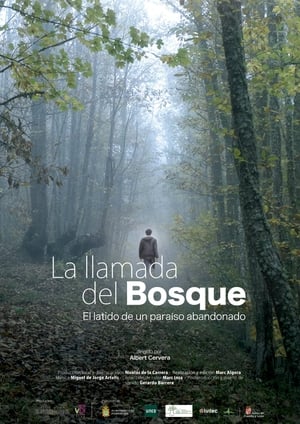
Trees talk, know family ties and care for their young? Is this too fantastic to be true? German forester Peter Wohlleben and scientist Suzanne Simard have been observing and investigating the communication between trees over decades. And their findings are most astounding.