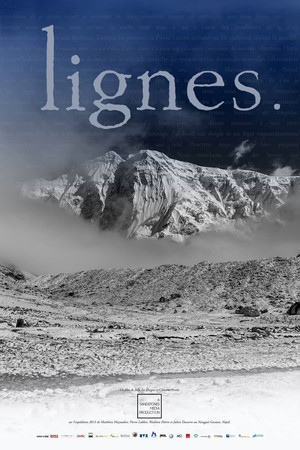
Lignes chronicles the sublime interplay between alpine literature and an expedition seeking the true meaning of mountaineering. Four high-mountain guides—Matthieu Maynadier, Pierre Labbre, Matthieu Détrie, and Julien Dusserre—embark on a project: to summit Nangpai-Gosum, an unclimbed 7,000-meter peak in Nepal, using the "alpine style" adapted to the Himalayas—the toughest and purest approach of all. Through this expedition, Lignes attempts to answer the question: "Why do we climb mountains?" Why, despite the harsh conditions and exhaustion, do these four Alpine guides pursue a perilous dream in a realm that belongs to no one? Lignes finds some answers in the past, drawing on 150 years of alpine literature. Serving as both narrator and seasoned guide, Raymond Renaud takes us on a tour of his books and speaks of the "conquerors of the useless"—from the turn of the century to the present day.
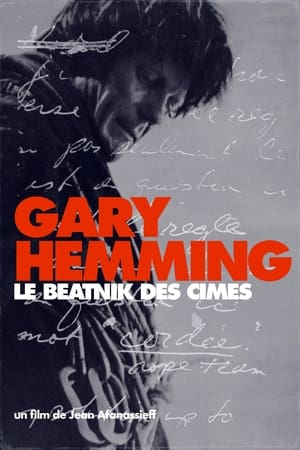
The American mountaineer Gary Hemming marked the era of the 1960s. The story of this "exceptional" character is intimately linked to that of the rescue of the two German mountaineers on the west face of the Drus, in 1966, a rescue which he had took the initiative. While the official emergency services of the EHM try to reach them from above, a pirate rope made up of Gary Hemming, René Desmaison, Lothar Mauch, Gil Bodin, Mike Brurke, François Guillot, the filmmaker Gérard Bauer organizes to join them from below and succeeded after a fierce struggle the rescue. The press seizes the event and elevates Gary Hemming to the rank of national hero. All the newspapers feature this big guy with a cool attitude, mismatched clothes, jovial smile and long blond hair on the front page. From then on, he was nicknamed: "the beatnik of the peaks".
A jetliner spans the miles, sheering through clouds to open sky and scenic vistas of the provinces below. Glimpses of town and country, of people of many ethnic origins, of a resourceful and industrious nation - impressions it would take days and weeks to gather at first hand - are brought to you in this vivid 1800-kilometer panorama.
27-year-old German alpinist Jost Kobusch wants to climb Everest, alone, without oxygen and in Winter, when the roof of the world is deserted.
In February 1966, Pierre Mazeaud and Lucien Berardini traveled to the Atakor massif, in the Hoggar mountain range of the Sahara in southern Algeria. There, they attempted a challenging first ascent: the Takouba spur, one of the peaks adjacent to Garet El Djenoun, a legendary mountain in the Hoggar massif, first climbed by Roger Frison-Roche and Raymond Coche in 1935. The documentary, superbly filmed by Jacques Ertaud, won the Grand Prize at the Trento International Mountain Film Festival in 1966.
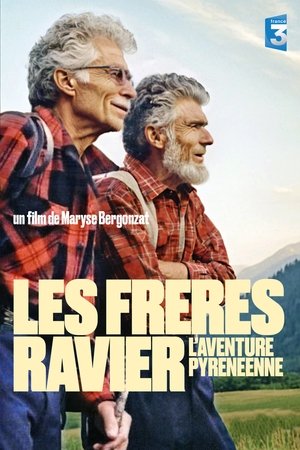
The two brothers Jean and Pierre Ravier have opened almost all the "classic" (difficult) routes in climbing and mountaineering in the Pyrenees. Roped together at the waist using a few flat knots and little equipment, the two twin brothers achieved more than 200 firsts across the entire massif. A unique style and commitment, a state of mind made up of adventure, literature, inventiveness and friendship. Unclassifiable and outgoing, after 60 years of Pyrenees, their desire for the mountains is intact. When does a race start? How does the idea, the desire, come about? What sense does it make to only achieve firsts? And what is the role of the Pyrenees themselves in this reciprocal and endless game of attraction?
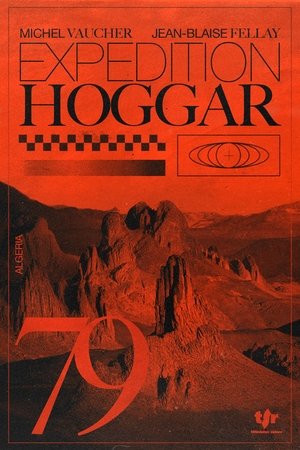
TSR documentary on the 1979 expedition to Algeria in the Atakor massif (Hoggar desert), organized by Geneva mountaineer Michel Vaucher and Jean-Blaise Fellay. The climbers make a dozen ascents including the famous summit of Adaouda (which means "finger" in Tamasheq, the Tuareg dialect), by several routes. Then a new route on the peaks of the southern Tezoulegs. They discover the volcanic geological characteristics of the Atakor massif and meet the nomadic inhabitants of the region, the Tuaregs, who are increasingly settling in the town of Tamanrasset.
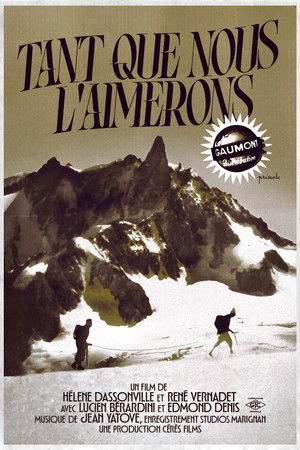
Lucien Berardini and Edmond Denis are two mountaineers who took part in the French expedition to Aconcagua (Andes Mountains) in 1954. Both suffered severe frostbite to their fingers and toes, and three years later, they set out to climb the Aiguille du Géant, a legendary route in the Mont Blanc massif. The camera closely follows the efforts of the roped party, an example of strength and self-sacrifice, until their victorious arrival at the summit.
The story of the ascent of the Aiguille de la République by mountaineers Jacques Fromentin and Michel Bastien. The Aiguille de la République, in the Mont-Blanc massif, culminates at an altitude of 3,305 meters among the Aiguilles de Chamonix group of summits. In the Fontainebleau forest, children learn mountaineering techniques on the bouldering climbing site. In 1954, rock climbing was also practiced in the Chamonix valley. The Montenvers train crosses the viaduct taking tourists or athletes to the Mer de Glace viewpoint. The two climbers take an approach step and reach the Envers des Aiguilles refuge. They then climb this steep and smooth wall, progressing along the ridge. On the platform, a rope throw allows them to climb up and sit at the top to dominate the panorama. Then the return: abseiling from the summit block.
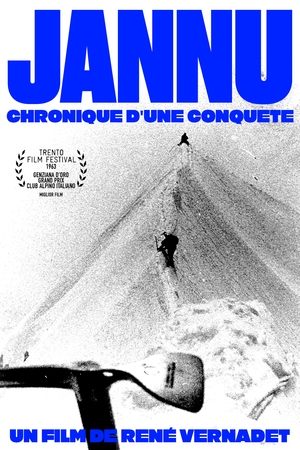
Three years after the 1959 expedition, abandoned 350m from the summit, Lionel Terray leads a new assault on Jannu, one of the most demanding peaks in the Himalayas. At the base camp, equipment and food rations are prepared. The conditions are optimal and the ascent can begin. The camera follows the progress of the mountaineers and Sherpas as closely as possible, from one high-altitude camp to another: installing fixed ropes, progressing over crevasses, in the middle of frozen towers, vertically down immense ice falls or along the edge of sharp ridges. From 7000m, oxygen bottles become essential, as the difficulty of the climb prevents acclimatization. The expedition is a total success: the majority of its members reach the 7710m summit.
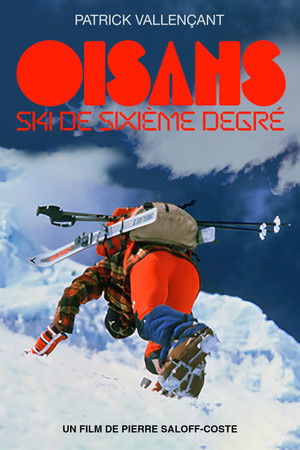
In 1975, Patrick Vallençant skied in some very challenging couloirs in the Oisans region: the north couloir of the Col du Diable, the north couloir of the Coup de Sabre, the couloir of the Pic sans Nom, the Barre Noire couloir in the Écrins massif, and the Gravelotte couloir on the Meije. He was accompanied by Jean-Marc Boivin, P. Guillet, P. Perrier, Gérard Pétrignet, Jacques Ramouillet, Pierre Saloff-Coste, and Joseph Spagnolo. In the second part of the trip, Vallençant completed a circuit of the Meije in three mixed-mountain ascents and, above the avalanche debris, skied off-piste through the steep couloirs and glaciers of the Oisans. He then climbed the routes to the summit of the Meije alone, following the stages of a high-mountain itinerary from the Refuge de l'Aigle.
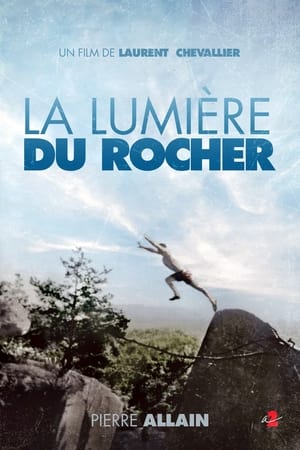
La Lumière du Rocher
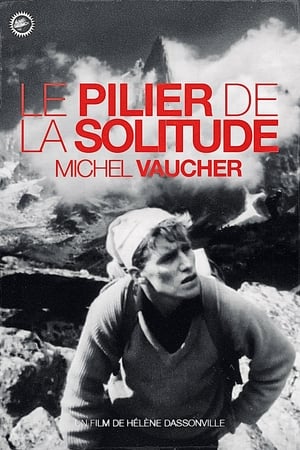
The Pillar of Solitude
In 1975, Raymond Renaud, Yves Pollet-Villard, Maurice Gicquel, Maurice Cretton, Jean Coudray, Yvon Masino, Walter Cecchinel, all teacher guides at ENSA in Chamonix, with the help of the Indian Mountaineering Foundation, set out to cross the 2 peaks of the highest mountain in India. After 43 hours in a truck, 10 days of slow and difficult approach walking, helped by goats for the portage due to lack of sherpas, the base camp is set up on the Nanda Devi glacier. Two groups share the two eastern and western slopes, 3 kilometers separate them: the goal being to meet between the two summits by the ridge. But on the big day, with the monsoon, bad weather arrives with wind and snow, we will have to give up. Like the French expedition of 1951 which lost two mountaineers, Roger Duplat and Gilbert Vigne, to whom Paul Gendre and Louis Dubosc pay tribute.
Mountaineering documentary on the Nanga Parbat expedition, in India, in 1982. Led by mountaineer Pierre Mazeaud, this international expedition brings together eight French people, two Germans, an Iraqi, an Austrian and an Englishman including Michel Afanassieff, Michel Berrueux, Walter Cecchinel, Kurt Diemberger, Hans Engl, Shah Jehan, Karim Imamdad and others. On July 14, 1982, Hans Engl reached the summit after twelve hours of struggle.
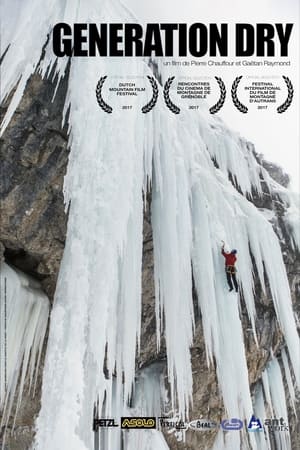
It is a fact that our winters are less and less cold. Therefore it is harder and harder to get the conditions for ice-climbing. Fortunately, man adapts to his environment and makes progress: this is how dry-tooling was born. This movie will make you discover this discipline: its history, its evolution and the current practice. You will also see how much excitement dry tooling can bring. Dry-tooling now allows to free-climb some routes which were impossible to climb without aid in the past.
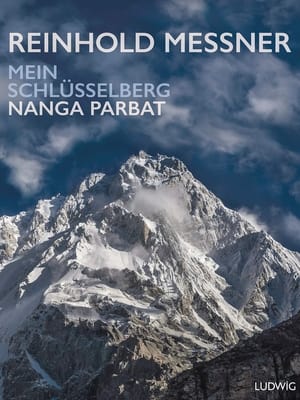
A tragic expedition to the Himalayas, told by the great mountaineer Reinhold Messner, who lost his brother there in 1970, swept away by an avalanche during the descent. An epic tale set against a grandiose backdrop.
Join us as we explore life on the highest mountain plateau on Earth. This beautiful and other worldly place is also one of the harshest on the planet. We follow the lives of some of the iconic creatures that call it home. From Tibetan wolves struggling to raise pups in the rugged peaks, and rare snub nosed monkeys facing family dramas on the forest slopes to chiru antelopes that travel hundreds of miles to give birth while facing death, and hardy pika who tough out the elements all year, whilst under constant attack. Discover how these extraordinary animals manage to not only survive, but also thrive on the roof of the world.
Two climbers, Dany Badier and Françoise Dassonville, swim to explore an underground cave in the Calanques, near Marseille, then equip themselves with climbing gear to scale the spectacular cliffs of the Calanques. Their ascent culminates at the summit of the Grande Candelle. Directed by Gilbert Dassonville in 1970 and produced by Cérès Films, this film won first prize at the Trento Mountain Film Festival in 1967.
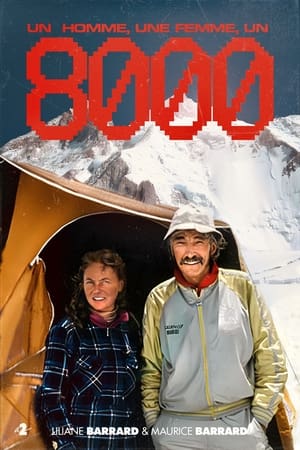
Maurice Barrard and Liliane Bontemps met in 1973 in Peru. Four years later, they are married and start their life together in the Loire Valley. She is a physiotherapist, he is an educator. For them, although settled not far from Chartres, the mountains are never far away. Whenever the opportunity presents itself, they embark on high-altitude expeditions. First individually, then together. In 1982, they were at the top of Gasherbrum 2, an ascent filmed in this documentary prelude to other future ascents including the Nanga Parbat in 1984, after an aborted attempt a year earlier, which made Liliane Barrardi the first woman to climb this mountain. of Karakoram. The "tallest couple in the world" will not stop there. After the Makalu in 1985, in the spring of 1986 they will attempt the ascent of K2 and its 8,611 meters... Un Homme, Une Femme, Un 8000 was broadcast in the program Les Carnets de L'Aventure in 1983.