The true story of anti-apartheid activists in South Africa, and particularly the life of Patrick Chamusso, a timid foreman at Secunda CTL, the largest synthetic fuel plant in the world. Patrick is wrongly accused, imprisoned and tortured for an attempt to bomb the plant, with the injustice transforming the apolitical worker into a radicalised insurgent, who then carries out his own successful sabotage mission.
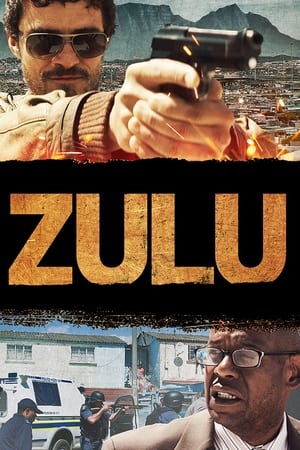
A South African political prisoner is tortured to obtain information on apartheid conspirators. Ten years later, the head officer in charge of the questioning is similarly held as prisoner and questioned about his past offenses.
The time is the late '80s, a crucial period in the history of South Africa. President P.W. Botha is hanging on to power by a thread as the African National Congress (ANC) takes up arms against apartheid and the country tumbles toward insurrection. A British mining concern is convinced that their interests would be better served in a stable South Africa and they quietly dispatch Michael Young, their head of public affairs, to open an unofficial dialogue between the bitter rivals. Assembling a reluctant yet brilliant team to pave the way to reconciliation by confronting obstacles that initially seem insurmountable, Young places his trust in ANC leader Thabo Mbeki and Afrikaner philosophy professor Willie Esterhuyse. It is their empathy that will ultimately serve as the catalyst for change by proving more powerful than the terrorist bombs that threaten to disrupt the peaceful dialogue.
As a child, Ali Neuman narrowly escaped being murdered by Inkhata, a militant political party at war with Nelson Mandela's African National Congress. Only he and his mother survived the carnage of those years. But as with many survivors, the psychological scars remain.
A petty gangster inevitably becomes involved in the growing anti-apartheid struggle and is forced to choose between individual gain and a united stand against the system.
Germans colonized the land of Namibia, in southern Africa, during a brief period of time, from 1840 to the end of the World War I. The story of the so-called German South West Africa (1884-1915) is hideous; a hidden and silenced account of looting and genocide.
The true story of a white South African racist whose life was profoundly altered by the black prisoner he guarded for twenty years. The prisoner's name was Nelson Mandela.
A young, emigrated, South African man comes back to South Africa to sell his mothers farm.
A portrait of a marginalised couple evicted by forced removal in apartheid South Africa.
After leading his football team to 15 winning seasons, coach Bill Yoast is demoted and replaced by Herman Boone – tough, opinionated and as different from the beloved Yoast as he could be. The two men learn to overcome their differences and turn a group of hostile young men into champions.
In Great Britain a reversal of African apartheid comes into place, and the country is governed by black people with whites as the subservients.
The struggle to eradicate apartheid in South Africa has been chronicled over time, but no one has addressed the vital role music plays in this challenge. This documentary by Lee Hirsch recounts a fascinating and little-known part of South Africa's political history through archival footage, interviews and, of course, several mesmerizing musical performances.
Stephen Frears’ first film, "The Burning" is a chilling exploration of racial tensions in Apartheid-era South Africa. On a sweltering summer’ day, a wealthy white matriarch insists on taking her household on a planned trip to the country, in spite of their urgent warnings that an uprising is underway.
The plot centers on students involved in the Soweto Riots, in opposition to the implementation of Afrikaans as the language of instruction in schools. The stage version presents a school uprising similar to the Soweto uprising on June 16, 1976. A narrator introduces several characters among them the school girl activist Sarafina. Things get out of control when a policeman shoots several pupils in a classroom. Nevertheless, the musical ends with a cheerful farewell show of pupils leaving school, which takes most of act two. In the movie version Sarafina feels shame at her mother's (played by Miriam Makeba in the film) acceptance of her role as domestic servant in a white household in apartheid South Africa, and inspires her peers to rise up in protest, especially after her inspirational teacher, Mary Masombuka (played by Whoopi Goldberg in the film version) is imprisoned.
Singer Paul Simon and several African musicians perform a concert to benefit victims of apartheid in South Africa.
A White enclave in Johannesburg, South Africa, in the 1960s. Molly Roth, 13 years old, is the daughter of leftist parents, and she must piece together what's happening around her when her father disappears one night, barely evading arrest, and, not long after, her mother is detained by the authorities. Some of Molly's White friends turn against her, and her family's friendships with Blacks take on new meaning. Relationships are fragile in the world of apartheid. How will she manage?
When the remains of an apartheid-era policeman are discovered 60 years after he went missing, a retired singer revisits her past to help with the investigation. But how much does she know, and what is she holding back?
A South-African preacher goes to search for his wayward son who has committed a crime in the big city.
A rural teacher discovers the harsh realities of his South Africa.
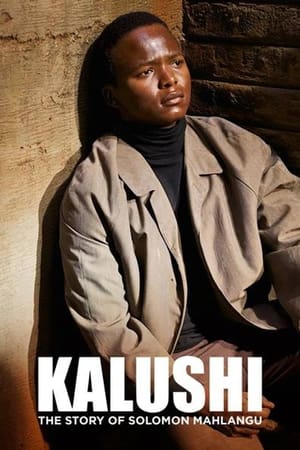
Solomon Mahlangu is a Mamelodi township schoolboy-hawker who, after the events of June 16th joins the military wing of the ANC to fight against the brutal oppression of the Apartheid regime and ends up becoming an icon of South Africa's liberation.