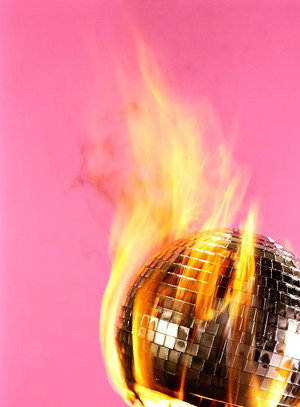
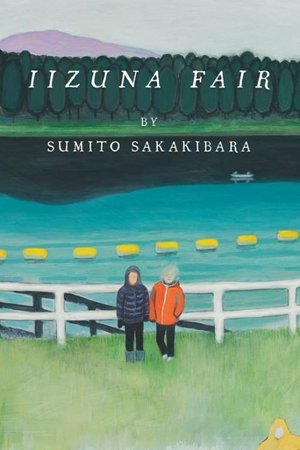
We depicting the never ending cycle of construction and demolition in the human consumption. It was exhibited at re-constructed disaster area in Kobe.
Skin Shade Night Day explores the daily routine and rituals practised by the artist’s Cambodian-Australian family, which are reperformed and documented through a process of embodied empathy. Acts of service, such as gardening and cooking, play out as echoes from the past across a sound and image installation displayed in a shadehouse. Spectres, shadows and aural textures conjure up impressions of a place that remembers how its inhabitants once lived.
"Three Women, is an ambitious work designed to be shown on multiple screens in a movie theater. Moving a step forward from the use of multiple screens as an expansion of cinema as exemplified by Abel Gance’s Napoléon (1927), it presents what is literally a conceptual expansion of cinema in the form of a filmic work experienced in a theater in which the 15-channel, surround-sound audio constructed by Araki Masamitsu and Ito’s visuals organically intertwine."
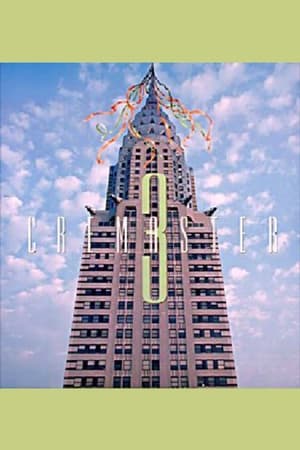
CREMASTER 3 is set in New York City and narrates the construction of the Chrysler Building, which is in itself a character - host to inner, antagonistic forces at play for access to the process of (spiritual) transcendence. These factions find form in the struggle between Hiram Abiff or the Architect...
Videoinstallation with methacrylate / no sound / 2018. Underwater Images recorded in Baja California Sur (México)
2 Small Channel Video Installation, featuring a monologue excerpted from an untitled novel by Alissa Bennett
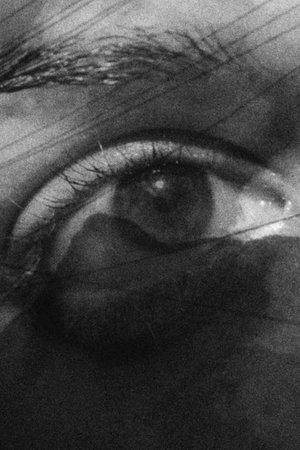
Arrancar los ojos is a project that proposes a constellation of works around the gaze and its political dimension. A reflection on the concepts of institutional violence, repression and collective trauma, focusing on the pattern of eye attacks by state security forces.
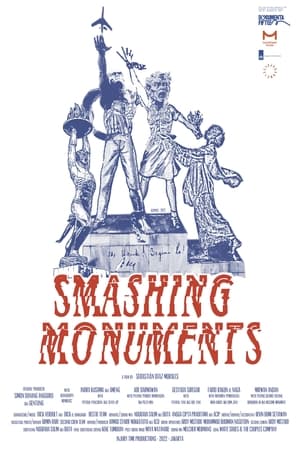
The title may evoke images of gleeful, destructive anarchism, but "smashing" here signals a relationship between people and official city statues that is friendly, jovial, even a little melancholic.
An experimental media installation of three windows exploring fragments of liminality. Three unique re-constructions of experiential instances volumising the cataclysms of thresholds. Experience the absence of definition, the absence of boundaries set and the absence of rationale. A myth is not to be understood, a myth is passed on, like a game of Chinese whispers, it takes its course and ages with time, suiting the demography and tale, it warps and distorts
In "Mitzukos Dream" you watch sleeping people, each filmed for one night with a willdlife camera that reacts to movement. So only the active parts of sleep were captured on film - the moments when we dream?
In the midst of the frenzy night a man finds himself lost in the crevasse of time. It was not the grotesque beings nor the monsters, but it was he who “was here, but wasn't here”. He was the phantom. Buried under memories full of inhibition and promises that never kept – words washed up on the shore – time keeps him at a distance from the “place”. And he hears poems coming on the waves from the other side rhyming and lapping against the shore. A 360° scope video Installation commissioned by Nagano Art Museum.
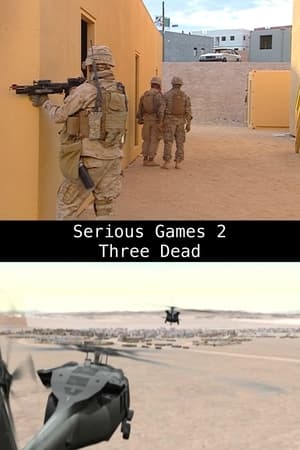
An exploration of how the U.S. military employs video game technology to train troops for war. Three Dead depicts a military exercise within a mock Iraqi town built on the outskirts of Twentynine Palms, California, blurring the line between computer simulation and reality.
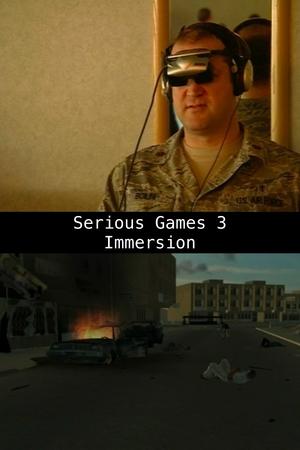
An exploration of how the U.S. military employs video game technology to train troops for war. In Immersion, Farocki presents footage of a role-playing exercise in which military psychologists demonstrate how to use the PTSD program on their colleagues, who describe traumatic wartime experiences. On a second channel, their descriptions play out as virtual renderings.
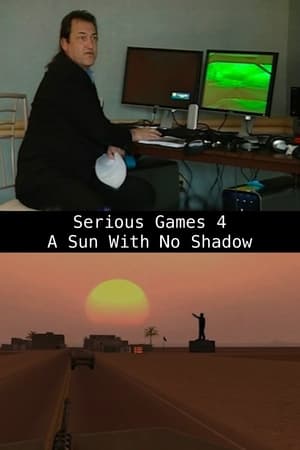
An exploration of how the U.S. military employs video game technology to train troops for war. In A Sun With No Shadow, Farocki calls attention to the subtle differences between the simulations for combat training and PTSD. With the former, the sun can be programmed to cast shadows in the virtual combat zones, while the latter, less expensive technology does not offer this feature.
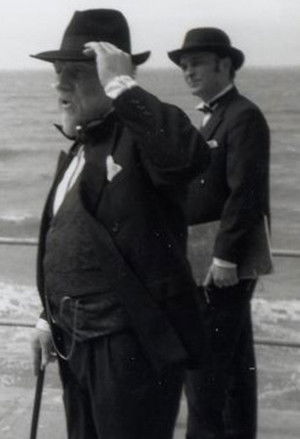
In 2000, which was ‘Ensor Year’, the installation artist Guillaume Bijl made a short fictitious found-footage film entitled ‘James Ensor in Oostende ca. 1920’, which shows the painter at this resort with his friends. We see them having a drink, strolling in the arcades of the Thermae Palace and sitting on the beach. Bijl’s meticulous choice of locations, belle époque dress (including bathing costumes) and his cinematographically perfect imitation of the rather jerky black & white images, as well as the patina and the perfectly imitated scratches on the film emulsion, all resulted in a perfect replica: an apparently forgotten roll of film from the days of silent film. Bijl himself classifies this faultless slice of life, one of his rare excursions into film and video, under ‘cultural tourism’, one of the elements of his work in which he popularizes cultural history subjects and reduces them to clichés for the general public.
The chasm through which light bleeds , bleeds out of proportion with bright spectral flickers flaming the trees abrading out the tissues with excruciating vigour gaining momentum
The relationship between the human body and the perception of space in the field of today's use of technology is questioned by showing parts of the ancient Qi Gong dragon form.
A multi-channel video installation about movement and bodies.
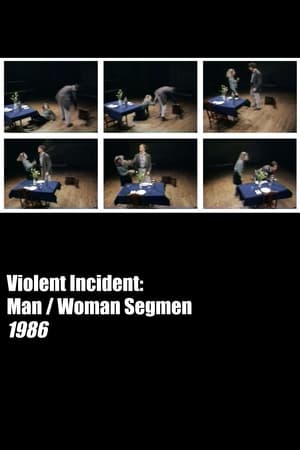
In this video work Bruce Nauman explores violence, gender and behaviour. Set around a simple middle class dining table, the scene quickly escalates into a slapstick fight between a man and a woman. Their actions become increasingly more erratic and aggressive yet also ridiculous and cartoon-like as the video progresses. Nauman explores the ways in which anger can be provoked by others and questions the way we can react to them. Much like many of his other artworks, he employs the use of humour and exaggeration to explore serious and even dangerous topics - he produced this work as a result of his frustration with futile acts of violence in ordinary life. He explains, “The viewer is presented with a hypnotic repetition of pointlessly cruel and destructive violence which is both seductive and alienating.”
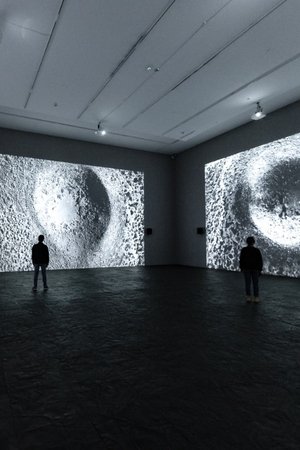
The camera hovers above the Mir diamond mine in Sakha, northeastern Siberia, one of Earth's largest kimberlite pipes. This colossal crater spans a continuum of Soviet and Russian resource politics from Stalin to Putin, where technology and ideology inscribe military and economic imperatives into a landscape transformed by radioactive residues and industrial toxicity. Dark earth is excavated and transported, the images governed by extraction processes that sustained the Soviet Union through Sakha's mineral wealth. Out of dense nocturnal fog, debris and dimly lit industrial plants slowly crystallize, apocalyptic scenery alternating with undulating earthworks evoking folds of velvet. The observational camera remains still, registering rather than narrating, while a finely arranged soundscape transmits the ceaseless whirring of machines. Finally, the camera descends into the open pit, its contours dissolving into darkness, like an infinitely slow fall into bottomless depths.