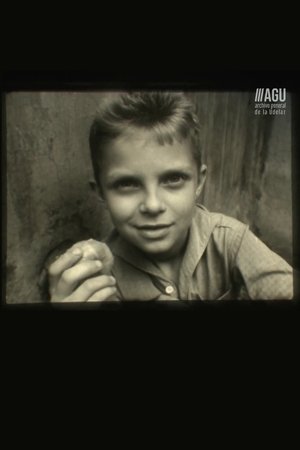
Documentary made in two parts by Luciano Berriatúa. This first part focuses on childhood, personal life and the early works in films by German director F.W. Murnau.
Jeffrey Dahmer lived a ghastly double life as an adult, ultimately becoming known as one of America’s most infamous serial killers. Through an exclusive interview with Dahmer, as well as his mother and father, this program takes an extended look inside the mind of a serial killer.
Part of ESPN's 30 for 30 Shorts. On October 30, 2001, with the United States of America still reeling from the aftermath of the September 11 terrorist attacks, George W. Bush took to the mound at Yankee Stadium to throw the "first pitch" of the 2001 World Series' third game. Includes interviews with former United States Secretary of State, Condoleezza Rice; former New York City mayor, Rudy Giuliani; Yankees shortstop, Derek Jeter; former Yankees manager, Joe Torre; former United States Director of Central Intelligence, George Tenet; members of the Bush family; and the 43rd President of the United States, George W. Bush.
After being denied access to the Church of Scientology's headquarters, documentarian Louis Theroux teams up with ex-Scientology official Marty Rathbun to stage re-enactments of alleged abuses within the organization. Theroux soon discovers that the church is watching his every move.
There are very few icons in Argentine culture capable of appealing to both popular and elitist tastes. Leonardo Favio was undoubtedly one of them. An unseasonable Peronist attached to the liturgy of his land, the director, born in the province of Mendoza, was and artist at every craft. a Renassaince man, but above all, a filmmaker. This is how "Favio: Chronicle of a Director" recaptures him, as a man of film who fed from radio, acting, music and painting in order to build up the handful of rhapsodies with which he adorned argentinean cinematography
Social isolation affects millions of people, even Mars-bound astronauts. A savvy NASA psychologist is tasked with protecting these daring explorers.
Based around the testimonies of four German women, this documentary details the abuse women suffered during after WWII at the hands of the Soviet forces, particularly during their forced labour.
A portrait of Keith Richards that takes us on a journey to discover the genesis of his sound as a songwriter, guitarist and performer.
The story of fashion designer Jeremy Scott's ascent from a small town in Missouri to his current position as the Creative Director of Moschino.
Documentary about Finnish film theaters - about their past, disappearance and future. And at the same time universal story how cinema is undeniably connected with life.
‘Voices from the Shadows’ shows the brave and sometimes heartrending stories of five ME patients and their carers, along with input from Dr Nigel Speight, Prof Leonard Jason and Prof Malcolm Hooper. These were filmed and edited between 2009 and 2011, by the brother and mother of an ME patient in the UK. It shows the devastating consequences that occur when patients are disbelieved and the illness is misunderstood. Severe and lasting relapse occurs when patients are given inappropriate psychological or behavioural management: management that ignores the severe amplification of symptoms that can be caused by increased physical or mental activity or exposure to stimuli, and by further infections. A belief in behavioural and psychological causes, particularly when ME becomes very severe and chronic, following mismanagement, is still taught to medical students and healthcare professionals in the UK. As a consequence, situations similar to those shown in the film continue to occur.
Evoking a cinema verite feel not found in most sports documentaries, Fast Break examines the 1977 Portland Trailblazers basketball team in a surprisingly personal and compelling fashion. Inter-cutting excerpts from the 1977 playoff / championship season, the film steps outside of the basketball court, and into the everyday lives of the Trailblazers, as well as their coach Jack Ramsey. Whether it’s biking the Oregon coast with star center Bill Walton, hosting a kids basketball camp with Dave Twardzik, or joking with Maurice Lucas at the pool – Fast Break lets the players speak for themselves: about basketball, life and playing in Portland. Fast Break, a film documentary about Bill Walton and the Portland Trail Blazers winning the 1976-77 NBA title and the aftermath of their accomplishment, is the greatest movie I have ever seen on the subject of professional team sports, basketball as a metaphor for life, and the perfect practice of Zen Buddhism in American society.
A documentary in which after being released from prison, former criminal Viggo wonders why he developed from a sensitive little boy into a merciless criminal. He decides to give up his criminal existence for good and dives into his past to avoid making the very same mistakes a second time. Viggo realizes that the damage he suffered because of his family might jeopardize his new life. His quest, in which he drags his two sister, leads to painful confrontations with their past and also with one another. The secrets of their incestuous family and manipulative father are unraveled little by little.
Meet the growing, worldwide community of theorists who defend the belief that the Earth is flat while living in a society who vehemently rejects it.
A dwarf, a dragon, and a golden egg. Yet the real fairy-tale of this film is the journey of Jeanmarie, the Dutch street performer. In an adventurous project, Jeanmarie teams up with youth worker Frank to travel through the last remaining untouched regions of China, performing his new show to local children. As they transport their wondrous music machine from village to village, they bring laughter and intrigue to all who witness their magical performance, reuniting reality with fantasy, Europe and Asia. In a film as imaginative and whimsical as Jeanmarie's play itself, this is a poignant tale of passion and conviction to follow and fulfil your dreams.
Through the conversation with Yugoslav film authors and excerpts from their films, this documentary film tells a story of a film phenomenon and censorship, and its focus is, in fact, a painful epoch of Yugoslav film called “a Black Wave”, which was the most important and artistically strongest period of Yugoslav film industry, created in the sixties and buried in the early seventies by means of ideological and political decisions. The film tells a great “thriller” story of the ideological madness which characterised the totalitarian psychology having left multiple consequences felt up to our very days. It stresses similarities between totalitarian regimes defending their taboos on the example of the persecution of the most important Yugoslav film authors. Those film authors have, however, made world careers and inspired many later authors. The film is the beginning of a debt pay-off to the most significant Yugoslav film authors.
Filmmaker Dan Murdoch meets America's most infamous supremacist group - the Ku Klux Klan - who say they are in the midst of a revival, with a surge in membership and cross lightings across the Deep South.
An exploration of the remarkable life and groundbreaking ideas of biologist E.O Wilson, founder of the discipline of sociobiology, world authority on insects and Pulitzer-prize winning writer on the subject of human nature. In Wilson, we see an endearing personality who is one of the great scientists and thinkers of our time.
Within the last half century, our agriculture and food has changed more than it has changed before in several thousand years. New technologies and scientific ingenuity have given rise to genetically modified organisms (GMO) and other novel foods. Some people have raised concerns about the safety of GMOs in our food supply, given their incredible dominance in the majority of our diet. Traditional, organic farmers, have consistently been under attack by large corporate farming interests, who seek to dominate the food industry and run family farms out of business. This film looks at our current food system as well as a variety of smaller, organic options available to consumers who want to support sustainable farming methods.
Director Julien Temple presents a unique insight into the tradition and transgression of Christmas. Featuring interviews and 70s archive, framing the Sex Pistols’ last UK concert with Sid Vicious, for the children of striking firemen in Huddersfield on Christmas Day 1977.