Séfar (in Arabic: سيفار) is an ancient city in the heart of the Tassili n'Ajjer mountain range in Algeria, more than 2,400 km south of Algiers and very close to the Libyan border. Séfar is the largest troglodyte city in the world, with several thousand fossilized houses. Very few travelers go there given its geographical remoteness and especially because of the difficulties of access to the site. The site is full of several paintings, some of which date back more than 12,000 years, mostly depicting animals and scenes of hunting or daily life which testify that this hostile place has not always been an inhabited desert. Local superstition suggests that the site is inhabited by djins, no doubt in connection with the strange paintings found on the site.
Notre nouveau monde : quand la terre nous surprend
A documentary about the histoy and linguistic ties of the Finno-Ugric, and Samoyedic peoples. Speakers of the Kamassian, Nenets, Khanty, Komi, Mari, and Karelian languages were filmed in their everyday settings in the late 1960s and early 1970s. The footage was shot in Altai Krai, the Nenets Okrug, Khantia-Mansia, Uzbekistan, the Komi Republic, Mari el, Karelia, and Estonia. The first documentary in Lennart Meri's "Encyclopaedia Cinematographica Gentium Fenno - Ugricarum (1970 - 1997)" series.
Cephalopods: The Reign of Suckers
In 1935, German scientists dug for bones; in 1943, they murdered to get them. How the German scientific community supported Nazism, distorted history to legitimize a hideous system and was an accomplice to its unspeakable crimes. The story of the Ahnenerbe, a sinister organization created to rewrite the obscure origins of a nation.
Famous and talented feature film director and scriptwriter Jan Kounen plunges the viewer into a unique and thrilling adventure of pregnancy, birth, and baby’s first swim, alongside marine creatures. Leina Sato is a Japanese professional free diver and is expecting her first child. Her partner, Jean-Marie Ghislain is a famous underwater photographer. They share a passion for the oceans, and believe that a strong bond between a mother-to-be and cetaceans exists. And they want to prove it. Leina will be multiplying her encounters with whales, dolphins and other underwater mammals. Mother Ocean is the incredible encounter between humans and under water species, around the universal question of giving birth and the power of creating life.
Un fleuve invisible
After an explosive and fortuitous encounter, a male hyena and a leopard join forces and create a peculiar hunting alliance.
After many years of careful conservation, Banff and Jasper National Parks have become vast zoological gardens. Deer, moose, bear, big-horn sheep, birds and small animals that live above the treeline are natural subjects for the close-up camera, with a backdrop of snowy peaks.
Directed by award winning filmmaker Ben Masters, Deep in the Heart is a visually stunning celebration of Texas’ diverse landscapes and remarkable wildlife found nowhere else. Told through the eyes of wildlife species ranging from the mysterious blind catfish to the elusive mountain lion, the film follows our ever-changing relationship with the natural world and how we affect it. Narrated by beloved Texan, Matthew McConaughey, the film aims to safeguard our remaining wild places and to recognize the importance of Texas’ conservation on a continental scale.
Tim Laman a photographer for National Geographic and ornithologist Ed Scholes have been traveling to some of the most remote jungles the world has to offer in search of observing and photographing all 39 species of tropical bird. This particular group of birds are entitled as the “Birds of Paradise” and can be found in some of the last truly wild locations of New Guinea.
Sir David Attenborough narrates a documentary about the Kea, the world's only alpine parrot. Playful and destructive, it attacks cars, starts landslides and terrorises New Zealand ski resorts but behind the bad behaviour there's a sharp mind at work. David tries to play chess with a kea and discovers how its cheeky character is the key to its survival.
An unprejudiced portrait of Spanish folklore and a crude analysis in black and white of its intimate relationship with atavism and superstition, with violence and pain, with blood and death; a story of terror, a journey to the most sinister and ancestral Spain; the one that lived far from the most visited tourist destinations, from the economic miracle and unstoppable progress, relentlessly promoted by the Franco regime during the sixties.
A look into the lives of eagles.
Follows the story of "Grizzly Man" Timothy Treadwell and what the thirteen summers in a National Park in Alaska were like in his attempt to protect the grizzly bears. The film is full of unique images and a look into the spirit of a man who sacrificed himself for nature.
Sequel to the "The Waterfowl People". The author interprets the kinship, linguistic and cultural relationships of the Finno-Ugric peoples. Finns, Vepsians, Votes, Setos, Erzya-Mordvinians, Mansi, Hungarians, Sami, Nganasans, and Estonians appear in the film. The film was shot in 1977 on location in northern Finland, Sapmi, Vepsia, Votia, Mordovia, Khantia-Mansia, Hungary, the Taymyr Peninsula, the Setomaa region in Estonia, and on the Estonian islands of Saaremaa and Muhu. Footage was also shot in 1970 in the Nenets Okrug. The second documentary in Lennart Meri's "Encyclopaedia Cinematographica Gentium Fenno - Ugricarum" series.
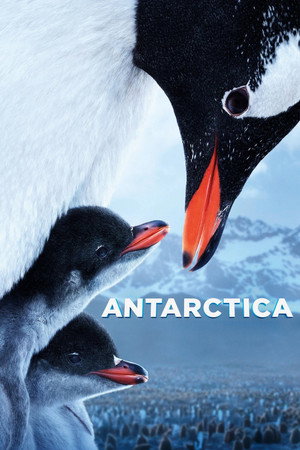
Every year, thousands of Antarctica's emperor penguins make an astonishing journey to breed their young. They walk, marching day and night in single file 70 miles into the darkest, driest and coldest continent on Earth. This amazing, true-life tale is touched with humour and alive with thrills. Breathtaking photography captures the transcendent beauty and staggering drama of devoted parent penguins who, in the fierce polar winter, take turns guarding their egg and trekking to the ocean in search of food. Predators hunt them, storms lash them. But the safety of their adorable chicks makes it all worthwhile. So follow the leader... to adventure!!
Animal Olympians examines the extraordinary athletic prowess of the animal kingdom, comparing and contrasting the beauty, endurance and sheer power of a variety of creatures with that of human sportsmen.
Dark green, impenetrable forests cover a landscape with secluded valleys and rugged mountain ridges. 2.000 rivers and streams dig deep into the underground and transport their water into reservoirs or "Germany's Wild Amazon", the Wupper. These forests and rivers, together with heath-lands and moors, are home to a diverse fauna. Martens, badgers, wild boars, hares, roe deer, red deer and wild boars, even black grouse and hazel deer find shelter in these parts. Wolves have also have a dominant presence, not to mention those who live underground, such as lizards, bats, and snakes. Accompany us on a journey where we explore every corner of this rugged land. Climb underground into the Bergisches Land, through the vast hidden cave systems that sprawl far beneath the forests. There is also much to be discovered in the water, dive with us in crystal clear streams and rivers with their diverse flora and fauna.
This film, three years in the making, The remote forests of Kalkalpen National Park in Austria, the largest area of wilderness in the European Alps, have been left untouched by humans for nearly a quarter of a century in order to return to their natural, primeval state. The landscape regenerates itself in dramatic cycles of growth and decay, and this bold hands-off method of conservation yields salient results: the lynx, absent from the area for 115 years, has returned.