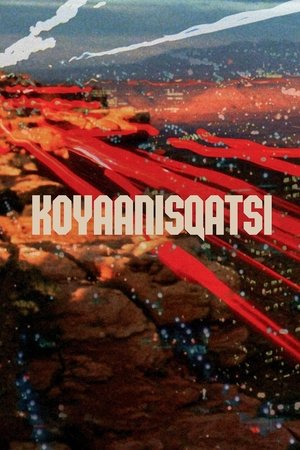
Takes us to locations all around the US and shows us the heavy toll that modern technology is having on humans and the earth. The visual tone poem contains neither dialogue nor a vocalized narration: its tone is set by the juxtaposition of images and the exceptional music by Philip Glass.
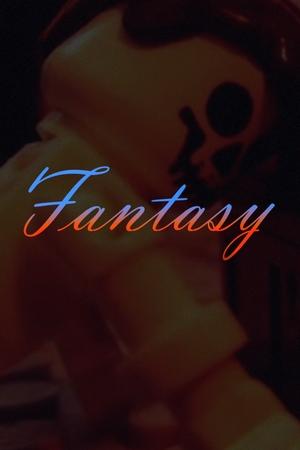
What happens when an earth-splitting disaster destroys the home world of a lone living skeleton? As long as he has his most valuable treasure, he doesn't worry about anything else. But can he hold onto his treasure in such a cataclysm?
In a leafy forest, a Galician sovereign who longs to attain wisdom meets a sorcerer, who tells him: “Go back to your country and study the Earth and the Stars in the sky; anywhere in the world reflects an image of it. You will ride on this arrow, which you must keep for a hundred years and a day. After this time, stick it in the widest valley of all those you possess, with the tip facing the sky. Then the Moon will come and, just as it exerts its action on the waters of the sea, it will act on the arrow, turning it into a holy mountain." - Legend about the Pico Sacro Inspired by Hokusai's views of Mount Fuji and Cézanne's paintings of Mont Sainte-Victoire, "Pico Sacro [The Holy Mountain]" aims to reveal the mystery and the magic that underlie reality.
Angels watch over an old farmer as he works to bring a tsunami-ravaged land back to life.
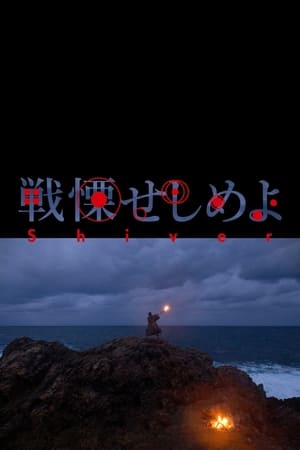
Toyoda Toshiaki went to Sado Island and filmed musician Koshiro Hino and Kodo, the local Taiko Performing Arts Ensemble, while they performed music composed especially for Shiver.
A boy waits in the same street every day with his bags packed. What is he waiting for?
A mysterious detective appears in a desolate and dark place, with no memory of how he got there or who he is. With a cigarette in hand, he begins to explore his unfamiliar surroundings.
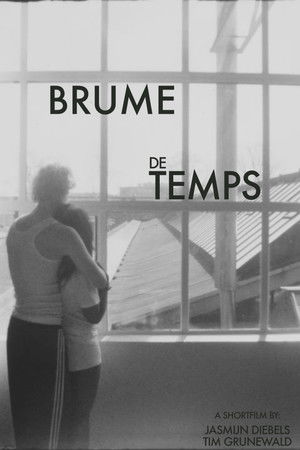
Shot on 16mm film, Brume de Temps tells a story of intimacy, nostalgia, and the fragile boundary between loving your perception of a person and love as it truly is. It unfolds as a journey through the quiet moments of a couple at ease with one another, enclosed in the bubble they have created. Their gestures are subtle, and the safe space surrounding them becomes part of their story. Without dialogue or voice-over, the story unfolds through the images, which shapes the emotions that emerge. An original musical arrangement carries the narrative, enhancing and guiding this journey. Time intrudes through clocks, calendars, and digital displays, yet each object remains blank. Can this illusion endure where reality cannot be denied?
After a breakup, a sleepless young man begins closing the countless tabs open on his computer until only one memory remains.
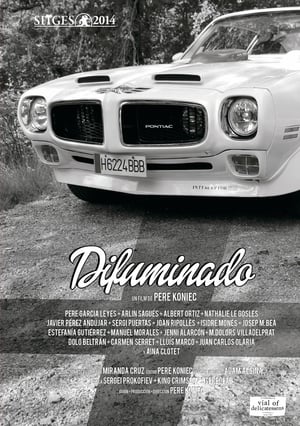
A mysterious old man and a dark past made up of classic cars, beautiful women and the excesses of his youth.
Two brothers move silently through the mundane world, carrying an unseen offering of light. As they journey from place to place, dancing and observing, subtle traces of change begin to appear, revealing how quiet presence can shift everything.
A young man named Phillip finds himself in a purgatory reality that's littered with clues of his past life. From the discovery of his own corpse to the mysterious connection with a woman scheduled for an abortion, Phillip slowly reveals this doomed fate by his own hands.
Kappo
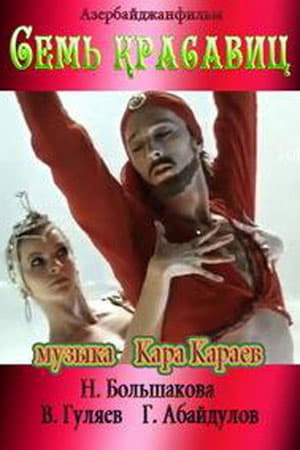
Based on the music of the famous Azerbaijani composer Kara Karayev. The ballet libretto is based on the poem “Seven Beauties” (Khamsa) by Nizami Ganjavi, created in 1197.
A documentary of insect life in meadows and ponds, using incredible close-ups, slow motion, and time-lapse photography. It includes bees collecting nectar, ladybugs eating mites, snails mating, spiders wrapping their catch, a scarab beetle relentlessly pushing its ball of dung uphill, endless lines of caterpillars, an underwater spider creating an air bubble to live in, and a mosquito hatching.
Waiting for his wife to come home from an expedition in the freezing wasteland, a man loses his sanity in a subterranean nuclear bunker.
A glimpse into the raw and simple power of nature through encounters with farm animals: the eponymous Gunda, a mother pig; two cows, and a one-legged chicken.
X-ray images were invented in 1895, the same year in which the Lumière brothers presented their respective invention in what today is considered to be the first cinema screening. Thus, both cinema and radiography fall within the scopic regime inaugurated by modernity. The use of X-rays on two sculptures from the Bilbao Fine Arts Museum generates images that reveal certain elements of them that would otherwise be invisible to our eyes. These images, despite being generally created for technical or scientific purposes, seem to produce a certain form of 'photogénie': they lend the radiographed objects a new appearance that lies somewhere between the material and the ethereal, endowing them with a vaporous and spectral quality. It is not by chance that physics and phantasmagoria share the term 'spectrum' in their vocabulary.
Set in 1980s Toronto, a young boy shuffles between the homes of his recently divorced parents.
This stop-motion animated short film draws us into a post-apocalyptic world through the eyes of a solitary hamster. Wandering through the ruins of once-thriving cities, he scavenges for objects, searches for water, and tries to care for the last surviving plants. One day, he stumbles upon a pair of binoculars. Through them, he spots a strange house covered in flowers, standing in the middle of the urban desert. Intrigued, he sets off to explore and discovers the Giant, a plant-like creature trapped inside its own overgrown sanctuary. Terrified of the outside world, the Giant dares not cross the walls of its home. Petit decides to help. Together, they embark on a journey that’s as simple as it is extraordinary: to make the Earth bloom again.