The true story of how businessman Oskar Schindler saved over a thousand Jewish lives from the Nazis while they worked as slaves in his factory during World War II.
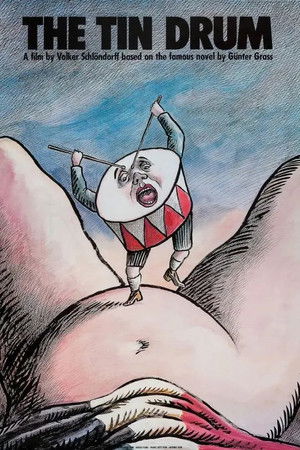
In 1924, Oskar Matzerath is born in the Free City of Danzig. At age three, he falls down a flight of stairs and stops growing. In 1939, World War II breaks out.
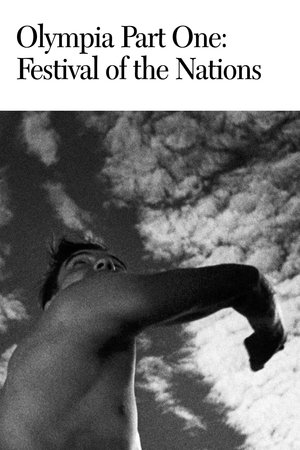
Starting with a long and lyrical overture, evoking the origins of the Olympic Games in ancient Greece, Riefenstahl covers twenty-one athletic events in the first half of this two-part love letter to the human body and spirit, culminating with the marathon, where Jesse Owens became the first track and field athlete to win four gold medals in a single Olympics.
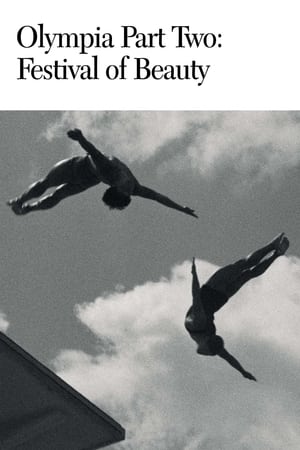
Part two of Leni Riefenstahl's monumental examination of the 1938 Olympic Games, the cameras leave the main stadium and venture into the many halls and fields deployed for such sports as fencing, polo, cycling, and the modern pentathlon, which was won by American Glenn Morris.
A group of German boys are ordered to protect a small bridge in their home village during the waning months of the second world war. Truckloads of defeated, cynical Wehrmacht soldiers flee the approaching American troops, but the boys, full of enthusiasm for the "blood and honor" Nazi ideology, stay to defend the useless bridge. The film is based on a West German anti-war novel of the same name, written by Gregor Dorfmeister.
In a French forest circa 1798, a child–who cannot walk, speak, read or write–is found. A doctor becomes interested in the case and patiently attempts to civilise the boy.
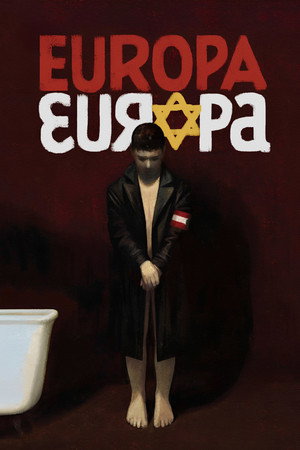
Tucson, Arizona, September 1996. At the request of his son Martin, George Goldsmith tells him of his past in Nazi Germany as a member of a family of Jewish musicians and the strange history of the Jüdischer Kulturbund, a Jewish organization sponsored by Reichsminister Joseph Goebbels.
The story of Auschwitz's twelfth Sonderkommando — one of the thirteen consecutive "Special Squads" of Jewish prisoners placed by the Nazis in the excruciating moral dilemma of assisting in the extermination of fellow Jews in exchange for a few more months of life.
Chronicles combat action of Hitler's elite bodyguard regiment from 1940 to 1941. From Rotterdam to Greece, German frontline cameramen captured footage of early victorious campaigns. Scenes of camp life and ceremonies convey an impression of the comradeship, pride, and elan of this mighty military formation.
Archival footage of an American Nazi rally that attracted 20,000 people at Madison Square Garden in 1939, shortly before the beginning of World War II.
INVASION is a documentary about the collective memory of a country. The invasion of Panama by the U.S in 1989 serves as an excuse to explore how a people remember, transform, and often forget their past in order to re-define their identity and become who they are today.
This is the true and astounding saga of the Spartans at Thermopylae. It is among the greatest tales of war ever recounted. All the glory and grit of these warriors' last stand is captured in this exceptional documentary. It is almost impossible to understand how 300 Spartans managed to hold off the million-man Persian army for even a moment, much less seven days. To a man they paid with their lives but their stunning Last Stand assured that their sacrifice would resonate throughout history. Transporting dramatizations and incisive graphics put you in the heat of the battle and show the lay of the land. The complications and strategies of the conflict are revealed through careful analysis, and critical moments are reconstructed to show exactly what happened. Discover what the Spartans were fighting for, what made them capable of such heroics and what drove them to such sacrifice.
In the final weeks of WW2, as the Nazis are on the verge of surrender, a young British stenographer is faced with a difficult decision when his commanding officer orders him to write a letter authorizing an airstrike that could result in thousands of civilian deaths.
To historians, physicist Lise Meitner deserves to be placed on a par with Einstein, Heisenberg and Otto Hahn. In the 1930s on the verge of World War II, she led a small group of scientists who discovered that splitting the atomic nucleus of uranium releases enormous energy. This extraordinary film tells the story of a woman who was far ahead of her time as a scientist and a pioneer of feminism.
The residents of Bucha, Ukraine, are rebuilding their city from the rubble after surviving the horrors of Russian occupation. A newly married couple, a schoolgirl, a city official, and an elderly housewife have all endured the painful experiences of war, yet they manage to hold onto hope and solidarity. But how do you rebuild in the wake of growing trauma, especially with war still raging in your country? As time hopes for a peaceful life fade, they must grapple with mounting tensions within their communities. Shot over a three-year period, the film is a follow-up to When Spring Came To Bucha, as five protagonists navigate the complex terrain of inner conflicts, trauma, and a longing for justice, posing questions about the future of a society at war.
A documentary film-project by Dmytro Komarov. He was the first journalist to witness and film the horrors of the just-liberated towns of Bucha, Irpin and Hostomel. He saw the first emotions of people immediately after the de-occupation of Kyiv region, Kharkiv region, and Kherson region. The documentary is the author's view of the war from angles that you won't see in the news. Unique, rare, exclusive comments from those whose hands and minds are shaping our future victory. The main heroes of documentary are both ordinary Ukrainians who heroically show their strength and power every day for a year and high-ranking officials such as Minister of Defense of Ukraine Oleksiy Reznikov, Chief of the General Staff of the Armed Forces of Ukraine Kyrylo Budanov, Major General Oleksandr Syrskyi, Commander of the Air Force of the Armed Forces of Ukraine Lieutenant General Mykola Oleshchuk. Initially, "Year" was a series of journalistic reports, later they were edited into a two-part film.
March 1945, on the frontlines of the Tatra Mountains, Romanian and German soldiers prepare for battle, bound by the same hidden fear. In the chaos of combat, beyond bullets and grenades, a harsh truth emerges: in war, they are all just humans.
The smallest of sparks can lead to the largest of explosions. Such is the case of the Atomic Bomb and the minds who have conceived of the deadliest force the world has ever known. This new documentary Atomic: The History of the A-Bomb follows this weapon of mass destruction from inception to detonation.
Angela Su’s fictional artist Rosie Leavers is the last remaining person to upload her consciousness to a video game. Contemplating during a pandemic year which also saw people’s resistance movements in many parts of the world, the work pinpoints the uncanny affinities between gaming and warfare strategies. They have mutually informed the infrastructure of both worlds since time immemorial when diplomatic conflicts played out on the battlefield of the 64 squares of a chess board to flight simulation technologies which were adapted to shape gaming experiences as we know it now. When the conflict is between the state and its people, she speculates that gaming strategies empower civilians in resistance movements to counter imperialism through its own operative logic. But once we upload our consciousness, are we able to return to the sensibilities and political motivation that inspired the revolution to begin with?
It was assisted by the Qing army and some traitors (Fan Cheng-En), who captured Guangzhou and massacred the civilians for three days until Sun Yat-Sen established the Republic of China and Chiang Kai-Shek succeeded in the Northern Expedition.