Twelve episodic tales in the life of a Parisian woman and her slow descent into prostitution.
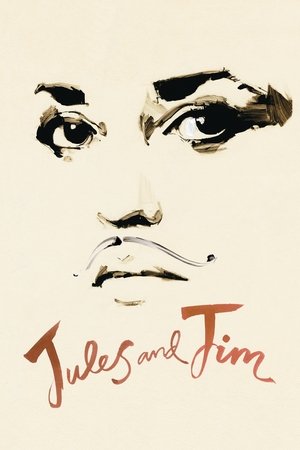
In the carefree days before World War I, introverted Austrian author Jules strikes up a friendship with the exuberant Frenchman Jim and both men fall for the impulsive and beautiful Catherine.
In occupied Paris, an actress wed to a Jewish theater owner must keep him hidden from the Nazis while doing both of their jobs.
Parisian everyman Antoine Doinel has married his sweetheart Christine Darbon, and the newlyweds have set up a cozy domestic life of selling flowers and giving violin lessons while Antoine fitfully works on his long-gestating novel. As Christine becomes pregnant with the couple's first child, Antoine finds himself enraptured with a young Japanese beauty. The complications change the course of their relationship forever.
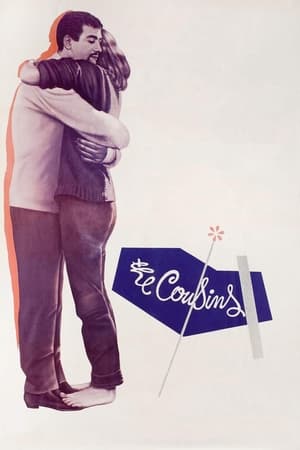
Young provincial Charles arrives in Paris to stay with his cousin Paul while studying law. Paul is a decadent, bohemian pleasure-seeker who shows the meek, diligent Charles the thrills of city life. When Charles falls for Florence, one of Paul's acquaintances, relationships begin to shift.
The Catholic Jean-Louis runs into an old friend, the Marxist Vidal, in Clermont-Ferrand around Christmas. Vidal introduces Jean-Louis to the modestly libertine, recently divorced Maud and the three engage in conversation on religion, atheism, love, morality and Blaise Pascal's life and writings on philosophy, faith and mathematics. Jean-Louis ends up spending a night at Maud's. Jean-Louis' Catholic views on marriage, fidelity and obligation make his situation a dilemma, as he has already, at the very beginning of the film, proclaimed his love for a young woman whom, however, he has never yet spoken to.
In the seacoast town of Boulogne, antique furniture saleswoman Hélène lives with her stepson, Bernard, who's back from military duty in Algiers. An old lover of Hélène's comes to visit, Alphonse, with his niece Françoise; he too is back from Algiers, where he ran a café. Bernard speaks of his fiancée, Muriel, whom Hélène has not met. The past is obscured by guilt, misperceptions, and missed possibilities. Appearances deceive, things change. As Hélène and Alphonse try to sort out a renewal, everyone seems off-kilter just enough to hint that all cannot end well.
Betrayed by an informant, Philippe Gerbier finds himself trapped in a torturous Nazi prison camp. Though Gerbier escapes to rejoin the Resistance in occupied Marseilles, France, and exacts his revenge on the informant, he must continue a quiet, seemingly endless battle against the Nazis in an atmosphere of tension, paranoia and distrust.
A superficial woman finds conflict choosing between her abusive husband and her vain lover.
Cinephile slackers Franz and Arthur spend their days mimicking the antiheroes of Hollywood noirs and Westerns while pursuing the lovely Odile. The misfit trio upends convention at every turn, be it through choreographed dances in cafés or frolicsome romps through the Louvre. Eventually, their romantic view of outlaws pushes them to plan their own heist, but their inexperience may send them out in a blaze of glory -- which could be just what they want.
At a weekend gathering, a man tells a woman that they had spent time there together a year prior. But, the woman has no recollection whatsoever and is convinced that he is simply fabricating the encounter. The more he speaks about their activities the previous year however, the more compelling he becomes. The question remains however – did they meet previously or not?
On the eve of his wedding, on holiday on the Lake Annecy shore, a career diplomat visits an old acquaintance, perhaps a former girlfriend. Through her he meets an intense teenager, Laura, and then lusts after her sister, Claire. Whilst Laura attempts to flirt with him, his fantasy becomes focused on wanting to caress Claire's knee.
A small-time thief steals a car and impulsively murders a motorcycle policeman. Wanted by the authorities, he attempts to persuade a girl to run away to Italy with him.
The deep conversation between a Japanese architect and a French actress forms the basis of this celebrated French film, considered one of the vanguard productions of the French New Wave. Set in Hiroshima after the end of World War II, the couple -- lovers turned friends -- recount, over many hours, previous romances and life experiences. The two intertwine their stories about the past with pondering the devastation wrought by the atomic bomb dropped on the city.
After long absence, a man returns to his hometown only to find his best friend has become an alcoholic.
In the second of Rohmer's moral tales, he examines the relationship between two friends and a girl who at first appears easily exploited. It is a complex tale of feelings and misconceptions, acted out within the head of the main character, as part of Rohmer's attempt to more easily simulate the mindscape quality of literature within a film.
Three people get together to read the play that one of them wrote; a play that recounts the love that these three experienced in the past. But perhaps not everything is as it is written there, perhaps not everything - or almost nothing - was like that.
A successful young writer is in search of his true destiny. Is it the life with his wife and typewriter in Amsterdam or the offers to go to the dreamworld of the Italian film city Cinecittà which is luring him? Trying to find this out he goes into retreat in the house of a befriended gay couple in the south of France.
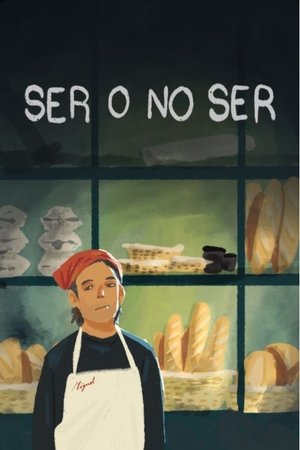
Early new wave effort from Rohmer, which was the first of his six moral tales. It concerns a young man who approaches a girl in the street, but after several days without seeing her again, he becomes involved with the girl in the local bakery. Eventually, he has to choose between them when he arranges dates with them on the same day.
Barny, although a Marxist, is intrigued by the mysteries of religion. In confession, she teases a priest, Léon Morin, but he is a young and intelligent man and ready to discuss anything.