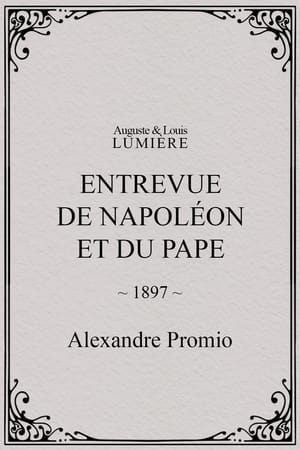
This reconstruction refers to a meeting that allegedly took place on 25 November 1804 at Fontainebleau between Pope Pius VII and Napoleon to discuss the coronation.
What if the events in a key era in our history were actually completely different than what our history textbooks try to tell us? What if Master Jan Hus didn't even get warm in Constance, let alone burn up? What if Jan Zizka had more than one healthy eye? This animated comedy from director Pavel Koutský playfully breaks the myths about the Hussite era as the pedestal of history is occupied not by preachers and military leaders but by two unbelievable scatterbrains, who become the heroes of their time against their will.
Dr Janina Ramirez travels across glaciers and through the lava fields of Iceland to find out about one of the most compelling of the great Viking stories - the Laxdaela Saga. This hour-long film explores how the unique literary achievements of the Saga writers were possible at a time of such immense cultural, political and religious upheaval.
A group of soldiers are sentenced for the murders of key political figures in the night of October 19th, 1921, in the streets of Lisbon. But the names of the conspirators remain unknown. Berta Maia, a widow of the 1910 revolution hero Carlos da Maia, will fight for the truth…
BBC documentary about Franz Kafka played by GREEK TV in 1990. This documentary is one of the ten films of “The Modern World: Ten Great Writers (1988)”.
The Castro revolution was just consolidating its power when, in 1961, over 100,000 students were sent from their schools into the countryside to teach the peasants there how to read. Coinciding with the Bay of Pigs invasion, in this docudrama, 15-year-old Mario (Salvador Wood) has come to a tiny village in the Zapata swamps and gradually wins the villagers over to his task. At the same time, he receives an education in the realities of rural life from the hard-working peasants.
A history of the French Revolution beginning from the decision of the king to convene the Etats-Generaux in 1789 in order to deal with France's debt problem. Part one spans the event until August 10, 1792 (when the King Louis XVI lost all authority and was imprisoned). Part two carries the story through the end of the terror in 1794.
Raphael: The Lord of the Arts is a documentary about the 15th century Italian Renaissance painter Raphael Sanzio.
A testament to NASA's Apollo program of the 1960s and '70s. Composed of actual NASA footage of the missions and astronaut interviews, the documentary offers the viewpoint of the individuals who braved the remarkable journey to the moon and back.
The impact of Marx on the 20th century has been all-pervasive and world-wide. This program looks at the man, at the roots of his philosophy, at the causes and explanations of his philosophical development, and at its most direct outcome: the failed Soviet Union.
A departing professor gathers his closest colleagues for an intimate farewell, but the night takes an unexpected turn when he shares a stunning secret about his past. As the conversation unfolds, skepticism and curiosity collide, challenging everything they thought they knew about history, science, and belief.
Beginning just after the bloody Sioux victory over General Custer at Little Big Horn, the story is told through two unique perspectives: Charles Eastman, a young, white-educated Sioux doctor held up as living proof of the alleged success of assimilation, and Sitting Bull the proud Lakota chief whose tribe won the American Indians’ last major victory at Little Big Horn.
A nearly illiterate woman becomes one of the founders of Poland's Solidarity union.
During the Italian Renaissance, Pope Julius II contracts the influential artist Michelangelo to sculpt 40 statues for his tomb. When the pope changes his mind and asks the sculptor to paint a mural in the Sistine Chapel, Michelangelo doubts his painting skills and abandons the project. Divine inspiration returns Michelangelo to the mural, but his artistic vision clashes with the pope's demanding personality and threatens the success of the historic painting.
More than 2.000 years ago, Narbonne in today's Département Aude was the capital of a huge Roman province in Southern Gaul - Gallia Narbonensis. It was the second most important Roman port in the western Mediterranean and the town was one of the most important commercial hubs between the colonies and the Roman Empire, thus the town could boast a size rivaling that of the city that had established it: Rome itself. Paradoxically, the town that distinguished itself for its impressive architecture, today shows no more signs of it: neither temples, arenas, nor theaters. Far less significant Roman towns like Nîmes or Arles are full of ancient sites. Narbonne today is a tranquil town in Occitania
In 1980, the first march of gays, lesbians and transvestites took place in Brazil in protest against the constant police operations that took place in São Paulo, which aimed to repress these groups. Based on Renan Quinalha's doctoral thesis, “Against morality and good customs: the sexual politics of the Brazilian dictatorship (1964-1988)”, carried out by the Institute of International Relations, a series of four 5 minute videos about the birth of the LGBT movement during the Military Regime.
69, année pandémique
A love story offering an intimate look inside the marriage of Winston and Clementine Churchill during a particularly troubled, though little-known, moment in their lives.
The Prince of Guastalla falls in love with the young citizen Emilia Galotti, who is soon to marry Count Appiani. In order to win Emilia, the prince tries to send the count on an "honorable" journey on his behalf with the help of his chamberlain Marinelli. However, after the Count refuses this offer, Marinelli decides to have the wedding carriage robbed on his own initiative in order to have Emilia abducted to the Prince's nearby pleasure palace. But he has not thought of the prince's mistress, Countess Orsina, and Emilia's shaken father Odoardo, both of whom soon arrive at the castle, one to meet the prince, the other to look after his daughter...
Sulan, who works in a factory in the summer of 1978, begins learning photos with other female workers from Seok-yoon, the owner of the photo studio across from the factory. Seok-yoon, who had been closed, began to open his heart to female workers, but began to feel uneasy about the female workers' labor movement.