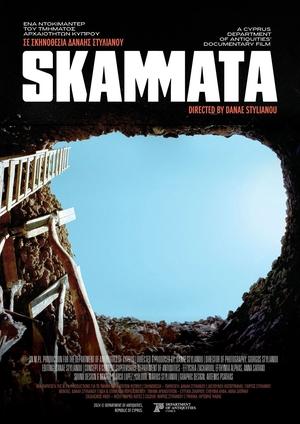
Drama documentary based on the latest discovery of a 16th Century sailing shipwreck found close to Malta by an underwater research team led by maritime archaeologist Timmy Gambin.
Docu-drama profiling Ying Sheng, the first Emperor of China. Charting the life of the man who unified China, this documentary begins with the future Emperor's rise to power after the death of his father, becoming King of Qin at the age of thirteen. Mostly told through the use of re-enactments, the story continues to the present day and the discovery of the Emperor's tomb and terracotta army in 1974.
This historical drama tells the story of Qin Shihuang, who unified China's vast territory and declared himself emperor in 221 B.C. During his reign, he introduced sweeping reforms, built a vast network of roads and connected the Great Wall of China. From the grandiose inner sanctum of Emperor Qin's royal palace, to fierce battles with feudal kings, this film re-creates the glory and the terror of the Qin Dynasty, including footage of Qin's life-sized terra cotta army, constructed 2,200 years ago for his tomb.
A sound is heard from the depth of the soil as the archeological exploration of the Shahre Sukhte goes on. While following the archeologists to document the explorations, the film in parallel seeks out the sound coming from the depths of the soil and steps deep in history to accompany the ancient citizens of the city. The film depicts the wonderful city of “Shahre Sukhte” (The Burnt City) in Zabol in Iran, which was home to one of the highest civilizations at the dawn of history lasting for over 1400 years. In this city was no central government or leadership in Shahr-e-Sukhte. The government was administered by a group that was matriarchal, meaning that power was in the hands of women. It may be for this reason that we witness no trace of violence and war in this city. Something that the world today desperately needs.
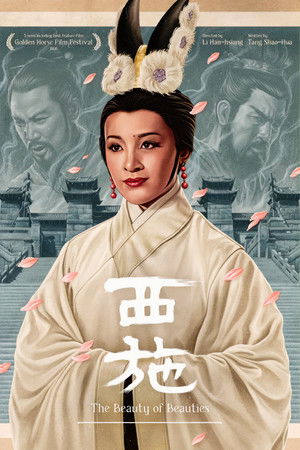
Hsi Shih: The Beauty of Beauties was one of the most ambitious films made in the Taiwan film industry in the 1960s. After leaving The Shaw Brothers studio in Hong Kong and moving to Taiwan, filmmaker Li Han-hsiang mounted this historical epic. Told through the story of Xishi (Hsi Shih), one of the 'Four Great Beauties' of Chinese history, the film portrays the war between two Chinese Kingdoms during the Warring States Period (475-221 B.C). After the kingdom of Yue is defeated by the kingdom of Wu, King Goujian of Yue takes pains to prepare for his revenge and rebuild his country. Knowing that King Fucha of Wu is lewd and lustful, he offers Xisi to the court of Wu to serve as Fucha’s concubine, with Fucha unaware that she is also a spy. She uses her charm to draw Fucha away from his office and governance, while King Goujian rallies his forces together to attempt to reclaim his lands.
Equal parts documentary, essay, and narrative,"Captain Elliot's Circle" is mostly a poetic interaction with an obscure corner of Chinese and British history. Constructed using primary source documents about the taking of Zhoushan, Britain's first choice for a seaport, in the late 1830s,this movie uses Captain Charles Elliot's reluctance to brutalize the Chinese to reflect on the cyclical nature of history and the power structures that move it. The long takes used throughout function to illustrate the dramatically different ways in which people who lived in the mid-19th century perceived time. Additionally, it represents the psychological effect of living on an island regardless of what era you were born in.The last third of the movie focuses on a young woman whose strange day job has taken her far away from the island of Zhoushan generations after Captain Charles Elliot was last there. "Captain Elliot's Circle" was shot on location in Zhoushan and Hangzhou.
With over 60 tombs, the Valley of the Kings is the most-famous burial ground on Earth. In the biggest Egyptian excavation ever, a team of archaeologists led by Zahi Hawass heads into the Western Valley to hunt for evidence of an undiscovered tomb.
The Chinese philosophy of the Five Elements postulates that everything in our universe is based on wood, fire, earth, metal, and water. While traveling through China’s stunning landscapes and witnessing the seasons, this documentary seeks not only the roots of this ancient theory but also the continuing impacts on modern China.
With exclusive access to research conducted by University College London and the Terracotta Army Museum, this documentary uncovers new secrets of China's fabled warriors. The discovery of China's famous Terracotta Army in 1974 captured the imagination of the world. But that first dig only revealed a fraction of this enormous and extraordinary treasure. Since then, scientists have resumed work on the site, and their research has turned up a series of new discoveries about the warriors and the people who made them over two millennia ago.
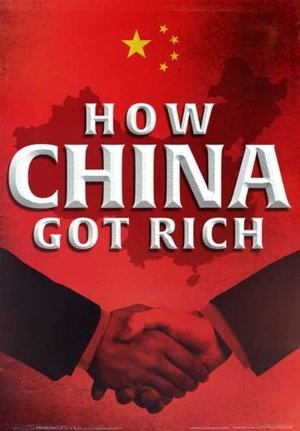
Over the last 40 years, China has been transformed out of all recognition. The scale of its growth and the sheer speed of change has been astonishing. The country has seen the largest lifting of people out of poverty that has ever taken place in human history. How did an impoverished and backward communist country become an engine of global capitalism? What lies ahead for this economic behemoth?
Dr. Mark Fairchild, world-renowned archaeologist, traces the hidden years of Saint Paul's life in the mountainous Turkish countryside of Rough Cilicia.
Over the past 50 years, thousands of exquisitely painted Maya vases, almost all looted from tombs, have flooded into public and private collections. These amazing works of art, filled with humor and mystery, have opened an extraordinary window on the Maya past. But the race to unearth these treasures has destroyed temples and palaces, culminating in the takeover of entire ancient cities by looter armies. OUT OF THE MAYA TOMBS (formerly titled DANCE OF THE MAIZE GOD) enters the world of the vases to explore the royal life and rich mythology of the Maya, as well as the tangled issues involved in the collection and study of Maya art. The story is told by villagers, looters, archaeologists, scholars, dealers and curators. For each, these vases have a radically different value and meaning.
Nana Xu travels to the place built by her father as a prisoner during the Cultural Revolution: first a work camp, later a prison, fruit farm and treatment centre. Conversations with last remaining witnesses, where home is still shaped by a repressed past.
Explores the Pyramids of Giza as Egyptologists try to unravel the mysteries and decipher the clues behind these stone giants built over 4,500 years ago.
Sir Ian McKellen reads the poetry, Michael Wood traces the journey on the ground. Together they conjure up the extraordinary life, times and words of China’s greatest poet, Du Fu. In this film, the first to ever be made about Du Fu in the west, Michael follows his tracks by road, train and riverboat. Along the way, he meets ordinary people, dancers and musicians, who help to tell the amazing story of a poet whose words have resonated through the centuries, describing the experiences of ordinary people caught up in war, corruption, famine and natural disasters. "I am one of the privileged. If my life is so bitter, then how much worse is the life of the common people?"
A 2D animated short film based on a fictionalized version of the history of the ancient Dian Kingdom.
Built in 1755 at the height of the French and Indian War, Braddock's Road was one of the nation's most infamous military roads. Traces of this historic route, in western Maryland, still remain, buried beneath soil and brush, and a team of archaeologists is on the hunt.
A retelling of the fateful Feast at Swan Goose Gate, a historical event that involved two rebel leaders opposing the Qin dynasty.
Thousands of terracotta warriors guarded the first Chinese emperor's tomb. This is their story, told through archeological evidence and reenactments.
This documentary delves into the mysteries surrounding the Neanderthals and what their fossil record tells us about their lives and disappearance.