This pioneering documentary film depicts the lives of the indigenous Inuit people of Canada's northern Quebec region. Although the production contains some fictional elements, it vividly shows how its resourceful subjects survive in such a harsh climate, revealing how they construct their igloo homes and find food by hunting and fishing. The film also captures the beautiful, if unforgiving, frozen landscape of the Great White North, far removed from conventional civilization.
The deep waters of the Southern and Pacific Oceans still hold many mysteries. Two international teams of scientists set out to explore the icy depths of Antarctica and the abysses of the Mariana Trench. Filmed for the first time, creatures seemingly from another galaxy cohabit with champions of survival in extreme conditions.
~ 3.9 km Swim ~ 180 km Bike ~ 42.2 km Run ~ The impossible journey to complete the first ever long-distance triathlon in Antarctica, The Iceman. To prove that limitations are perceptions.
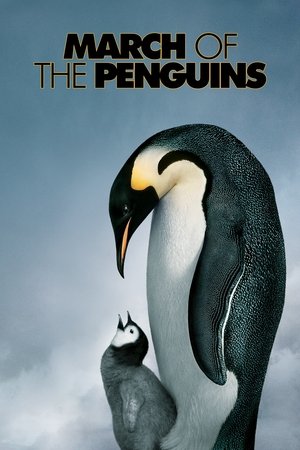
Baby Emperor Penguin Pengi and Sommi's Ultimate Challenge Begins! At 60 degrees below zero, winter has come to the South Pole, the coldest glacial region in the world. Abandoned due to its bitter coldness, the South Pole is greeted by the real natives of this place, the Emperor Penguins, who have come to welcome new lives. Through the indescribable love and care given by mom and dad, baby Emperor Penguins Pengi and Sommi awake from their egg shells. Gluttonous Pengi, the number one trouble maker in the South Pole, and cutie Sommi, who loves daddy's embrace the best, become great friends. Then one day, Sommi’s dad goes out to the sea to seek her out. Sommi left all alone, cold and starving to the brink of death, and Pengi desperately tires to help Sommi through her troubles. Could Pengi and Sommi possibly overcome numerous hardships and become beautiful full-grown Emperor Penguins?
This large format film explores the last great wilderness on earth. It takes you to the coldest, driest, windiest continent, Antarctica. The film explores the life in Antarctica, both for the animals that live their and the scientist that work there.
Češi na pólech
There is a huge secret hidden deep beneath Antarctic ice. Eyewitness Navy Seal Spartan 1 walked there through green, glowing halls carved with mysterious hieroglyphs. Marine Spartan 2 says these same glyphs are on the Moon and Mars. Both whistleblowers tell reporter Linda Moulton Howe that E. T. humanoids have terraformed Earth and our solar system for millions of years.
James Castrission and Justin Jones, dare to not only tackle the perilous journey across Antarctica to the South Pole and return, but to do it completely unassisted – no sled dogs, no wind kites, just two men dragging their food, their shelter and themselves across 1140 kilometres of barren ice. And back again. As they battle frostbite, hypothermia, crevasses and starvation over three months of torture in the harshest place on Earth, Cas and Jonesy discover their limits, the nature of sportsmanship and the boundaries of the human spirit.
A look at possible ufo activity in Antarctica
At the bottom of the world is a place of wild isolation. Antarctica. Its vastness and extremes defy description. From volcanoes to glaciers... and peaks that scrape the sky, its geography is like nothing else in the world. Its wildlife embraces harsh, alien landscapes. And the people that make their home there for part of the year survive amidst unbelievable conditions, thanks to some of the most creative problem-solving on the planet. Filmed principally in the Sub-Antarctic and Ross Sea region as a series of vignettes - each based around one astonishing location after another - viewers will explore one of the most remote, and least-visited parts of the continent; less than 500 tourists make the journey to this region each year. Few places on earth capture the imagination like the great white continent. Now see it as it’s never been viewed before.
A witty and tenacious team of filmmakers brave the Antarctic to film Disneynature's "Penguins."
On his ship "Calypso," as well as in a submarine, Jacques Cousteau and his crew sail from South America and travel to Antarctica. They explore islands, reefs, icebergs, fossils, active volcanic craters, and creatures of the ocean never before seen. This voyage took place in 1975, and Captain Cousteau became one of the first explorers ever to dive beneath the waters of the frozen South Pole.
The Douglas Mawson Antarctic Expedition of 1912 is considered one of the most amazing feats of endurance of all time. Although his two companions perished, Douglas Mawson survived, but how? In a bold historical experiment, scientist and adventurer Tim Jarvis is retracing the gruelling experience, with the same meagre rations, primitive clothing and equipment to uncover what happened to Mawson physically — and mentally — as a man hanging on the precipice of life and death.
This documentary, filmed entirely by military photographers, recounts the U.S. Navy's 1946-47 expedition to Antarctica, known as Operation High Jump. The expedition was under the overall command of Admiral Richard E. Byrd, no stranger to the Antarctic. This was a large undertaking involving 13 ships and over 4000 thousand men. The fleet departed from Norfolk, Virginia traveling through the Panama canal and then southward to their final destination. The trip through the ice pack was fraught with danger and forced the submarine that was part of the fleet to withdraw. The trip was a success meeting all of its scientific goals.
In February 2013 a film crew led by documentary filmmaker David Sington will leave Montevideo in Uruguay for a voyage across the South Atlantic into the stormiest waters on Earth. Their destination will be a rendezvous with the Saga Sea, a high-technology trawler operating in the Antarctic Ocean. It will be a voyage to the latest and possibly last frontier between industrial civilization and the natural world, in search of a mysterious sea creature which for decades has held the promise of transforming human nutrition: krill. Could the exploitation of krill improve diet across the globe, or will it simply lead to the collapse of one of the most important ecosystems on the planet?
With Byrd at the South Pole (1930) is a documentary film about Rear Admiral Richard E. Byrd and his 1st quest to the South Pole beginning at the Little America-Exploration Base. The film's soundtrack consists mostly of music and sound effects, with narration read by Floyd Gibbons. The film won at the 3rd Academy Awards for Best Cinematography.
The newest addition to the PONANT fleet, Commandant Charcot is the world's first luxury ship capable of taking travelers to the heart of the polar regions. Six years of work were required to create this innovative marvel. From the initial sketches to the final interior fittings, the ship's design reflects the architects' and designers' constant focus on showcasing the beauty of the polar environment.
Amidst the pristine but freezing waters surrounding the white continent, a unique insight into the mysterious daily lives of Leopard Seals and discover some never-before-filmed behaviors of these highly intelligent predators. "Killer Seals" will reveal how Leopard Seals hunt penguins underwater or on land, charging unwary trespassers on the ice, be they penguin or human!
The Transantarctic expedition led by the American Will Steger and the Frenchman Dr. Jean-Louis Étienne took place between July 1989 and March 1990. It was the first successful attempt to cross the entire extent of Antarctica without the use of motor power. Six men of various nationalities, including Viktor Boyarksy (Soviet Union), Geoff Somers (Great Britain), Qin Dahe (China) and Keizo Funatsu (Japan), crossed Antarctica from east to west for seven months on dog sleds pulled by 63 sled dogs, covering a total distance of 6,048 kilometers, with temperatures as low as minus 45 degrees Celsius and long-lasting storms. Their aim was to draw global attention to the continent's endangered future and the early signs of climate change. The documentary relives this great human adventure, which took more than three years from the first meeting of the participants to the final success.
The vessel is Infinity, a 120-foot hand-built sailboat, crewed by a band of miscreants. The journey, an 8,000 mile Pacific crossing from New Zealand to Patagonia, with a stop in Antarctica. Unlike all the other boats heading to the Southern Ocean, Infinity is no ice-reinforced super-yacht crewed by professional sailors; rather, Infinity lives in the moment and sails on a whim. What can be found in abundance on board is blood, sweat, enthusiasm, risk tolerance, disdain for authority, and an ample supply of alcohol – all in all a mad voyage of reckless adventure just for the sheer joy of it. Along the way the crew will battle a hurricane of ice in the Ross Sea, assist the radical environmental group Sea Shepherd in their fight with illegal whalers, and tear every sail they have. At the heart of their journey is a quest for awe and a sense of wonder with the raw power of the natural world.